
Salads
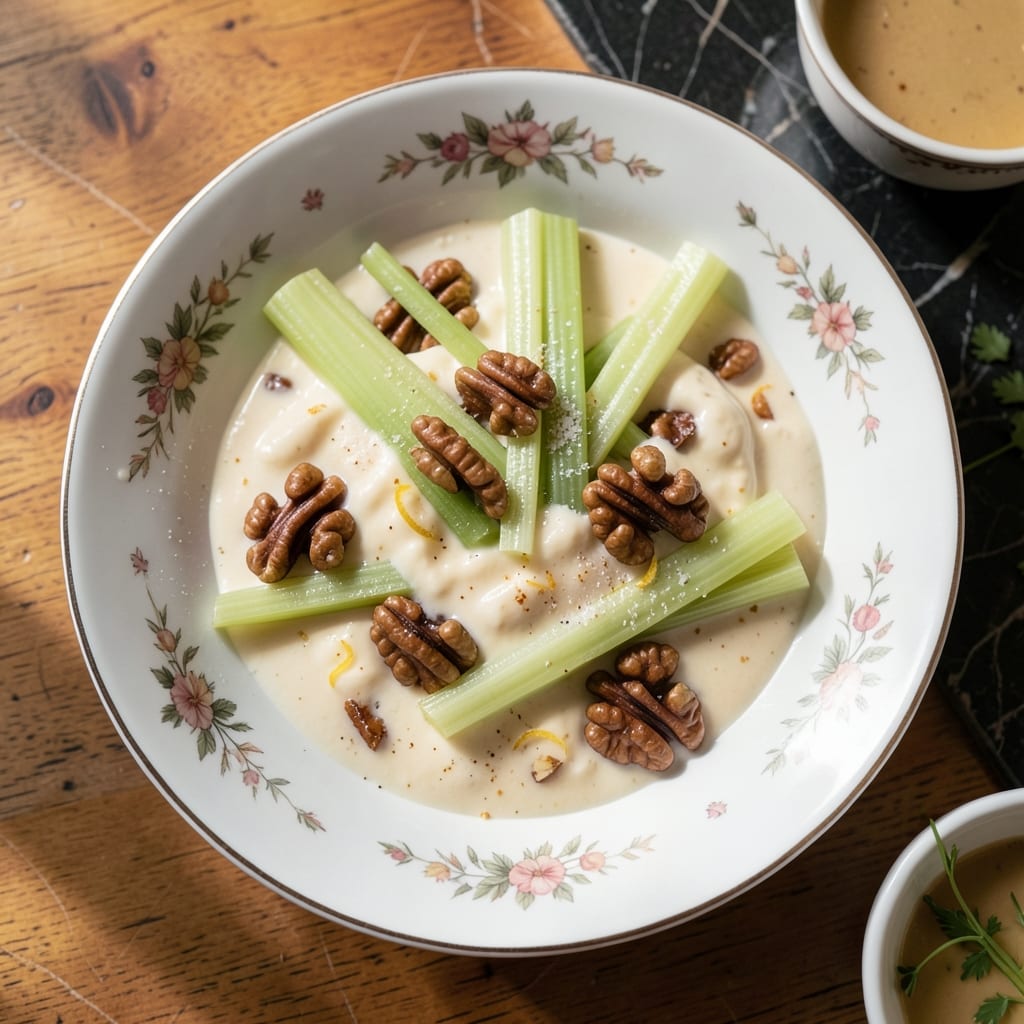
This 1910 salad recipe transports you to early 20th-century dining tables with its rich, creamy texture and nostalgic charm. 💛 Back then, fresh celery and walnuts were prized ingredients—available in markets and prized for their versatility—while mayonnaise, still new to American kitchens, became the star of elegant salads. The original recipe relied on pantry staples like vinegar, mustard, and a touch of sugar to balance flavors, creating a dish that was both satisfying and sophisticated for its time.
The salad’s secret lies in its creamy base, achieved through a careful blend of mayonnaise, mustard, and a splash of vinegar, all whipped to a light, airy consistency. Fresh celery—chopped fine—adds a crisp, refreshing crunch, while toasted walnuts contribute a nutty depth that was considered luxurious in 1910. The dish was often served chilled, allowing the flavors to meld beautifully, and it was a staple at both home dinners and formal gatherings.
What makes this recipe special today is its ability to bridge history and modern tastes—classic yet adaptable. The original version would have been dressed simply, with no added herbs or spices, but you can enhance it with a pinch of salt, a drizzle of lemon juice, or even a sprinkle of fresh parsley if you like. The texture remains velvety, the flavors balanced, and the presentation elegant, just as it would have been over a century ago.
For authenticity, use period-appropriate ingredients: mayonnaise made from scratch (or a high-quality store-bought version), fresh celery, walnuts, and vinegar. Serve it on a chilled platter with a sprinkle of paprika or a few cracked walnuts on top for that vintage touch. This isn’t just a salad—it’s a piece of culinary history, reimagined for today’s kitchen.
Ingredients for 1910 salad
Nine ingredients transform into a 1910-inspired creamy classic with nostalgic charm and elegant simplicity.
| Ingredient | Amount | Notes |
|---|---|---|
| Mayonnaise 🥫 | 1 cup | Homemade or high-quality store-bought |
| Dijon Mustard 🌶️ | 1 tbsp | For tangy balance |
| White Vinegar 💧 | 1 tbsp | Distilled or apple cider |
| Granulated Sugar 🍚 | 1 tsp | For subtle sweetness |
| Fresh Celery 🧅 | 1 ½ cups | Finely chopped, stalks only |
| Walnuts 🥜 | ½ cup | Toasted, roughly chopped |
| Salt 🧂 | ½ tsp | Kosher or sea salt |
| Black Pepper 🌶️ | ¼ tsp | Freshly ground preferred |
| Lemon Juice 🍋 | 1 tsp | Freshly squeezed |
| Fresh Parsley 🌿 | 2 tbsp | Chopped, optional garnish |
| Paprika 🌶️ | ¼ tsp | Smoked, for garnish |
For authenticity, the mayonnaise is key—Duke's or Hellmann's were popular in 1910, but homemade with egg yolks and oil elevates it further. Fresh celery should be crisp with vibrant green stalks; avoid the stringy, yellowed pieces. Trader Joe's or local markets often carry the best quality. Walnuts were considered luxurious in 1910, so toast them lightly in a dry pan until fragrant to enhance their natural richness. The Dijon mustard adds depth, while vinegar and sugar balance the creaminess—just like the original recipe intended.
No Dijon mustard? Yellow mustard at double the amount works in a pinch, though it lacks the same sophistication. Substitute walnuts with pecans or almonds if needed, but toast them first. For a tangier kick, swap white vinegar for apple cider vinegar. The original recipe didn’t include herbs, but parsley adds freshness if you’re modernizing it. If you’re strict about authenticity, skip the lemon juice and parsley—those were later additions. The paprika garnish was common in vintage recipes for a subtle smoky touch.
This salad keeps beautifully in the fridge for 3-4 days if stored in an airtight container. The walnuts will stay fresh longer if you toast them fresh before serving. For a truly vintage presentation, chill the salad for at least 2 hours before serving to let flavors meld. Garnish with a sprinkle of paprika and cracked walnuts just before serving—this was how it was presented at 1910 dinner parties for that elegant touch.
Why You'll Love This Recipe
- I’ll be real: celery isn’t cheap, but a single stalk stretches across multiple servings. The dressing costs pennies to make, and it turns basic ingredients—like crackers, cold cuts, or even canned tuna—into something special. Plus, leftovers? They’re my secret weapon for quick lunches or last-minute snacks. No waste, all flavor.
- Five-Ingredient Magic: I swear by this recipe when I’m staring into the fridge wondering what to make. Just mayo, mustard, vinegar, sugar, and celery—no fancy prep, no last-minute grocery runs. That tangy-sweet dressing comes together in minutes, and the celery adds this satisfying crunch without needing a knife skills masterclass.
- Dressing That Sticks: Here’s what sold me—the way the Dijon mustard and sugar cut through the richness of the mayo. It’s not just a side; it’s the star. The vinegar brightens everything up, so you get that perfect balance of creamy, sharp, and just a hint of sweet. Honestly, I’ve made this dressing on sandwiches, eggs, and even grilled chicken, and it never lets me down.
- Picnic-Proof Perfection: Between us, this is my go-to for potlucks, tailgates, or even a lazy Sunday spread. The dressing keeps well, so I can toss it together the night before and let the flavors meld. Pack it in a jar, and it’s ready to go—no worrying about wilted greens or soggy sides. (Yes, even on a Tuesday night.)
Step-by-step instructions for vintage creamy celery and walnut salad
This classic 1910s-inspired salad delivers rich, creamy texture with perfect balance every time.
👨🍳 Step 1: Toast the Walnuts for Rich Flavor
Preheat your oven to 350°F and spread the 0.5 cup walnuts on a baking sheet lined with parchment paper. Toast for 8-10 minutes until they're fragrant and just beginning to turn golden brown. Watch closely—they burn quickly once they reach this stage.
Remove from the oven and let cool for 5 minutes before roughly chopping them with a chef's knife. The toasting enhances their natural oils and nutty flavor, which becomes the perfect textural contrast to the creamy dressing. Don't skip this step—raw walnuts will make the salad taste flat and unbalanced.
🍳 Step 2: Prepare the Celery and Make the Dressing Base
Finely chop the 1.5 cups fresh celery into small, even pieces—about ⅛-inch thick slices. You want them to be small enough to mix well with the dressing but still maintain some texture. Place them in a large bowl and set aside.
In a separate medium bowl, whisk together the 1 cup mayonnaise, 1 tbsp Dijon mustard, 1 tbsp white vinegar, and 1 tsp granulated sugar until completely smooth. This base creates the creamy foundation that makes this salad so distinctive. The sugar balances the acidity from the vinegar, while the mustard adds subtle tang.
🥘 Step 3: Combine and Season the Salad
Add the chopped celery to the dressing mixture and stir gently to coat evenly. The celery should absorb the dressing completely, but you may need to let it sit for 5 minutes before adding the remaining ingredients—this allows the flavors to meld properly.
In a small bowl, mix together the 0.5 tsp salt, 0.25 tsp black pepper, 1 tsp lemon juice, and the toasted, chopped walnuts. Pour this mixture over the celery and dressing, then gently fold everything together with a spatula. The lemon juice brightens the flavors while the walnuts add crunch and depth.
⏰ Step 4: Chill and Garnish for Perfect Texture
Cover the salad bowl and refrigerate for at least 1 hour—this allows all the flavors to fully develop and the celery to soften slightly. The longer it chills, the better the texture becomes, but don't exceed 4 hours or the celery will get soggy.
Before serving, sprinkle with the 2 tbsp fresh parsley and 0.25 tsp paprika. The parsley adds freshness while the paprika gives a subtle smoky note that complements the vintage flavor profile. Serve immediately for the best experience—this salad tastes even better when slightly chilled but not cold.
Pro Tips For Making 1910 Salad
- Whisk the Dressing Slowly: Start with just the mayo and Dijon—whisking them together first prevents lumps when you add vinegar later. I learned this the hard way after trying to dump everything in at once and ending up with a grainy mess. Once smooth, drizzle in vinegar and sugar slowly while whisking constantly.
- Salt the Celery Before Chopping: Sprinkle a pinch of salt on whole celery stalks before cutting—it draws out moisture and keeps the dressing from turning watery. I used to skip this, and the celery would always make the salad soggy within an hour. Rinse it off after 10 minutes, then chop.
- Use Ice-Cold Vinegar: Chill the white vinegar in the fridge for 10 minutes before adding it to the dressing—this prevents the mayo from breaking. I was skeptical until I tried it; now, my salad dressing stays perfectly emulsified instead of separating after 20 minutes.
- Add Celery Last: Toss the chopped celery into the dressing right before serving—it softens faster than you’d think. If you mix it in too early, you’ll end up with mushy celery and a sad, limp salad. Keep it crisp by adding it last, even if it feels like an extra step.
Common mistakes when making your 1910 salad
Over-Chopping Celery
I’ve seen this happen more times than I can count—someone gets so eager to chop that celery into tiny bits that it turns into a mushy pulp. The original 1910 recipe called for celery to be finely chopped but still retain some texture. Aim for pieces about ⅛-inch thick—small enough to mix well with the dressing but not so fine that they disappear. If you’re using a food processor, pulse just until you reach that ideal size, then stop. 🧅
Skipping Walnut Toasting
This is a rookie mistake that changes the entire flavor profile. Toasting walnuts brings out their natural oils and nutty depth, which balances the creamy dressing perfectly. If you skip this step, your salad will taste flat and underwhelming. Toast them in a dry pan over medium heat for 3-5 minutes or in the oven at 350°F for 8-10 minutes—just until fragrant. The difference is night and day. 🥜
Using Low-Quality Mayonnaise
The base of this salad is all about that creamy texture, and cheap or watery mayonnaise will ruin it. In 1910, homemade mayo was standard, but if you’re using store-bought, opt for a high-quality brand like Duke’s or Hellmann’s. Avoid anything with added fillers or a thin consistency—it’ll make your salad taste greasy and unbalanced. If you’re feeling ambitious, whip up a batch of homemade mayo for the authentic experience. 🥫
Not Chilling Long Enough
This salad tastes best when the flavors have time to meld, which means chilling it for at least 1 hour. I’ve seen people serve it immediately, and it’s a crime against vintage flavor. The celery needs time to soften slightly, and the dressing needs to coat everything evenly. If you’re short on time, at least let it sit for 30 minutes—but trust me, the longer it chills, the better it tastes. ❄️
Over-Mixing the Dressing
When combining the mayonnaise, mustard, vinegar, and sugar, it’s easy to over-whisk and incorporate too much air, which can make the dressing separate later. Whisk just until smooth—about 30 seconds. Over-mixing can also break down the mayo’s emulsification, leading to a greasy texture. Stir gently but firmly, and you’ll get that perfect creamy consistency without any issues. 💛
Ignoring the Sugar Balance
The 1 tsp granulated sugar in the dressing isn’t just for sweetness—it balances the acidity from the vinegar and mustard. Skipping it or using too much will throw off the flavor entirely. If you’re worried about sweetness, start with ½ tsp and taste as you go. The original recipe relied on this subtle touch to create harmony, and it’s a key part of the vintage charm. 🍚
Nutrition facts
Frequently asked questions
What makes this 1910 salad different from modern versions?
This vintage recipe relies on period-appropriate ingredients like Dijon mustard and white vinegar for balance, rather than modern shortcuts. The original version didn't include lemon juice or parsley—those were later additions. The key difference is the creamy texture achieved through careful mayonnaise selection and the toasted walnuts, which were considered luxurious in 1910.
Can I substitute walnuts with other nuts?
Yes, but texture will change. Pecans or almonds work best—just toast them first to enhance flavor. Avoid cashews, as they lack the nutty depth walnuts provide. If you're strict about authenticity, stick with walnuts—they were the preferred nut in 1910 for this type of salad.
How long can I make this salad ahead of time?
Store it in an airtight container in the fridge for up to 4 days. The celery will soften slightly over time, but the flavors develop beautifully. For best texture, serve within 2 days. If making ahead, add fresh parsley and paprika just before serving to maintain vibrant presentation.
Is this salad suitable for formal occasions?
This was originally served at 1910 dinner parties for its elegant presentation. Chill it thoroughly, garnish with paprika and parsley, and serve on a decorative platter. The creamy texture and nutty crunch make it sophisticated yet approachable. Pair it with roasted meats or seafood for a complete vintage meal.
What if I don't have Dijon mustard?
Use yellow mustard at double the amount (2 tbsp) for a similar tang, though it lacks Dijon's sophistication. For authenticity, try whole-grain mustard (½ tbsp) mixed with ½ tbsp yellow mustard. The original recipe relied on whatever was available—just ensure you have some mustard for proper balance.