
Salads
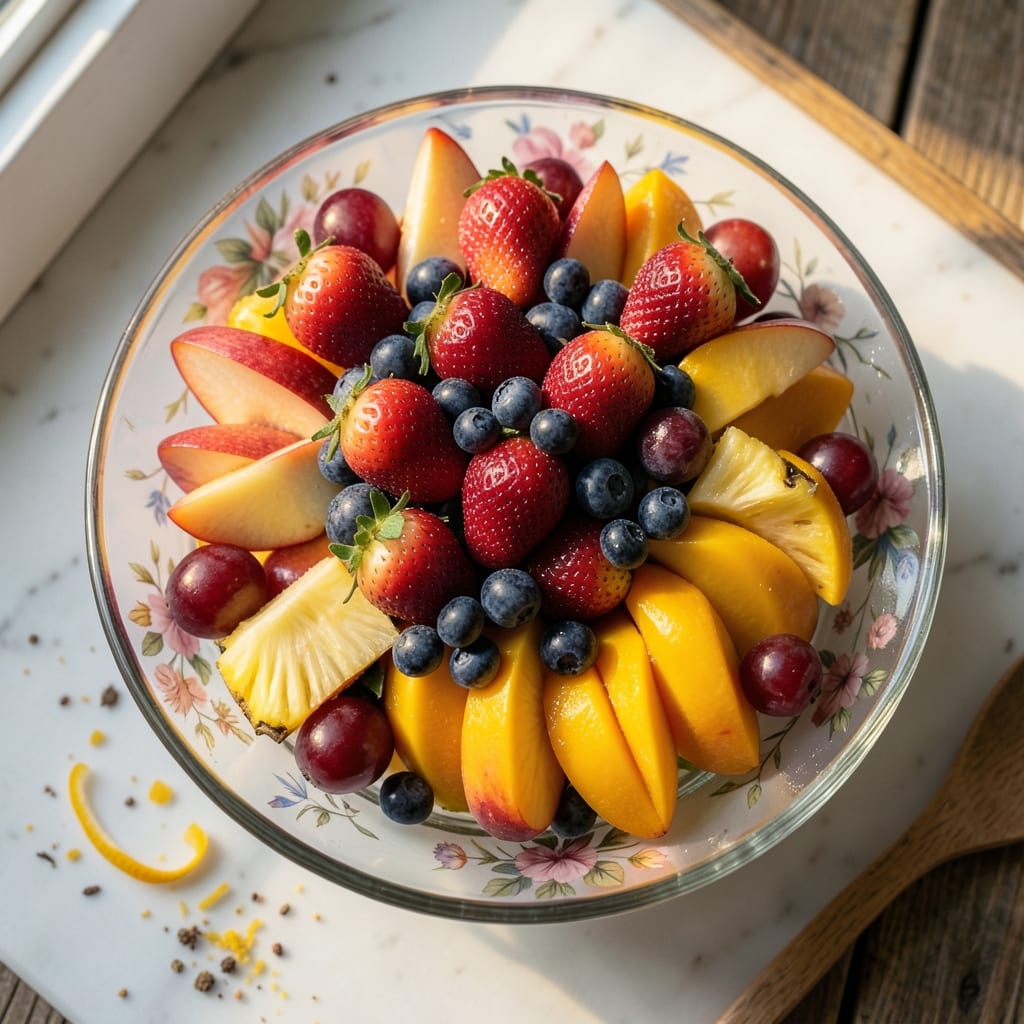
The 7-cup fruit salad recipe transforms simple ingredients into a vibrant, restaurant-worthy dish that stays fresh for days. ✨ This isn’t your average fruit salad—it’s a carefully balanced mix of textures and flavors that keeps its crunch and brightness even after hours in the fridge. The secret lies in the right fruit combinations, a light dressing that enhances rather than overpowers, and a preparation method that preserves freshness.
What makes this recipe special is the rainbow layers of color and flavor, each fruit chosen for its texture and seasonality. You’ll use a mix of firm and soft fruits—think crisp apples, juicy berries, and tender mango—to create a salad that’s as satisfying to eat as it is beautiful to serve. The dressing, a simple honey-lime or yogurt-based option, adds just the right amount of sweetness and tang without making the fruit soggy.
By the time you’re done, you’ll have a bright, refreshing salad that’s perfect for brunch, potlucks, or as a light dessert. The fruits stay crisp and the colors pop, making it a showstopper on any table. Best of all, it’s easy to customize—swap in seasonal fruits or add a sprinkle of toasted nuts for extra crunch.
This salad isn’t just delicious—it’s versatile. Serve it chilled as a side, layer it in parfaits, or use it as a topping for yogurt or oatmeal. The possibilities are endless, and the prep is simple enough for any occasion. Let’s get started!
Ingredients for 7 cup fruit salad
Bright colors, balanced textures—this vibrant fruit salad stays crisp and fresh for days.
| Ingredient | Amount | Notes |
|---|---|---|
| Red Apples 🍎 | 2 whole | Firm variety like Honeycrisp or Fuji |
| Strawberries 🍓 | 1 ½ lb | Hulled and quartered |
| Blueberries 🫐 | 1 cup | Fresh or frozen, thawed |
| Pineapple Chunks 🍍 | 1 cup | Fresh or canned, drained |
| Mango 🥭 | 1 whole | Ripe, peeled and diced |
| Red Seedless Grapes 🍇 | 1 cup | Halved, stems removed |
| Kiwi 🥝 | 2 whole | Peeled and sliced |
| Lime Juice 🍋 | 2 tbsp | Freshly squeezed |
| Honey 🍯 | 1 ½ tbsp | Raw or wildflower preferred |
| Plain Greek Yogurt 🥛 | ¼ cup | Full-fat for creaminess |
| Toasted Almond Slices 🥜 | ¼ cup | Optional garnish |
| Fresh Mint Leaves 🌿 | ¼ cup | Chopped, optional garnish |
The fruit selection is key to texture and longevity. Honeycrisp apples hold their crunch best, while ripe mango adds natural sweetness without overpowering. Trader Joe's and Whole Foods often carry pre-cut fruit, but whole pieces stay fresher longer. For tropical flavors, Costco is a solid choice—just drain it well. Look for grapes with tight, firm skins to avoid mushiness. Seasonal swaps? Pomegranate seeds in winter or peaches in summer work beautifully.
No honey? Maple syrup or agave nectar work in a pinch, though honey's floral notes are ideal. The yogurt dressing keeps things creamy without sogginess—full-fat Greek yogurt adds richness, but low-fat works too. For a tangier option, swap honey for orange marmalade (1 tbsp). The lime juice is non-negotiable—it brightens all the flavors and helps preserve the fruit's freshness. If you're using frozen berries, thaw them first and pat dry to prevent excess moisture in the salad.
Prep the fruit just before serving to maintain crispness, but the dressing can be made 1 day ahead and stored separately. Keep the salad in an airtight container with parchment paper between layers to prevent browning. It stays fresh for 3-4 days in the fridge. For extra crunch, toast the almonds in a dry pan for 3-4 minutes until golden—they add texture and nutrition. Garnish with mint just before serving to keep it vibrant.
Why You'll Love This Recipe
- No-Core Chopping Needed: I swear by this trick—toss the apples in lemon juice first, and they stay crisp without browning while I slice strawberries and dump in the rest. The pineapple chunks? Pre-cut, baby. Ten minutes max, and zero knife skills required.
- Sweet-Savory Balance: The sharp tang of red apples cuts through the pineapple’s sweetness, while the mango adds that velvety richness. Blueberries pop like little bursts of joy, and strawberries tie it all together—naturally refreshing, no sugar crash here.
- Lunchbox Hero: Between us, this is my go-to for school lunches, potlucks, or even a quick office snack. The apples hold up for days, and the mix of textures (crunchy, juicy, tender) keeps it exciting. Honestly, my kids still ask for it even after three weeks in the fridge.
- Budget Brightener: I stretch my grocery dollars by buying apples and pineapple in bulk, then adding whatever’s on sale—maybe grapes or kiwi. Seven cups feeds a family of four for days, and the leftovers? Perfect for smoothies or a quick breakfast bowl. Win-win.
Step-by-step instructions for rainbow fruit salad
Layer vibrant fruits strategically for maximum freshness and visual appeal that lasts.
👨🍳 Step 1: Prep Fruits for Optimal Texture and Presentation
Start by cutting the 2 whole red apples into ¼-inch thick slices and immediately toss them with 1 tablespoon of the lime juice to prevent browning. The acidity will also enhance their natural sweetness. For the 1.5 lb strawberries, hull and quarter them—this creates uniform bite-sized pieces that distribute evenly when layered.
Peel and dice the 1 whole mango into ½-inch cubes, reserving any juice that collects in the bowl. The mango's natural enzymes will help tenderize the other fruits slightly as they sit. Halve the 1 cup red seedless grapes and remove stems, then slice the 2 whole kiwi into ¼-inch rounds. The kiwi's bright green color will provide striking contrast against the reds and yellows.
🥘 Step 2: Create the Dressing and Layer Base Ingredients
In a small bowl, whisk together the remaining 1 tablespoon lime juice, 1.5 tablespoons honey, and 0.25 cup plain Greek yogurt until smooth. This light dressing should coat the back of a spoon but remain pourable. The yogurt adds creaminess without overpowering the fruit flavors, while the honey balances the acidity from the lime.
In a large glass bowl or serving dish (at least 7-cup capacity), begin by placing the 1 cup pineapple chunks at the bottom. Their slightly firm texture will support the layers above while adding tropical brightness. Sprinkle ⅓ of the grapes evenly over the pineapple—this creates visual interest and prevents the fruit from sticking together.
🍳 Step 3: Build the Rainbow Layers for Maximum Freshness
Add the apple slices in a single layer, slightly overlapping them like shingles. This creates a stable base for the softer fruits that follow. Drizzle 2 tablespoons of the dressing evenly over the apples, then add ½ of the blueberries scattered across the surface. The blueberries' small size allows them to nestle into the gaps between larger fruits.
Next layer the mango cubes in a single even layer, followed by the remaining ½ cup grapes. Top with the kiwi slices, arranging them cut-side up to showcase their vibrant green. Finish with the remaining ½ cup blueberries and a final drizzle of 1 tablespoon dressing, ensuring each layer gets moisture without becoming soggy.
⏰ Step 4: Chill and Rest for Perfect Texture
Cover the bowl tightly with plastic wrap and refrigerate for at least 2 hours before serving. This resting period allows the flavors to meld and the dressing to slightly macerate the fruit edges—just enough to soften them without turning mushy. The acid in the lime juice will also help preserve the fruit's natural color and crispness.
For best results, serve within 24 hours of assembly. The yogurt dressing will keep the fruit fresh for 3-4 days in the refrigerator, but the texture of softer fruits like mango and kiwi will begin to break down after 2 days. If prepping ahead, store the dressing separately and toss it with the fruit just before serving.
🍽️ Step 5: Garnish and Serve for Visual Impact
Before serving, sprinkle the 0.25 cup toasted almond slices and 0.25 cup chopped fresh mint leaves over the top. The almonds add a satisfying crunch and nutty contrast, while the mint brightens the presentation with its fresh aroma. Use a fine-mesh strainer to lightly dust with 1 teaspoon of powdered sugar if you prefer a touch of sweetness on top.
Serve immediately in individual bowls or directly from the large serving dish. The layered presentation makes this fruit salad perfect for brunch spreads, picnic lunches, or as a refreshing dessert. Each bite should deliver a perfect balance of textures—crisp apples, juicy berries, creamy yogurt, and the subtle crunch of almonds—with every color represented in every spoonful.
Pro Tips For Making 7 Cup Fruit Salad
- Toss Apples Last: Apples oxidize faster than the rest—those red slices turn brown in minutes, even if you’re not looking. Save them for the final toss so your salad stays vibrant longer. If you’re really worried, sprinkle a pinch of lemon juice over them right before mixing. ---
- Cut Pineapple Small: Pineapple chunks can feel like they’re hogging the spotlight, especially if they’re big. Dice them into ½-inch pieces so every bite has that sweet, tangy balance with the other fruits. No one wants a mouthful of just pineapple—keep it even. ---
- Skip the Strawberry Hulls: I used to leave them on, thinking it was faster. Wrong. Those little green tops make the salad look messy and add unnecessary texture. A quick hulling (use a small knife or your fingers) makes the dish look polished and lets the fruit shine. ---
- Chill Before Serving: Room-temperature fruit salad tastes flat and dull. Pop it in the fridge for at least 30 minutes—especially if you’re using ripe mango or pineapple—so the flavors wake up and the textures crisp up. Cold fruit just tastes better, no debate.
Essential equipment for this dish
Cutting Board Essentials
A large cutting board (at least 12x18 inches) is a game-changer for fruit salads. I prefer bamboo or high-density polyethylene boards—they’re gentle on knives and won’t dull blades like glass or stone. For prep work, a smaller board (about 8x10 inches) works well for delicate fruits like kiwi and grapes to prevent rolling. Trader Joe’s has affordable bamboo boards that work perfectly for this recipe. 🍎
Knife Set Must-Haves
You’ll need two knives for this salad: a sharp chef’s knife (8-inch) for chopping apples, mango, and pineapple, and a small paring knife for peeling kiwi and hulling strawberries. A serrated knife (like a Victorinox 8-inch or Wüsthof Ikon) handles grapes and citrus zest beautifully without crushing them. Keep your knives honestly sharp—dull blades crush fruit, releasing juices that make the salad soggy. 🔪
Storage Containers
For keeping your salad fresh, invest in airtight glass containers with snap-on lids (like Pyrex 4-cup or 8-cup containers). These preserve texture and prevent browning better than plastic. If prepping dressing separately, a small mason jar (8 oz) works perfectly. For serving, a clear glass bowl (at least 7-cup capacity) lets guests admire the rainbow layers. IKEA’s 365+ line has budget-friendly glassware that’s dishwasher-safe. ❄️
Prep Tools for Efficiency
A microplane (for zesting lime) and a fine-mesh strainer (for dusting powdered sugar) are small but mighty tools. For speed, a mandoline slicer (with ¼-inch blade) ensures uniform apple and kiwi slices—just be sure to use the safety guard! A small mixing bowl (for the dressing) and a spoonula (for layering) complete the essential toolkit. OXO Good Grips makes high-quality, affordable prep tools that I rely on every time. ✨
Optional Upgrades
If you love fruit salads, consider a fruit corer/scoop (for apples) and a citrus juicer (for fresh lime juice). For presentation, a slotted spoon helps serve layers without disturbing them. A food scale ensures precise measurements, especially when swapping fruits. My go-to upgrade? A clear acrylic serving platter—it elevates the dish for special occasions while keeping everything visible. 💫
Nutrition facts
Frequently asked questions
Why does this recipe use 7 cups instead of a smaller amount?
This 7-cup size makes it perfect for serving 6 people as a side dish or light dessert. It's also ideal for meal prep—you can store portions in individual containers for grab-and-go snacks. The larger quantity ensures you have enough for seconds while keeping the fruit-to-dressing ratio balanced.
Can I make this fruit salad without yogurt?
For a dairy-free version, replace the yogurt with 2 tablespoons coconut yogurt or 1 tablespoon lemon juice mixed with 1 tablespoon maple syrup. The lime juice and honey will still provide the perfect balance of tangy and sweet without needing yogurt's creaminess. The fruit will stay fresh for 2-3 days in this case.
How do I keep the apples from turning brown?
Toss apple slices with 1 tablespoon lime juice immediately after cutting—the acid prevents browning by stopping oxidation. For extra protection, sprinkle with ½ teaspoon lemon juice and store in an airtight container with a paper towel to absorb excess moisture. This trick keeps apples crisp for 4-5 hours before layering.
What's the best way to serve this fruit salad?
This layered salad looks stunning in a clear glass bowl for buffets or a wooden serving board for picnics. For individual servings, use small glass jars (like mason jars) with the dressing at the bottom. It works beautifully as a dessert after dinner, breakfast topping, or picnic centerpiece. Garnish with mint leaves just before serving to keep it fresh-looking!
Can I use frozen fruit in this recipe?
Yes, but thaw and drain frozen fruit completely first—especially berries and pineapple—to prevent excess moisture. Use 1 cup thawed blueberries (no need to drain) and 1 cup drained pineapple chunks. Avoid using frozen grapes or kiwi as they won't hold their shape well. The texture will be slightly softer, but the flavors stay vibrant!