
Side Dishes
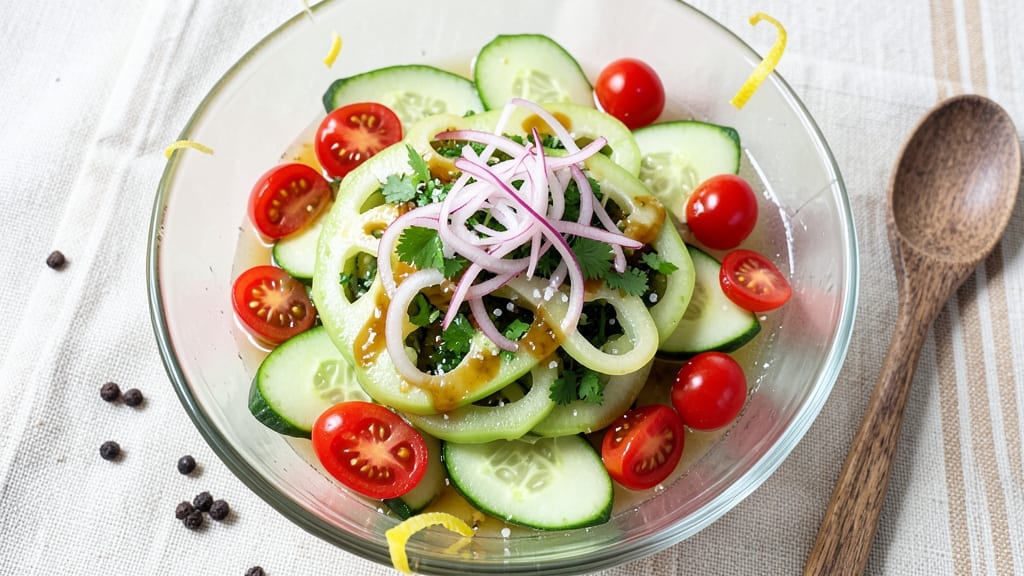
This Filipino Ampalaya Salad transforms bitter melon into a crispy, citrusy delight that balances tangy sweetness and savory depth. The secret lies in reducing the natural bitterness through proper preparation—slicing thinly, salting, and rinsing—before tossing with a bright vinegar-based dressing.
What makes this dish special is its ability to shine as a standalone vegetarian side or complement richer Filipino meals like adobo or sinigang.
At its core, this recipe relies on simple ingredients: fresh ampalaya (bitter melon), rice vinegar, sugar, salt, and fish sauce for that signature umami kick. The salad achieves its signature crispy texture through a quick sear in oil, while the citrusy dressing cuts through the richness.
Traditional Filipino techniques—like the salt rinse—ensure the melon remains tender yet satisfyingly crisp.
What you’ll end up with is a vibrant, restaurant-quality salad that’s as visually appealing as it is flavorful. The thinly sliced ampalaya holds its shape while absorbing the dressing’s tangy-sweet balance, making every bite a harmonious mix of textures and flavors.
Serve it chilled or at room temperature for the best experience.
For added depth, consider garnishing with crushed peanuts or chili flakes, though the salad stands strong on its own. This recipe is perfect for meal prep or as a refreshing side to any Filipino feast. Let’s get started!
Ingredients for ampalaya salad recipe filipino
Fresh ampalaya, crispy textures, and zesty dressing create this vibrant Filipino salad masterpiece.
| Ingredient | Amount | Notes |
|---|---|---|
| Fresh Ampalaya (Bitter Melon) 🍈 | 2 lb | Thinly sliced, rinsed after salting |
| White Rice Vinegar 🍶 | ½ cup | Seasoned preferred for depth |
| Granulated Sugar 🍚 | ¼ cup | Adjust to taste for sweetness |
| Vegetable Oil 🫒 | ½ cup | High smoke point for searing |
| Kosher Salt 🧂 | 1 ½ tsp | Diamond Crystal preferred |
| Fish Sauce 🍶 | 1 ½ tbsp | Red Boat preferred for quality |
| Fresh Lime Juice 🍋 | ¼ cup | Freshly squeezed for brightness |
| Minced Garlic Cloves 🧄 | 4 cloves | Freshly minced for aromatic depth |
| Crushed Peanuts 🥜 | ¼ cup | Toasted for added texture |
| Red Chili Flakes 🌶️ | ½ tsp | Adjust for heat preference |
| Fresh Cilantro Leaves 🌿 | ¼ cup | Chopped for garnish |
| Sesame Oil 🫒 | 1 tbsp | Toasted sesame for aroma |
The ampalaya is the heart of this dish—freshness is non-negotiable. Look for bitter melons with smooth, firm skin and minimal blemishes at Asian markets, where they often carry the best selection. If you can't find fresh, pre-cut frozen ampalaya works in a pinch, but it lacks the crispy texture. The key to reducing bitterness lies in the preparation: slice paper-thin, salt generously, then rinse thoroughly. For the fish sauce, Red Boat is the gold standard—its rich umami flavor elevates the dish without overpowering. If you prefer a vegetarian alternative, vegan fish sauce works well, though traditionalists may notice a subtle difference.
No fish sauce? Soy sauce or coconut aminos provide a similar savory depth, though the umami profile will differ slightly. Short on rice vinegar? Apple cider vinegar or white vinegar are acceptable substitutes, but reduce the amount by half to avoid over-acidity. The garlic should be freshly minced for maximum flavor—pre-minced garlic lacks the aromatic punch. For those avoiding peanuts, toasted sesame seeds offer a nutty alternative, though they won't provide the same crunch. If you're sensitive to heat, omit the chili flakes entirely—the salad's tangy-sweet balance stands strong on its own.
Ampalaya loses crispness quickly after slicing, so prep it last and work efficiently. The salad is best served immediately after tossing, but if you need to prep ahead, store the dressing separately and combine just before serving. It keeps for 2-3 days in the fridge, though the texture will soften slightly. For meal prep, consider making a double batch—the extra can be used as a filling for Filipino spring rolls or served alongside grilled meats. The peanuts and chili flakes can be added fresh at serving time to maintain their crunch and heat.
Why You'll Love This Recipe
- No Chopping Chaos: I’ll be real—ampalaya’s bumpy skin and seeds can feel intimidating, but this salad only needs you to slice it thin. No dicing, no peeling, just quick strips that soften perfectly in the vinegar-sugar bath.
- Sweet-Sour Magic: That first bite? The crisp-tender melon balanced with tangy rice vinegar and just enough sugar to melt the bitterness—it’s the kind of flavor that makes you pause mid-bite. Honestly, it’s the closest thing to a dessert salad I’ve ever loved.
- Lunchbox Hero: Pack it cold for work or school—it stays fresh for days, and the acidity keeps those slices from getting soggy. My kids actually eat their veggies when it’s this, and I’ll take that win any day.
- Pantry Staple Power: Five ingredients, zero specialty trips. Ampalaya’s cheap at Asian markets, and the rest? Things you already have. I’ve made this for potlucks, lazy Sundays, and even as a side when I burned dinner—it’s my go-to when I’m not feeling fancy.
Step-by-step instructions for Filipino ampalaya salad
Transform bitter melon into a crispy, vibrant dish with this precise method.
Prepare and Season the Ampalaya
Begin by thinly slicing the 2 lb fresh ampalaya (bitter melon) into ¼-inch thick rounds. Place them in a colander and sprinkle evenly with the 1.5 teaspoons kosher salt. Let them sit for 10 minutes—this draws out excess bitterness and preps the texture. Rinse thoroughly under cold water and pat completely dry with paper towels. The slices should feel slightly crisp when handled.
Heat 0.25 cup vegetable oil in a large skillet over medium-high heat until shimmering. Working in batches, add the ampalaya slices in a single layer. Cook undisturbed for 2-3 minutes per side until they develop a golden-brown crust and begin to crisp. Remove and set aside on a paper towel-lined plate to drain excess oil. The goal is crispy exterior with tender interior—don't overcrowd the pan or they'll steam instead of crisp.
Create the Citrusy Dressing Base
In a mixing bowl, whisk together the 0.5 cup white rice vinegar, 0.25 cup granulated sugar, 1.5 tablespoons fish sauce, and 0.25 cup fresh lime juice. Stir until the sugar dissolves completely and the mixture becomes syrupy. This balance of sweet, sour, and umami creates the signature tangy depth. Taste and adjust—add more sugar if too sharp or more fish sauce for saltiness.
Add the 4 cloves minced garlic and 0.5 teaspoon red chili flakes to the dressing. Let it steep for 5 minutes while you finish the remaining components. The garlic will infuse its aroma, and the chili flakes will distribute evenly without clumping. This resting period allows flavors to meld before combining with the crispy ampalaya.
Assemble and Marinate the Salad
Return the crispy ampalaya slices to the skillet and drizzle with 1 tablespoon sesame oil. Toss gently to coat evenly, allowing the nutty aroma to permeate the crispy exterior. Transfer to a large serving bowl and pour the prepared dressing over the top. Toss carefully to distribute the sauce without breaking the crispy texture.
Sprinkle with 0.25 cup crushed peanuts and 0.25 cup chopped fresh cilantro leaves. The peanuts add crunch contrast while the cilantro brightens the dish visually and aromatically. Let the salad marinate for 10-15 minutes at room temperature—this allows the flavors to fully integrate and the dressing to penetrate the crispy slices.
Serve with Perfect Texture
Gently toss the salad one final time just before serving to maintain the crispy texture. The ampalaya should have a satisfying crunch, while the dressing clings to each slice. Serve immediately while the peanuts remain crisp and the ampalaya maintains its perfect texture contrast.
For optimal presentation, arrange the salad on a platter with the peanuts and cilantro garnished on top. The vibrant green of the cilantro against the golden-brown ampalaya creates a visually striking dish that's as beautiful as it is delicious. Pair with steamed jasmine rice to balance the salad's bold flavors.
Pro Tips For Making Ampalaya Salad Recipe Filipino
- Slice Thin, Then Soak: Ampalaya’s bitterness hides in its skin and thick walls—slice it paper-thin (⅛-inch slices max) and soak in cold water for 10 minutes to mellow the harshness. I used to skip this, and the salad tasted like medicine. Trust me, the crunch stays, but the bite softens.
- Salt Before Frying: Toss sliced ampalaya with ½ tsp salt before frying—it draws out moisture so the oil crispens the edges instead of steaming them. After burning three batches of soggy melon, I learned: salt first, fry fast over medium-high heat.
- Balance Vinegar Last: Taste the salad before adding vinegar—ampalaya’s natural sweetness peaks after frying, so you’ll need less acid than you think. Drizzle vinegar in stages, then adjust sugar to taste. My first attempt drowned the melon in tang; now I start conservative.
- Use Neutral Oil: Vegetable oil’s high smoke point matters here—it fries the ampalaya evenly without burning. I tried coconut oil once (romantic, I know), and the flavor turned funky. Stick to neutral oil, and the salad’s clean, bright taste shines.
Perfect pairings for this dish
Filipino Main Dish Pairings
This crispy ampalaya salad pairs beautifully with rich, savory Filipino mains like adobo or sinigang. The tangy dressing cuts through the deep flavors of braised pork or fish, creating a perfect balance.
For a vegetarian spread, serve alongside ginataang gulay (vegetables in coconut milk) or tofu adobo for a cohesive plant-based meal. 🍛
Crispy Rice Sides
Garlic fried rice or sinangag (Filipino garlic rice) elevates this salad to restaurant-quality. The nutty aroma of toasted rice complements the ampalaya’s crispiness, while the garlic enhances the dressing’s depth. For extra flair, add a sprinkle of crispy chicharon (pork cracklings) on top of the rice. 🍚
Protein Additions
Add grilled shrimp or sliced chicken breast for a heartier dish. Marinate the protein in soy sauce, garlic, and calamansi before grilling, then arrange over the salad. For a vegetarian twist, top with tofu cubes seared in sesame oil. The protein adds substance while keeping the dish light. 🍤
Beverage Pairings
A cold calamansi soda or hibiscus tea (tsokolate) refreshes the palate after each bite. For alcohol, San Miguel Pale Pilsen (light lager) balances the salad’s tangy-sweetness, while red wine like Cabernet Sauvignon pairs well with meat-heavy versions. Sparkling water with lime is a crisp, non-alcoholic alternative. 🍹
Garnish Upgrades
Boost visual appeal with crispy shallots or fried eggplant slices on top. For a smoky touch, drizzle with patis (fish sauce) reduction or bagoong (shrimp paste). Fresh mint leaves add a bright contrast to the cilantro. These garnishes enhance both flavor and presentation. 🌿
Meal Prep Pairings
Pack this salad in bento boxes with steamed rice, atchara (pickled papaya), and hard-boiled eggs for a balanced Filipino-style lunch. The salad’s crispness holds up well in airtight containers for 2-3 days, making it perfect for office meals. Reheat gently if storing with proteins. 📦
Nutrition facts
Frequently asked questions
Why does Filipino ampalaya salad taste so different from other bitter melon dishes?
The magic lies in the crispy texture and tangy-sweet dressing that balances the bitterness. Unlike stir-fries, this salad uses a vinegar-based dressing with sugar and fish sauce that creates a signature umami-sweet contrast. The thinly sliced, crisped ampalaya absorbs the dressing perfectly while maintaining its satisfying crunch.
Can I make this salad without fish sauce?
Replace the 1.5 tablespoons fish sauce with soy sauce or coconut aminos for a vegetarian version. The umami depth will be slightly different but still delicious. For extra flavor, add 1 teaspoon miso paste to the dressing. The key is maintaining the sweet-sour balance with the vinegar and sugar.
How do I prevent the ampalaya from turning mushy?
Keep slices paper-thin (¼-inch) and cook in small batches over medium-high heat to prevent steaming. Pat them completely dry after salting and rinsing, and cook just until golden—2-3 minutes per side. Overcrowding the pan is the #1 cause of soggy ampalaya.
What's the best way to store leftovers?
Store the dressing separately in an airtight container and keep the crispy ampalaya slices in another container. Recombine just before serving to maintain texture. Leftovers keep for 2-3 days in the fridge. For longer storage, freeze the cooked ampalaya (without dressing) for up to 1 month, then reheat gently in a dry skillet.
Can I use frozen ampalaya instead of fresh?
Frozen ampalaya works in a pinch, but it won't achieve the same crispy texture. If using frozen, thaw completely first, then slice extra thin and cook for 1-2 minutes less per side. For best results, always use fresh bitter melon when possible—the flavor and texture difference is noticeable.