
Salads
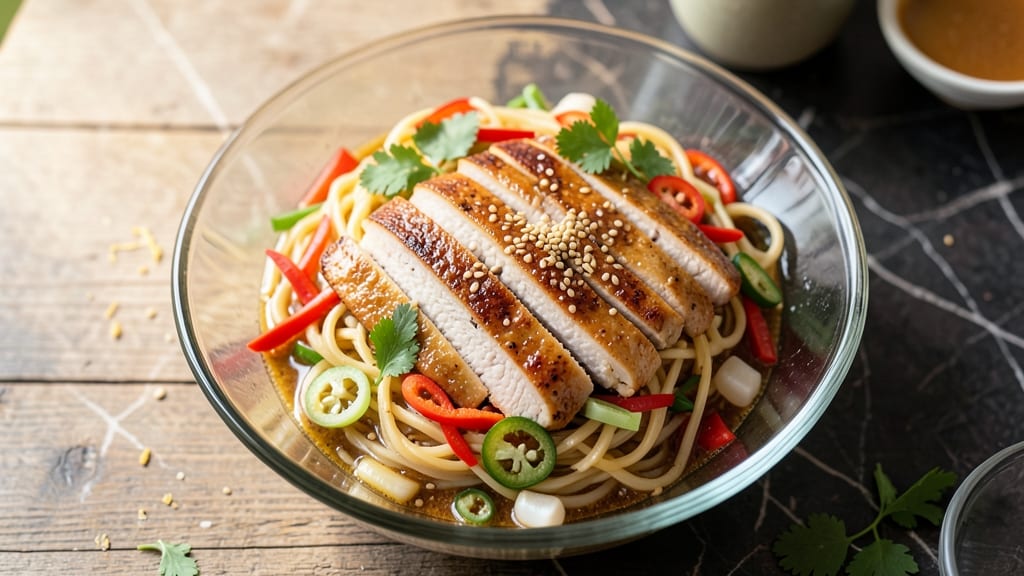
This Asian chicken pasta salad recipe blends warm, savory soy-glazed chicken with chilled noodles for a refreshing yet satisfying dish. The secret lies in balancing textures—crisp-tender chicken, cool al dente pasta, and fresh vegetables—all tied together with a tangy sesame-ginger dressing.
I developed this recipe for quick weeknight meals that still feel special, using pantry staples and a 30-minute prep time that delivers restaurant-quality results.
The warm chicken is the star here, marinated in a sweet-savory soy-ginger glaze and seared to perfection, while the chilled noodles provide a refreshing contrast. This dish works equally well as a light lunch or a make-ahead meal for gatherings, with the flavors developing even better when chilled overnight.
The combination of umami from the soy, brightness from fresh herbs, and crunch from quick-pickled vegetables creates a harmonious bite every time.
What makes this recipe stand out is its adaptability—swap in different vegetables based on season or preference, and adjust the dressing to your taste. The technique is straightforward: cook the chicken separately, cool the pasta properly, and assemble everything just before serving to maintain the perfect temperature contrast.
Each forkful delivers a balance of warmth, coolness, and texture that keeps this salad exciting.
Perfect for meal prep or last-minute lunches, this Asian chicken pasta salad proves that healthy eating doesn't have to be boring. The flavors are bold yet balanced, and the dish holds up beautifully in the fridge for 3-4 days.
Whether you're feeding a family or packing lunches for work, this recipe delivers satisfaction with minimal effort. Let's get started!
Ingredients for asian chicken pasta salad
Warm chicken, chilled noodles, and vibrant vegetables—this salad balances textures perfectly with pantry staples and fresh ingredients.
| Ingredient | Amount | Notes |
|---|---|---|
| Boneless, Skinless Chicken Breast 🍗 | 1 ½ lb | Pounded to even thickness |
| Spaghetti or Linguine Pasta 🍝 | 12 oz | Al dente preferred |
| Low-Sodium Soy Sauce 🍶 | ½ cup | Kikkoman preferred |
| Sesame Oil 🫒 | 1 tbsp | Toasted sesame preferred |
| Fresh Ginger 🌿 | 2 tbsp | Finely grated |
| Minced Garlic 🧄 | 3 cloves | Fresh preferred |
| Honey 🍯 | 1 tbsp | Wildflower preferred |
| Rice Vinegar 🍶 | 1 tbsp | Seasoned preferred |
| Sesame Seeds 🌾 | 1 tbsp | Toasted for garnish |
| Red Bell Pepper 🌶️ | 1 whole | Thinly sliced |
| Cucumber 🥒 | 1 whole | Seedless, sliced |
| Green Onion 🧅 | 3 whole | Thinly sliced |
| Extra-Virgin Olive Oil 🫒 | 2 tbsp | For tossing |
| Diamond Crystal Kosher Salt 🧂 | 1 ½ tsp | For pasta water |
| Fresh Cilantro 🌿 | ¼ cup | Chopped for garnish |
The chicken breast should be pounded to even thickness for consistent cooking—about 1/4-inch thick works best. Kikkoman soy sauce delivers the right umami depth without overpowering, but any low-sodium brand will do. For the ginger, fresh is non-negotiable—dried lacks the bright punch this dish needs. I always grab organic bell peppers from the grocery store’s produce section, but any color works. The sesame oil should be toasted for maximum aroma—look for it in the international aisle or Asian market if your regular store doesn’t carry it.
No sesame seeds? Toasted sunflower seeds make a great crunchy substitute—they’re often cheaper and easier to find. Running short on rice vinegar? Substitute with apple cider vinegar at half the amount, but add a pinch of sugar to balance. The honey can be swapped for maple syrup if you prefer, though it adds a slightly earthier note. For the vegetables, pre-cut mixes save time, but fresh always tastes better. If you’re using pre-sliced cucumbers, pat them dry thoroughly to prevent sogginess in the salad. The pasta should be cooked al dente—undercooked noodles hold up better to chilling.
This salad tastes even better the next day, so double the batch if you’re meal prepping. Store components separately in airtight containers—chicken and dressing for 3 days, pasta and vegetables for 2 days—then assemble when ready to eat. The dressing keeps for up to 1 week in the fridge, and the raw chicken can be marinated and refrigerated for up to 24 hours before cooking. For extra freshness, add the cilantro and sesame seeds just before serving—they wilt quickly when mixed in ahead of time.
Why You'll Love This Recipe
- I swear by this trick: slice the chicken breast thick (1.5 inches) and grill or pan-sear it just until the edges catch—no dice, no fuss. The outside stays juicy, and the soy-ginger marinade soaks right in. My lazy Sundays thank me.
- No-Chop Chicken Win: I swear by this trick: slice the chicken breast thick (1.5 inches) and grill or pan-sear it just until the edges catch—no dice, no fuss. The outside stays juicy, and the soy-ginger marinade soaks right in. My lazy Sundays thank me.
- Umami Bomb: That low-sodium soy sauce and sesame oil combo? It’s the secret sauce (literally). The ginger adds a zing that cuts through the richness, and the pasta? It’s like a blank canvas for the bold, salty-sweet-savory flavor. Honestly, I’ve never tasted a pasta salad this addictive.
- Lunchbox Hero: Between us, this is my go-to for packed lunches—no soggy pasta here. Toss the cooled pasta and chicken with a drizzle of sesame oil right before packing, and it stays fresh for three days. My kids fight over whose lunch it is, and I get to brag about my genius.
Step-by-step instructions for Asian chicken pasta salad
Here's how to balance warm, savory chicken with crisp chilled noodles for a perfect Asian-inspired dish.
🍳 Step 1: Cook and Glaze the Chicken
Pound the 1.5 lb boneless, skinless chicken breast between plastic wrap to an even ½-inch thickness for consistent cooking. Heat 2 tablespoons extra-virgin olive oil in a large skillet over medium-high heat until shimmering. Add the chicken and cook for 5-6 minutes per side until the internal temperature reaches 165°F and the exterior develops golden-brown sear marks.
Remove the chicken from the pan and set aside. In the same skillet, reduce heat to medium and add 1 tablespoon sesame oil, 2 tablespoons finely grated fresh ginger, and 3 cloves minced garlic. Sauté for 30 seconds until fragrant. Pour in ½ cup low-sodium soy sauce, 1 tablespoon honey, and 1 tablespoon rice vinegar, scraping up any browned bits. Return the chicken to the skillet, spooning the sauce over it, and simmer for 2 minutes to coat evenly. Let the chicken rest for 5 minutes before slicing into ¼-inch strips.
🍲 Step 2: Prepare the Pasta and Vegetable Base
Bring a large pot of water to a rolling boil and add 1.5 teaspoons Diamond Crystal kosher salt. Add the 12 oz spaghetti or linguine pasta and cook until 1 minute before al dente (about 10-11 minutes). Drain immediately and rinse under cold water for 30 seconds to stop cooking and chill the noodles. Toss the pasta with 2 tablespoons extra-virgin olive oil to prevent sticking.
While the pasta cools, thinly slice the 1 whole red bell pepper and 1 whole cucumber into ¼-inch strips. Thinly slice the 3 whole green onions on the bias. Combine all sliced vegetables in a large mixing bowl and toss gently with ½ cup chopped fresh cilantro. Set aside at room temperature until ready to combine.
🥘 Step 3: Assemble and Finish the Salad
Add the sliced chicken and chilled pasta to the vegetable mixture in the bowl. Gently toss everything together with tongs until the chicken and noodles are evenly distributed. The salad should be well-coated with the chicken's glaze but still retain a fresh, vibrant appearance. Taste and adjust seasoning if needed—add a splash of rice vinegar for brightness or more soy sauce for depth.
Transfer the salad to a serving platter and garnish with 1 tablespoon toasted sesame seeds and additional chopped cilantro. Serve immediately while the chicken remains warm and the vegetables retain their crisp texture. For best results, serve within 30 minutes of assembly to maintain the perfect temperature contrast.
Pro Tips For Making Asian Chicken Pasta Salad
- Sear Chicken First: Toss the raw chicken in a screaming-hot pan with a splash of sesame oil—just 2 minutes per side—before shredding. I used to skip this, and the chicken always tasted bland. The crust locks in flavor and keeps it from drying out when mixed with the sauce later.
- Grate Ginger Fine: Use the small holes of a box grater, not a microplane, for this recipe. Microplane makes it too fine and bitter; you want visible specks that dissolve into the sauce without overpowering. Trust me, your tongue will notice the difference.
- Reserve Pasta Water: Drain the pasta, but save a cup of starchy water—it’s the glue holding your salad together. Tossing the cold pasta with a splash of this water (instead of plain water) makes the sauce cling better and keeps everything cohesive. (Yes, even if you’re impatient like me.)
- Toss Pasta Cold: Rinse the pasta under cold water after draining, then chill it in the fridge for 10 minutes before mixing. Warm pasta absorbs the sauce unevenly and turns mushy—cold pasta stays firm and soaks up the sesame-soy dressing perfectly. I learned this after one soggy disaster.
Troubleshooting great asian chicken pasta salad
Chicken Overcooked?
If your chicken feels dry or tough, you likely overcooked it. Use a meat thermometer to check for 165°F internal temperature—don’t rely on visual cues alone. For extra juiciness, slice the chicken thinner (¼-inch strips) and serve immediately after glazing.
I’ve found that boneless, skinless chicken thighs (instead of breast) stay moister while still absorbing the glaze beautifully. 🔥
Pasta Too Soft?
Rinsing pasta under cold water stops the cooking process, but over-rinsing can make it mushy. Limit rinsing to 30 seconds max and toss immediately with 2 tbsp olive oil to coat.
For extra structure, cook pasta 1 minute less than package instructions and rinse with ice water for 10 seconds only. I keep a bowl of ice water ready in the sink to speed this up.
Dressing Too Strong?
The soy-ginger glaze can overpower if the chicken absorbs too much. To balance, add 1 tbsp rice vinegar or 1 tsp honey to the salad after assembly. For a lighter touch, reduce the soy sauce in the glaze to ¼ cup and boost the honey to 2 tbsp.
Fresh herbs like cilantro or mint help cut through richness—toss in ¼ cup chopped cilantro at the end. 🌿
Vegetables Too Watery?
Cucumbers and bell peppers release moisture when chopped. Pat them dry with a paper towel before slicing, and let them sit in a colander for 5 minutes to drain excess liquid. For extra crunch, add vegetables just before serving.
I also recommend using seedless cucumbers and removing bell pepper seeds to prevent sogginess. A quick pickle in 1 tbsp rice vinegar + ½ tsp sugar for 10 minutes adds brightness without moisture.
Salad Too Dry?
If the pasta and chicken aren’t holding moisture, drizzle with 1 tbsp toasted sesame oil or a splash of the reserved glaze. For a creamier texture, stir in 2 tbsp Greek yogurt or 1 tbsp tahini with the dressing.
I keep a small bowl of extra dressing on the side—just 1 tbsp soy sauce + 1 tsp honey + 1 tsp sesame oil—to refresh the salad if needed. 💫
Make-Ahead Mistakes
Storing components separately is key—mixing everything ahead causes sogginess. Keep chicken and dressing in one airtight container (3 days max) and pasta/veggies in another (2 days max). If prepping overnight, chill the salad uncovered for 30 minutes before covering to prevent condensation.
For extra freshness, add sesame seeds and cilantro only when serving. I’ve found that assembling the salad 1 hour before eating (not sooner) keeps textures perfect. ⏰
Nutrition facts
Frequently asked questions
Can I use rotisserie chicken instead of cooking fresh?
Rotisserie chicken makes this recipe even easier. Shred 1.5 cups of cooked chicken (about 1 cup meat) and toss it with 1 tbsp soy sauce, ½ tbsp sesame oil, and ½ tbsp honey to mimic the glaze. This cuts prep time by 20 minutes while keeping the same delicious flavor. Just skip the searing step and go straight to assembly!
What's the best pasta shape for this salad?
Spaghetti or linguine work perfectly, but you can also try fettuccine, angel hair, or udon noodles for Asian flair. Avoid thick shapes like penne—they hold up poorly to chilling. For extra texture, use chilled soba noodles (rinse well to remove bitterness) and toss with 1 tsp toasted sesame oil after cooking.
How can I make this gluten-free?
Swap regular pasta for gluten-free spaghetti or rice noodles, and use tamari instead of soy sauce. Check that your sesame oil and sesame seeds are certified gluten-free. For extra flavor, add 1 tbsp gluten-free fish sauce to the chicken glaze. Always cook gluten-free pasta 1 minute less than package instructions to prevent mushiness.
Can I add other proteins?
Yes! Try shrimp (toss with glaze for 2 minutes max), tofu (press and cube, then pan-fry), or edamame (shelled, blanched 2 minutes). For beef lovers, use flank steak (marinate in the same sauce for 30 minutes before grilling). Just adjust cooking times—never overcook proteins meant for salads!
How do I keep it from getting soggy when packed for lunch?
Store components separately in airtight containers: chicken/dressing in one (3 days max), pasta/veggies in another (2 days max). Pack a small container of extra dressing on the side. When ready to eat, assemble and let sit 5 minutes before eating. For extra crunch, add ¼ cup sliced jicama or shredded carrots—they hold up better than cucumbers in packed salads.