
Side Dishes
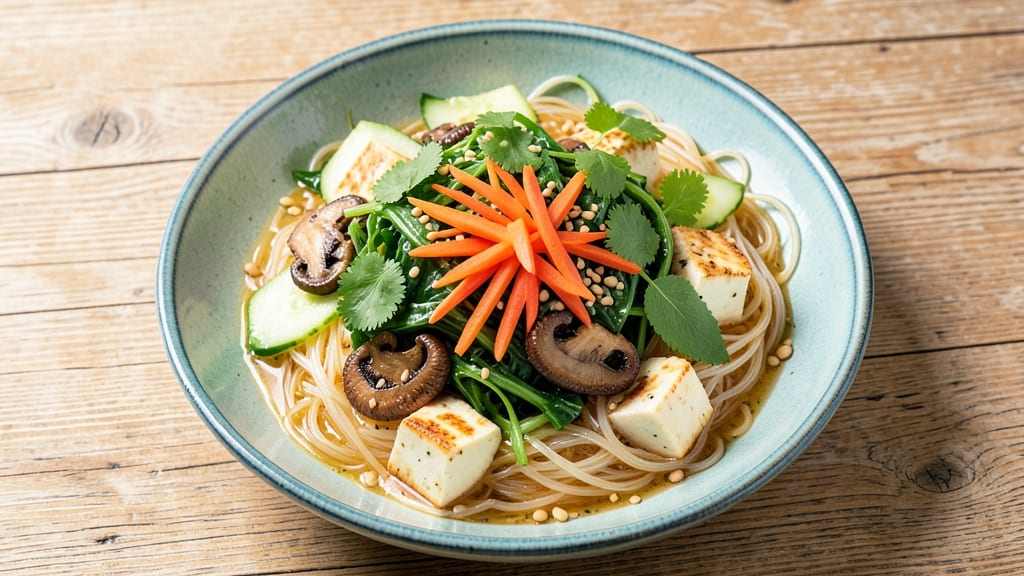
This Asian glass noodle salad recipe delivers the perfect balance of silky texture and bold flavors in every bite.
The secret lies in properly soaking the delicate rice vermicelli until they achieve that signature slippery consistency—no more chewy or mushy noodles. 💛 What makes this dish truly special is its versatility: whether you're vegetarian, vegan, or pescatarian, you can customize the protein to suit your preferences while keeping the vibrant, zesty peanut dressing at its heart.
The foundation of this salad begins with the noodles, which transform from dry strands into luscious, translucent ribbons when soaked in warm water.
Shredded cabbage, crisp carrots, and cool cucumber add freshness, while the dressing—a tangy blend of soy sauce, lime juice, garlic, and chili—ties everything together with its rich, nutty depth.
The optional addition of tofu, mushrooms, or shrimp ensures the salad is hearty enough to stand alone or pair beautifully with grilled meats.
What you'll end up with is a dish that's as visually appealing as it is delicious—bright, colorful, and packed with layers of flavor. The peanut dressing coats the noodles and vegetables perfectly, creating a harmonious blend of sweet, spicy, and savory notes.
Garnishes like toasted sesame seeds, fresh herbs, or crushed peanuts add crunch and texture, elevating the salad to restaurant-quality at home.
This recipe is ideal for meal prep, picnic lunches, or a light yet satisfying dinner. The best part? It comes together in just 20 minutes, making it perfect for busy weeknights or last-minute gatherings. Let's get started on creating this refreshing, adaptable dish that's sure to become a favorite.
Ingredients for asian glass noodle salad
Silky rice noodles meet vibrant veggies and a nutty, tangy dressing—this salad is restaurant-quality at home.
| Ingredient | Amount | Notes |
|---|---|---|
| Rice Vermicelli Noodles 🍜 | 8 oz | Dry, uncooked, rice-based |
| Green Cabbage 🥬 | 3 cups | Shredded, thinly sliced |
| Carrots 🥕 | 2 medium | Shredded or julienned |
| English Cucumber 🥒 | 1 whole | Seedless, thinly sliced |
| Extra-Firm Tofu 🍲 | 8 oz | Pressed, cubed |
| Shiitake Mushrooms 🍄 | 4 whole | Stemmed, sliced |
| Red Bell Pepper 🌶️ | 1 whole | Thinly sliced |
| Fresh Lime 🍋 | 2 whole | Juiced, seeds removed |
| Garlic Cloves 🧄 | 4 cloves | Minced |
| Red Chili Flakes 🔥 | 1 tbsp | Adjust to taste |
| Peanut Butter 🥜 | ½ cup | Natural, unsweetened |
| Soy Sauce 🥢 | ¼ cup | Low-sodium preferred |
| Sesame Oil 🫒 | 1 tbsp | Toasted, for aroma |
| Toasted Sesame Seeds 🌱 | 2 tbsp | For garnish |
| Fresh Cilantro 🌿 | ¼ cup | Chopped, stems removed |
The rice vermicelli is the star—look for thin, translucent strands at Asian markets or the world foods aisle. Thai Kitchen or Three Ladies brands are my go-to for consistent quality. If your noodles are too thick, soak them longer (up to 20 minutes). The cabbage and carrots should be crisp and fresh—store-bought pre-shredded works, but the texture suffers. For mushrooms, shiitake or oyster add the most umami depth, but cremini will do in a pinch. Tofu? Extra-firm is non-negotiable—press it for 20 minutes to remove excess water, or grab pre-pressed from the grocery store.
No peanut butter? Almond butter or cashew butter works in a bind—just add a splash of water to thin it. Short on soy sauce? Tamari or coconut aminos bridge the flavor gap. The lime juice needs to be freshly squeezed—bottled juice lacks the bright punch. For heat, Sichuan peppercorns add a unique tingling sensation if you're feeling adventurous. The red bell pepper can be swapped for jicama if you want extra crunch, or green beans for a different texture. Pro tip: Toast your sesame seeds in a dry pan for 30 seconds—they'll smell amazing and add depth to every bite.
Noodles keep for 3 days in the fridge once soaked—store them in a sealed container with a damp paper towel to prevent drying. The dressing stays vibrant for 5 days in the fridge, but the peanut butter may separate. Give it a quick stir before using. For meal prep, assemble everything day-of to keep the veggies crisp. This salad reheats beautifully—30 seconds in the microwave with a splash of water revives the noodles perfectly. Garnish just before serving to keep those toasted sesame seeds and fresh herbs looking their best.
Why You'll Love This Recipe
- No-Soaking Trick: I’ll admit, I used to dread the noodles bloating like a soggy mess—but these rice vermicelli? Just a quick rinse and they’re ready. No waiting, no fuss, and they hold up perfectly even after sitting in the fridge.
- Crispy Tofu Magic: That pan-fried tofu with a sprinkle of soy sauce and sesame oil? Chef’s kiss. It’s the star—crunchy outside, tender inside, and it soaks up the dressing like a dream. (Between us, my picky eaters actually finish their plates now.)
- Packable Lunch Savior: Honestly, this is my go-to for work lunches. Toss it in a container, and it stays fresh for days—no sad wilted greens here. The tofu and carrots hold their shape, and the dressing keeps everything vibrant. Just add a spoonful of peanut sauce when you’re ready to eat.
- Budget Meal Upgrade: Green cabbage and carrots last forever, and a block of tofu stretches across three meals. I’ll be real: it’s not fancy, but it’s solid for under $10. Plus, swap in whatever veggies you have—this salad doesn’t care.
Step-by-step instructions for Asian glass noodle salad
Here's how to create silky glass noodles and a zesty peanut dressing that'll make this salad unforgettable.
🍳 Step 1: Cook the Rice Vermicelli Noodles to Perfection
Bring a large pot of water to a rolling boil. Add the 8 oz rice vermicelli noodles and cook for exactly 4-5 minutes—they'll look translucent and springy when done. The key is to remove them immediately at the first sign of al dente texture, as they'll continue cooking when drained.
Drain the noodles in a colander and rinse under cold water for 30 seconds to stop the cooking process. This prevents them from becoming mushy. Toss the noodles with 1 tablespoon sesame oil to prevent sticking and add a subtle aromatic base. Let them cool completely before assembling the salad—warm noodles will turn soggy when mixed with other ingredients.
👨🍳 Step 2: Prepare the Crunchy Vegetable Medley
Shred the 3 cups green cabbage into thin strips using a mandoline or sharp knife for even slices. Julienne the 2 medium carrots into matchstick-thin pieces. Thinly slice the 1 whole English cucumber lengthwise, then cut into bite-sized rectangles. For the 1 whole red bell pepper, slice into thin strips—this adds vibrant color and a satisfying crunch.
Slice the 4 whole shiitake mushrooms in half lengthwise, then thinly slice each half. Press the 8 oz extra-firm tofu between paper towels for 15 minutes to remove excess moisture, then cube into ½-inch pieces. Heat a nonstick skillet over medium heat and pan-fry the tofu until golden brown on all sides—this adds texture and prevents a bland bite. Let all vegetables cool completely before combining.
🥘 Step 3: Create the Zesty Peanut Dressing
In a small bowl, whisk together the 0.5 cup peanut butter, 0.25 cup soy sauce, and juice from 2 whole fresh lime until smooth. Add 1 tablespoon red chili flakes and 1 tablespoon sesame oil, then thin with 2 tablespoons warm water until pourable. The dressing should coat the back of a spoon with a velvety consistency—this ensures perfect cling to the noodles.
For extra depth, add 1 teaspoon minced garlic and 1 teaspoon grated ginger (if available) to the dressing. Taste and adjust seasoning—you might need a pinch more soy sauce for saltiness or lime juice for brightness. This dressing is the soul of the salad, balancing rich peanut with bright, tangy notes.
🥘 Step 4: Assemble and Toss the Salad
In a large bowl, gently combine the cooled rice vermicelli noodles with the prepared vegetables and tofu. Pour the peanut dressing over the top and toss everything together with clean hands or tongs. Work quickly but carefully—you want even distribution without breaking the noodles. The salad should look vibrant with contrasting colors of green, orange, red, and brown.
Let the salad sit for 5 minutes before serving. This allows the dressing to fully coat the noodles and vegetables, enhancing their flavors. The texture should be a perfect balance: slippery noodles, crisp vegetables, and tender tofu in every bite.
🍽️ Step 5: Garnish and Serve Immediately
Transfer the salad to serving bowls and sprinkle with 2 tablespoons toasted sesame seeds and 0.25 cup chopped fresh cilantro. The sesame seeds add nutty crunch, while the cilantro brings freshness. Serve immediately while the noodles are still springy and the dressing is at its peak flavor.
This salad keeps well in the fridge for 2-3 hours, but the texture starts to soften after that. For the best experience, assemble and serve right away. Pair with grilled meats or enjoy as a standalone vegetarian dish—either way, it's a showstopper.
Pro Tips For Making Asian Glass Noodle Salad
- SOAK NOODLES IN COLD WATER: I learned this the hard way—hot water turns glass noodles mushy. Use room-temperature or cold water, and let them sit for 20-30 minutes until they’re pliable but still hold shape. Drain and rinse with cold water again to stop cooking; they’ll finish in the salad.
- SHRED TOFU DRY: Extra-firm tofu releases water when cooked, turning your salad soggy. Press it for 15 minutes, then pat it thoroughly with paper towels before slicing or cubing. If you’re short on time, microwave it for 1 minute after pressing—it’ll crisp up faster.
- SAVE CABBAGE FROM BITTERNESS: Green cabbage gets tough and bitter if you shred it too early. Keep it whole until the last 5 minutes of prep, then slice thinly with a sharp knife. For extra crunch, massage the shreds with a pinch of salt for 2 minutes before tossing—it softens without wilting.
- TOSS NOODLES LAST: Add noodles to the salad bowl only when everything else is ready. They’ll absorb dressing instantly, turning limp if left sitting. Keep them separate until the final mix, then fold them in gently with tongs to avoid breaking. (Yes, it’s messy, but it works.)
Troubleshooting great asian glass noodle salad
Noodles Too Chewy
If your rice vermicelli turns out chewy instead of silky, you likely didn’t soak them long enough or didn’t rinse properly. Soak the noodles in warm (not boiling) water for 10-15 minutes until fully translucent, then rinse under cold water for 30 seconds to stop cooking.
For extra tenderness, toss the drained noodles with 1 tablespoon sesame oil—this prevents sticking and maintains that signature slippery texture. ⏱️
Dressing Too Thick
A thick peanut dressing won’t coat your salad evenly. Thin it with 1-2 tablespoons warm water at a time until it reaches a pourable consistency—it should coat the back of a spoon smoothly.
If it still feels too thick, add a splash of lime juice or a pinch of soy sauce to balance the texture. Stir well before tossing to distribute evenly. 🥜
Vegetables Too Soft
Overly soft veggies ruin the salad’s crunch. Shred cabbage and julienne carrots just before assembling to preserve freshness. Store prepped veggies in an airtight container with a damp paper towel to maintain crispness.
For mushrooms, slice them thinly and cook only until tender—overcooking turns them mushy. Keep everything chilled until ready to toss. 🥬
Tofu Too Bland
Plain tofu absorbs flavors poorly. Press it for 15-20 minutes to remove excess water, then pan-fry until golden brown on all sides. For extra flavor, marinate the cubed tofu in 1 tablespoon soy sauce and ½ teaspoon garlic powder for 10 minutes before cooking.
This adds depth and prevents a bland bite. 🍲
Salad Too Dry
If your salad lacks moisture, the dressing might have separated or the noodles absorbed too much. Whisk the dressing again before tossing to re-emulsify. For extra richness, drizzle 1 teaspoon sesame oil over the top just before serving.
If the noodles seem dry, add 1-2 tablespoons warm water to the dressing and toss again. ✨
Garnishes Not Adhering
Toasted sesame seeds and cilantro often slide off if the dressing isn’t sticky enough. Press the garnishes gently into the salad after tossing, or lightly spray with a water mist to help them stick.
For extra hold, sprinkle them on immediately after plating while the dressing is still wet. This keeps everything in place for a polished look. 🌿
Nutrition facts
Frequently asked questions
Can I use regular spaghetti instead of rice vermicelli?
Not recommended! Rice vermicelli has a delicate, slippery texture that's essential for this salad. Regular spaghetti is too thick and chewy. If you must substitute, look for rice stick noodles or bean thread noodles—both work better for Asian-style dishes. Soak them properly to achieve that signature glass noodle consistency.
How do I make this salad vegan?
Easy! Skip the fish sauce and use coconut aminos instead of soy sauce. For extra protein, add marinated tofu or crispy baked tempeh. The peanut dressing stays vegan as-is—just ensure your peanut butter is unsweetened and check for hidden honey in other ingredients. All the other components (veggies, noodles) are naturally plant-based.
Can I prepare this ahead of time?
Yes, but with a few key adjustments. Soak and rinse the noodles 1 day ahead and store them in an airtight container with a damp paper towel. Prep the veggies and store separately. Assemble the salad just before serving—this keeps the crunch intact. The dressing can be made 3 days ahead and stored in the fridge. Toss everything together right before eating for best texture.
What if I don't like peanuts?
No problem! Swap the peanut butter for almond butter or cashew butter—both work beautifully. For a nut-free option, use a dressing made with soy sauce, lime juice, sesame oil, and a touch of honey or maple syrup. The key is maintaining that balance of tangy, savory, and slightly sweet flavors. Adjust the spices to match your preference for heat or depth.
How spicy should the dressing be?
Start with 1 tablespoon chili flakes for mild heat, then adjust to taste. For extra kick, add ½ teaspoon cayenne pepper or a few drops of hot sauce. If you prefer no heat, simply omit the chili flakes entirely. The lime juice and garlic already provide plenty of bright, zesty flavor to balance the richness of the peanut butter.