
Salads
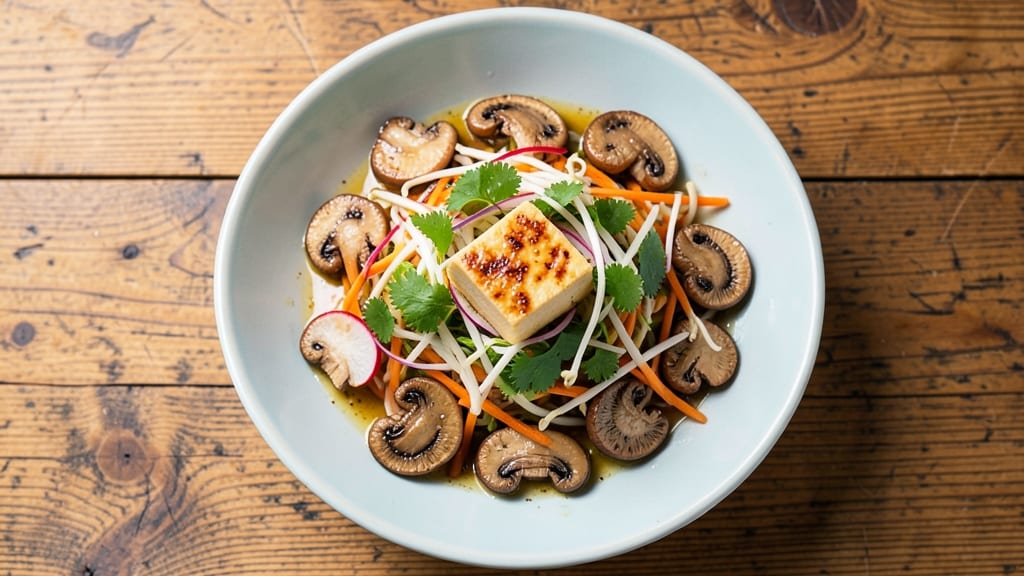
This Asian mushroom salad recipe transforms earthy mushrooms into a vibrant, umami-rich dish that balances crisp texture and bold flavors. The secret lies in the sesame-ginger dressing—a modern twist on classic Asian seasoning—that elevates simple ingredients into something restaurant-worthy. I developed this recipe after realizing how versatile mushrooms could be when paired with the right technique and dressing.
The key to success is preparation: shiitake, oyster, and enoki mushrooms are quickly seared for depth, while optional tofu or tempeh adds protein.
A quick-pickling step for toppings like radishes or carrots ensures crunch, and the dressing—made with toasted sesame oil, fresh ginger, and a touch of soy—binds everything together with a perfect balance of sweet, savory, and tangy.
What you’ll end up with is a salad that’s visually stunning (deep umami tones against bright greens) and packed with texture—crisp, tender, and slightly chewy. The dressing clings to the mushrooms, creating pockets of flavor in every bite.
It’s a dish that feels special enough for dinner parties but simple enough for a weeknight.
Pair it with a cup of jasmine tea or a light lychee martini to complement the flavors. This recipe is designed to be adaptable—swap in your favorite mushrooms or add nuts for extra crunch. Let’s get started!
Ingredients for asian mushroom salad
Earthy mushrooms, crisp toppings, and a restaurant-worthy sesame-ginger dressing come together for this vibrant vegetarian dish.
| Ingredient | Amount | Notes |
|---|---|---|
| Fresh Shiitake Mushrooms 🍄 | 8 whole | Stems removed, caps sliced |
| Oyster Mushrooms 🍄 | 8 oz | Fresh, trimmed and halved |
| Enoki Mushrooms 🍄 | 1 bunch | Stalks trimmed to 1 inch |
| Extra-Firm Tofu 🍲 | ½ lb | Pressed and cubed |
| Red Radishes 🥕 | 2 small | Thinly sliced for crunch |
| Carrots 🥕 | 2 medium | Julienned for texture |
| Baby Spinach 🌿 | 4 cups | Fresh, loosely packed |
| Toasted Sesame Oil 🫒 | 2 tbsp | For dressing and finishing |
| Fresh Ginger 🧄 | 1 tbsp | Finely grated, organic preferred |
| Low-Sodium Soy Sauce 🥫 | 2 tbsp | For umami depth |
| Rice Vinegar 🍶 | 1 ½ tbsp | Seasoned preferred |
| Sesame Seeds 🌾 | 1 tbsp | Toasted for garnish |
| Honey 🍯 | 1 tsp | For subtle sweetness |
| Vegetable Oil 🫒 | 1 tbsp | For searing mushrooms |
| Diamond Crystal Kosher Salt 🧂 | ½ tsp | For seasoning |
The mushrooms are the heart of this salad—shiitake and oyster deliver deep umami, while enoki add delicate texture. Whole Foods or Asian markets carry the best selection, especially for enoki which can be pricey but worth it. Look for mushrooms with vibrant caps and minimal bruising. If you can't find enoki, baby bella mushrooms work as a substitute. For the tofu, Kite Hill or Nasoya brands are excellent choices if you prefer organic options, but any extra-firm tofu will work. Pressing the tofu thoroughly is critical—wrap it in a towel and place a heavy pan on top for 15 minutes.
No sesame oil? Avocado oil plus a pinch of toasted sesame seeds mimics the flavor profile. Fresh ginger is ideal, but if you're using dried, reduce to one-third the amount and toast it lightly in a dry pan first. The radishes and carrots can be swapped for daikon radish or jicama if you prefer a milder crunch. For a quicker prep, pre-sliced coleslaw mix works in a pinch, though it lacks the freshness of julienned carrots. The honey adds subtle sweetness—agave nectar is a great vegan alternative if needed. Balance is key in the dressing: start with the measurements, then adjust to taste.
Mushrooms lose moisture quickly, so store them in a paper bag in the fridge for up to 5 days. The dressing keeps for 1 week in an airtight container, but the mushrooms are best used within 2 days of slicing. For meal prep, assemble the salad just before serving to maintain crispness. The tofu can be marinated in soy sauce for 30 minutes ahead of time to boost flavor. Garnishes like sesame seeds and fresh herbs should be added right before eating to preserve their texture and aroma.
Why You'll Love This Recipe
- No-Cook Crunch: I swear by this—just slice the shiitake and oyster mushrooms thin, toss them with the crisp enoki and radishes, and let the dressing do the work. No stove, no fuss, just that satisfying snap with every bite.
- Umami Explosion: That combo of shiitake’s deep earthiness, oyster mushrooms’ briny sweetness, and enoki’s delicate crunch? It’s like a flavor party in your mouth. The tofu adds a chewy contrast that keeps me coming back.
- Lunchbox Legend: Between us, this is my go-to for work lunches—holds up for days in the fridge, and the radishes stay crisp. Pack it cold, and it’s still fresh by afternoon. (Yes, even on a Tuesday.)
- Budget Powerhouse: Fresh mushrooms and radishes stretch farther than you’d think, and tofu’s the ultimate cheap protein. I make a big batch, and it feeds my family for days without breaking the bank. Zero waste, all win.
Step-by-step instructions for umami-packed Asian mushroom salad
This method delivers a perfect balance of textures and flavors—crispy mushrooms, tender tofu, and a vibrant sesame-ginger dressing.
Prepare and Sear the Mushrooms
Heat the 1 tablespoon vegetable oil in a large skillet over medium-high heat until shimmering. Add the 8 oz oyster mushrooms, halved, and sear for 4-5 minutes until golden brown and tender. Remove and set aside on a plate. Repeat with the 8 whole fresh shiitake mushrooms, sliced, and the 1 bunch enoki mushrooms, trimmed to 1-inch stalks, cooking each batch separately to avoid overcrowding.
This high-heat searing develops deep umami flavors in the mushrooms while maintaining their texture. If the mushrooms release too much liquid, reduce heat slightly to prevent steaming. The shiitake should develop a rich, caramelized edge while the enoki mushrooms will crisp slightly at the edges.
Press and Cube the Tofu
Wrap the 0.5 lb extra-firm tofu in a clean kitchen towel and place a heavy object (like a cast-iron skillet) on top for 15 minutes to press out excess moisture. Cut the tofu into ½-inch cubes and transfer to a bowl. Add 0.5 teaspoon diamond crystal kosher salt and toss gently to coat evenly.
Pressing the tofu ensures it absorbs the dressing properly and doesn't make the salad soggy. The salt enhances the tofu's natural flavor and helps it hold its shape during cooking. Let the seasoned tofu cubes sit while you prepare the remaining ingredients.
Create the Sesame-Ginger Dressing
In a small bowl, whisk together the 2 tablespoons low-sodium soy sauce, 1.5 tablespoons rice vinegar, 1 tablespoon finely grated fresh ginger, 1 teaspoon honey, and 2 tablespoons toasted sesame oil. Taste and adjust seasoning—add a pinch more salt if needed. The dressing should be smooth with a balance of sweet, tangy, and umami notes.
This dressing is the heart of the salad, tying all the flavors together. The sesame oil adds richness while the ginger provides a bright, aromatic kick. Whisking thoroughly ensures the honey dissolves completely, creating a cohesive sauce that clings beautifully to the salad components.
Assemble the Salad Components
In a large mixing bowl, combine the 4 cups baby spinach, 2 small thinly sliced red radishes, and 2 medium julienned carrots. Add the seared mushrooms and tofu cubes, tossing gently to distribute everything evenly. Drizzle half of the dressing over the salad and toss again until everything is lightly coated.
The spinach provides a fresh base while the radishes and carrots add crisp texture. The mushrooms and tofu should be evenly distributed throughout. Tossing gently prevents bruising the delicate spinach leaves while ensuring each bite contains all the components.
Finish and Serve Immediately
Divide the salad among 4 serving plates. Drizzle with the remaining dressing and sprinkle generously with 1 tablespoon toasted sesame seeds. Serve immediately while the mushrooms are still warm and the tofu maintains its texture.
This dish shines when served fresh, with the contrast between warm seared mushrooms and cool spinach. The sesame seeds add a final nutty crunch that elevates the dish. For best results, serve within 15 minutes of assembly to preserve the perfect texture balance.
Pro Tips For Making Asian Mushroom Salad
- Trim Enoki Properly: Those little Enoki mushrooms have a tough base that’s basically inedible—don’t just snap them off. Use a sharp knife to cut the stems at the first visible split (about 1/3 from the bottom) for cleaner bites and less waste. I used to toss the whole stalk; now I save 20% of the mushroom.
- Pan-Fry Tofu Twice: Extra-firm tofu needs two quick sears—first in a dry pan to build crust, then with a splash of water to steam it through. This keeps it from falling apart when tossed with the salad. I learned this the hard way after my tofu turned into mush in the dressing.
- Radish Slice Thin: Red radishes are tough when thick—slice them paper-thin (about 1/16-inch) for a satisfying crunch. A mandoline makes this easy, but a sharp knife works too if you’re careful. Thick slices? You’ll regret it.
- Sauté Mushrooms Separately: Shiitake and oyster mushrooms behave differently—cook them in batches. Shiitake need a hot, dry pan for 3-4 minutes to develop depth, while oyster mushrooms release water fast and should go in later. Mixing them ruins both textures.
Essential equipment for great asian mushroom salad
High-Heat Skillet
A 10-inch cast iron skillet or carbon steel pan is my go-to for searing mushrooms—it retains heat beautifully and develops those gorgeous caramelized edges. The Lodge 10-inch cast iron is my top recommendation because it distributes heat evenly and lasts forever.
If you don’t own one, a stainless steel skillet like All-Clad works too, though you’ll need to watch the heat more closely. 🔥
Knife Set Essentials
For this salad, you’ll need three knives: a sharp chef’s knife (like Wüsthof or Victorinox) for chopping mushrooms and tofu, a mandoline (or sharp vegetable knife) for julienning carrots, and a pair of kitchen shears for trimming enoki stalks.
A Japanese santoku knife is perfect for slicing mushrooms cleanly—its shorter blade gives you better control. I keep my knives sharp with a Whetstone or Sharpie knife sharpener.
Mixing Bowls
Use a large mixing bowl (at least 8-inch diameter) with smooth sides to toss the salad without bruising the spinach. I prefer stainless steel for durability, but glass bowls work too.
For the dressing, a small ramikin bowl or whisking bowl (like OXO Good Grips) makes whisking easier. Avoid plastic—it can absorb flavors and affect the dressing’s consistency.
Microplane for Ginger
A Microplane is a game-changer for fresh ginger—it creates ultra-fine zest that dissolves seamlessly into the dressing. I love the OXO Good Grips Microplane because it’s easy to grip and cleans up quickly.
If you don’t have one, a fine grater works, but you’ll end up with larger pieces that may not blend as smoothly. 🧄
Tongs for Tossing
Stainless steel tongs (like OXO Good Grips) are ideal for gently tossing the salad without crushing the mushrooms or spinach. Their long handles keep your fingers safe from the hot skillet, and their serrated edges grip ingredients better than wooden spoons. Avoid plastic tongs—they can melt if they touch hot pans.
Optional: Mandoline
For perfectly uniform julienne carrots, a mandoline slicer (like Benriner) saves time and ensures consistency. If you’re new to mandolines, start with the thickest setting (about 3mm) and use the hand guard for safety.
No mandoline? A sharp chef’s knife and steady hand work—just take your time for even slices. 🥕
Nutrition facts
Frequently asked questions
Can I make this salad with dried mushrooms instead of fresh?
Rehydrate 4 oz dried shiitake or oyster mushrooms in warm water for 20 minutes, then drain and pat dry. Use them in place of fresh mushrooms—they'll add an even deeper umami flavor. For texture, sear them for 3-4 minutes after rehydrating to crisp the edges.
How do I adjust the dressing for a peanut or spicy version?
For peanut: Replace 1 tbsp sesame oil with 1 tbsp creamy peanut butter and add ½ tsp sriracha to the dressing. For spicy, add ½ tsp chili crisp or 1 tsp gochujang to the soy-vinegar base. Both versions work beautifully with the same salad base!
What's the best way to store leftovers?
Store the dressing separately in an airtight container for up to 5 days. Keep the salad components (without dressing) in a sealed container for 2 days in the fridge. Re-toss with fresh dressing before serving. For best texture, avoid storing the tofu—add it fresh when assembling.
Can I use this as a meal prep salad?
Yes, but with modifications! Prep the mushrooms and tofu separately (they keep 3 days in the fridge), and store the greens and raw veggies in another container. Assemble only when ready to eat. For extra protein, add cooked quinoa or chickpeas that can be stored separately.
Why does my tofu turn out soggy?
Soggy tofu usually means it wasn't pressed enough or absorbed too much dressing. Always press for 15 minutes with a heavy weight, and pat dry after cubing. Use only half the dressing when tossing—add more at serving. For extra insurance, pan-sear the tofu cubes for 2 minutes before adding to the salad.