
Sauces & Condiments
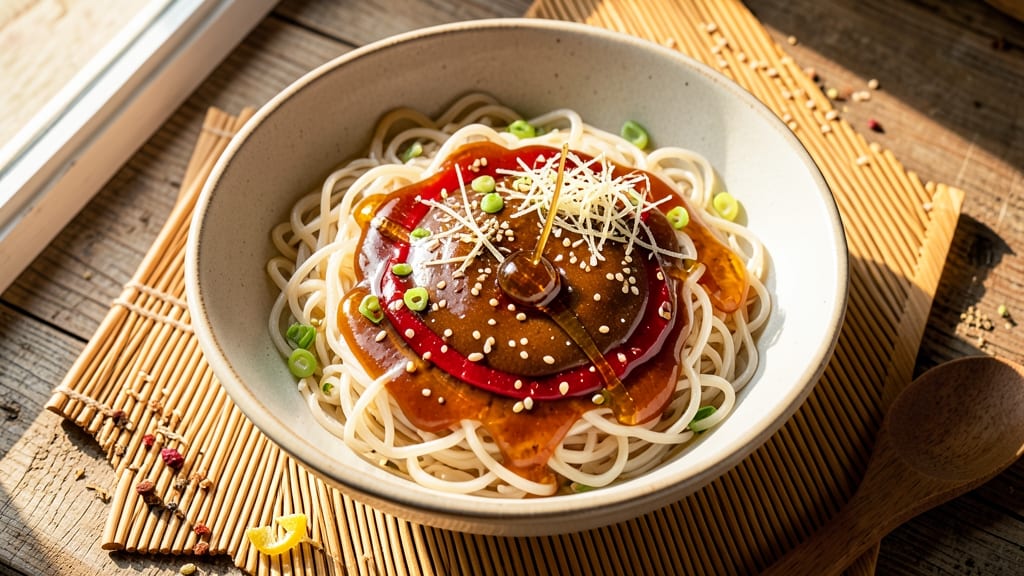
This Asian noodle salad dressing recipe delivers the perfect harmony of sweet, spicy, and tangy flavors that elevate any noodle dish from ordinary to extraordinary. The secret lies in balancing traditional ingredients like soy sauce and sesame oil with fresh ginger, garlic, and a touch of chili for depth.
I developed this dressing to transform simple noodle salads into restaurant-quality meals with minimal effort.
The foundation of this dressing is a simple yet powerful combination of soy sauce, rice vinegar, and sesame oil, which create the umami backbone. Freshly grated ginger and minced garlic add aromatic warmth, while a splash of honey or maple syrup balances the acidity.
The optional chili paste or sriracha introduces just the right amount of heat to make every bite exciting. What makes this dressing truly special is its versatility—it works equally well with cold soba noodles, warm ramen, or even as a marinade for proteins.
What you’ll end up with is a glossy, aromatic dressing that clings beautifully to noodles and vegetables, enhancing their natural flavors without overpowering them. The dressing’s bright color and enticing aroma make it impossible to resist, while its balanced sweetness and tanginess keep every bite interesting.
This is the kind of dressing that turns a simple bowl of noodles into a memorable meal.
The best part? This dressing comes together in just 5 minutes with ingredients you likely already have in your pantry. It’s perfect for meal prep, travel-friendly containers, or last-minute dinner solutions.
Whether you’re serving it over chilled noodles, fresh herbs, or grilled vegetables, this dressing will elevate your dish to new heights.
Ingredients for asian noodle salad dressing
These bold flavors transform simple noodles into a restaurant-worthy dish—just mix and drizzle.
| Ingredient | Amount | Notes |
|---|---|---|
| Soy Sauce 🍶 | ½ cup | High-quality, preferably Japanese |
| Rice Vinegar 🍶 | ¼ cup | Unseasoned for tangy brightness |
| Sesame Oil 🫒 | 2 tbsp | Toasted for nutty aroma |
| Fresh Ginger 🌿 | 1 tbsp | Finely grated, aromatic |
| Garlic Cloves 🧄 | 3 cloves | Minced for bold flavor |
| Honey or Maple Syrup 🍯 | 2 tbsp | Balances acidity perfectly |
| Chili Paste or Sriracha 🌶️ | 1 tbsp | Optional for heat kick |
| Toasted Sesame Seeds 🌰 | 1 tbsp | For garnish and crunch |
| Olive Oil 🫒 | 1 tbsp | For glossy finish |
| Salt 🧂 | ½ tsp | Adjust to taste |
The soy sauce and rice vinegar are your flavor anchors—Kikkoman soy sauce and Mushroom Brand rice vinegar are my go-tos, but any quality brand works. Fresh ginger and garlic? Don’t skip these—they’re what turns this from basic to extraordinary. I always grab extra ginger at Asian markets because it’s fresher and more aromatic. Toast your sesame seeds in a dry pan for 30 seconds—their nutty aroma is worth the effort. And if you’re using honey, raw wildflower adds subtle floral notes that elevate everything.
No sesame oil? Avocado oil or neutral oil works in a pinch, but you’ll miss that toasty depth. Short on ginger? Dried ginger powder at half the amount gets you close, though it’s not the same. The chili paste is totally optional—skip it if you’re sensitive to heat, or add a pinch of red pepper flakes for a milder kick. For extra richness, stir in 1 tsp of miso paste (white or red) at the end. And if you’re making this ahead, store the dressing without the sesame seeds—toss them on just before serving to keep that crispy crunch.
This dressing keeps for up to 2 weeks in the fridge, sealed tightly in a jar. The flavors actually deepen over time, so it’s perfect for meal prep. For travel, transfer it to a small leak-proof container—it’s great for drizzling on takeout noodles or even as a quick marinade for proteins. If you make extra, freeze it in ice cube trays for single-use portions. Just remember to shake it well before using, especially if you’ve stored it for more than a few days.
Why You'll Love This Recipe
- No Chopping Needed: I swear by this one—just smash a few garlic cloves and grate some ginger, then stir. That’s it. No dicing, no peeling fuss, and the flavors still explode when you toss it with noodles.
- Umami Bomb: The combo of soy sauce and sesame oil? Pure magic. It’s salty, nutty, and just a little funky—like a hug for your taste buds. Add rice vinegar, and suddenly your salad tastes like it came from a dim sum cart.
- Meal Prep MVP: This dressing lasts in the fridge for a week, and it’s perfect for batch cooking. Drizzle it on cold noodles, toss with veggies, or even use it as a marinade. Honestly, I make a big batch every Sunday so I’m never stuck.
- Pocketbook Hero: With just five ingredients, this is my go-to when I’m broke but still want flavor. A little sesame oil goes a long way, and the rest? Pantry staples. No fancy ingredients, just big-time taste for pennies.
Step-by-step instructions for Asian noodle salad dressing
This umami-packed dressing comes together in minutes with bold flavors you’ll crave.
Grate and Mince Aromatics
Use a fine grater to zest the 1 tablespoon fresh ginger—this releases more aromatic oils than mincing. Then, finely mince the 3 cloves garlic until you have a paste-like consistency. The ginger should be almost invisible, while the garlic should be smooth enough to blend seamlessly into the dressing.
I like to press the garlic with the flat side of my knife first to break it down before mincing. This prevents large chunks that can make the dressing grainy. Set these aside in a small bowl—they’ll be the flavor foundation of your dressing.
Whisk Together Wet Ingredients
In a medium bowl, combine the 0.5 cup soy sauce, 0.25 cup rice vinegar, 2 tablespoons honey or maple syrup, and 1 tablespoon chili paste or sriracha. Start with a whisk to break up any clumps in the soy sauce and honey, then gradually incorporate the grated ginger and minced garlic.
This is where the magic happens—the soy sauce brings umami depth, the vinegar adds tangy brightness, and the honey balances the acidity. The chili paste or sriracha adds that signature heat. Stir until everything is fully integrated and smooth. If you used maple syrup, the dressing will have a slightly deeper, caramel-like flavor.
Finish with Oils and Season
Slowly drizzle in the 2 tablespoons sesame oil and 1 tablespoon olive oil while whisking continuously. The sesame oil adds nutty richness, while the olive oil provides a smooth, glossy finish. Add the 0.5 teaspoon salt and adjust to taste—this dressing should be bold but not overwhelmingly salty.
Taste as you go. If it needs more brightness, add a splash of extra rice vinegar. If it needs more depth, add a touch more soy sauce. The dressing should coat the back of a spoon with a velvety texture and a perfect balance of sweet, tangy, and umami flavors.
Rest and Garnish
Let the dressing sit for 5-10 minutes at room temperature. This allows the flavors to meld and the oils to fully emulsify, creating a silky consistency. Before using, give it one final whisk to ensure everything is well combined.
Just before serving, sprinkle with 1 tablespoon toasted sesame seeds for crunch and visual appeal. These seeds add a final nutty layer that contrasts beautifully with the smooth dressing. Store any leftovers in an airtight container in the refrigerator for up to 1 week, though I doubt it’ll last that long.
Pro Tips For Making Asian Noodle Salad Dressing
- Grate Ginger Fine: Use the smallest holes on your grater—no peeling needed—and rub the ginger vigorously for 30 seconds. I used to chop it, but the texture is gritty and uneven. Freshly grated ginger releases its oils instantly, so add it last unless you’re blending everything.
- Toast Garlic First: Slice garlic cloves in half lengthwise, then dry them on a paper towel before hitting them with a hot pan for 30 seconds until golden. This removes bitterness and deepens the flavor—way better than raw garlic. Skip this, and your dressing tastes flat.
- Whisk Sesame Oil Last: Add sesame oil after everything else is mixed, then whisk gently—it’s potent stuff. I learned this after once drowning a whole batch in it and ending up with a dressing that tasted like a Chinese takeout bottle. A little goes a long way.
- Balance Vinegar Slowly: Start with half the rice vinegar called for, taste, then add more. Vinegar’s acidity can overpower the soy sauce if you’re not careful. I’ve ruined dressings this way—now I adjust in ½-teaspoon increments.
Common mistakes when making great asian noodle salad dressing
Over-Salting the Base
The soy sauce is already packed with salt, so adding extra can make your dressing taste flat or even bitter. I’ve ruined a batch by reaching for the salt shaker too quickly—trust the 0.5 teaspoon called for in the recipe.
If it needs more salt, start with just ¼ teaspoon and taste again before adding more. The dressing should be bold, not salty.
Skipping the Resting Time
Rushing to use the dressing immediately after mixing means missing out on its full potential. The 5-10 minute rest lets the flavors meld and the oils emulsify, creating that silky texture.
I once drizzled it on noodles right away and was disappointed by how thin and watery it tasted. Patience pays off—let it sit!
Using Low-Quality Ingredients
Cheap soy sauce or vinegar can make your dressing taste harsh or off. I always use Japanese soy sauce like Kikkoman and Mushroom Brand rice vinegar for brightness. The same goes for sesame oil—expensive, toasted sesame oil makes a world of difference compared to the cheaper, flavorless versions.
Don’t skimp; these ingredients are the soul of your dressing.
Adding Too Much Chili
Chili paste or sriracha can easily overpower the delicate balance of flavors. Start with just 1 tablespoon and taste before adding more. If you love heat, you can always add a pinch of red pepper flakes later.
I’ve had to dilute a batch with extra rice vinegar because I went overboard—don’t make that mistake!
Not Adjusting for Humidity
If your kitchen is humid, the dressing may separate or thin out over time. To prevent this, whisk in the oils slowly and add a ½ teaspoon of cornstarch mixed with 1 teaspoon water to thicken it slightly.
I learned this trick from a chef friend—it keeps the dressing glossy and stable, even in sticky summer weather.
Ignoring the Sesame Seeds
Adding sesame seeds at the end isn’t just for garnish—they bring much-needed crunch and nutty depth. If you skip them, your dish loses texture and visual appeal. Toast them in a dry pan for 30 seconds until golden, then sprinkle right before serving. Trust me, it makes all the difference!
Nutrition facts
Frequently asked questions
Can I make this dressing without sesame oil?
Yes, but you’ll lose some of that nutty depth. Use 1 tablespoon avocado oil or neutral oil instead, then boost flavor by adding ½ teaspoon toasted sesame paste (available at Asian markets) or a pinch of ground sesame seeds directly to the dressing. The texture will be slightly different, but it’ll still taste amazing.
How long will this dressing keep in the fridge?
This dressing stays fresh for up to 2 weeks when stored in an airtight container in the fridge. The flavors actually improve over time, so it’s perfect for meal prep. For longer storage, freeze it in ice cube trays—just thaw and shake before using. Without sesame seeds, it’ll last even longer.
What noodles work best with this dressing?
This dressing shines with cold soba noodles, rice noodles, or ramen—anything that holds up to the bold flavors. For extra texture, try udon or egg noodles that have been briefly blanched and chilled. The dressing also works beautifully on zucchini noodles or shirataki noodles for a low-carb option.
Can I make this spicier or sweeter?
For more heat, add ½ teaspoon chili flakes or extra chili paste. For extra sweetness, increase the honey to 3 tablespoons or add 1 teaspoon lime juice to brighten it up. The key is to adjust gradually—taste as you go! You can always balance it with a splash of rice vinegar if needed.
Will this dressing work for other dishes?
Yes! This versatile dressing doubles as a marinade for grilled chicken or tofu, a dip for spring rolls or dumplings, or even a sauce for stir-fries. For stir-fries, reduce the vinegar slightly and add 1 teaspoon cornstarch to thicken. The flavor profile works surprisingly well with grilled vegetables or cold cuts too!