
Side Dishes
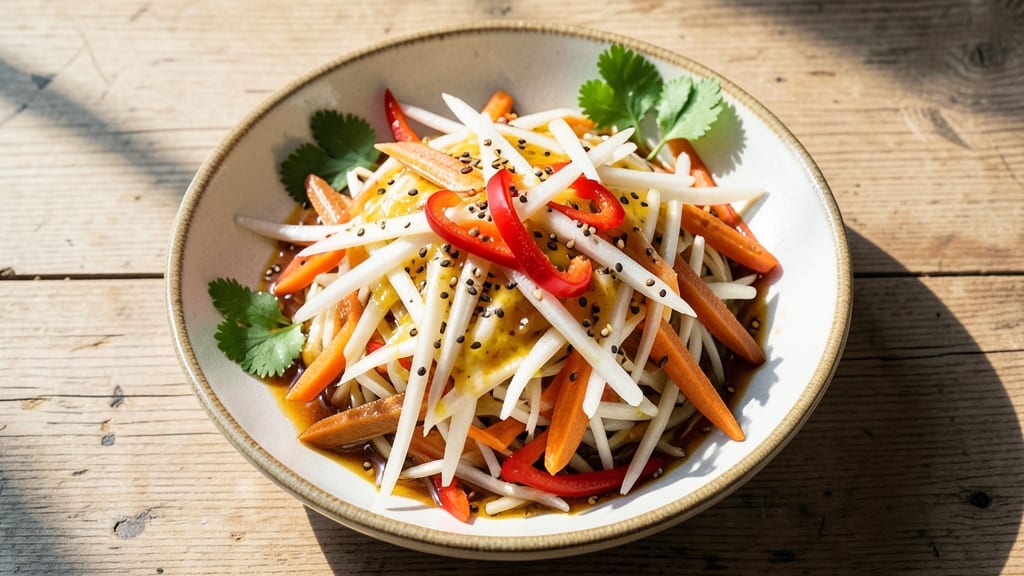
This Asian pickled salad recipe transforms simple vegetables into a vibrant, tangy side that brings restaurant-quality flavor to your table. The secret lies in a precise balance of rice vinegar, sesame oil, and chili flakes that create that signature fermented zing.
After perfecting this technique through countless batches, I've developed a method that delivers crisp, umami-packed bites every time—whether you're serving it alongside grilled meats or as a standalone vegetarian dish.
The beauty of this recipe is its versatility. You can use daikon radish for a traditional Japanese sunomono approach, or mix cucumbers, carrots, and bell peppers for a Korean-inspired jangajji twist.
The pickling process takes just 30 minutes of active time, followed by 1-2 hours of marinating, making it perfect for meal prep. For added protein, consider tossing in marinated tofu or shrimp after pickling—both work beautifully with the bright, acidic flavors.
What you'll end up with is a salad that's crisp, refreshing, and packed with layers of flavor—tangy from the vinegar, nutty from the sesame, and just a hint of heat from the chili.
The vegetables retain their crunch while absorbing the dressing perfectly, creating a texture that's both satisfying and refreshing. This is the kind of side dish that elevates any meal, from casual weeknight dinners to festive gatherings.
The best part? This recipe scales effortlessly. Make a large batch for potlucks, or prepare individual servings for lunchboxes. The flavors actually improve as the salad sits, making it ideal for making ahead.
Whether you're exploring traditional Asian flavors or adding a modern twist to your menu, this pickled salad delivers on both authenticity and adaptability.
Ingredients for asian pickled salad
Simple vegetables meet bold flavors in this umami-packed Asian pickled salad.
| Ingredient | Amount | Notes |
|---|---|---|
| Daikon Radish 🥕 | 2 cups | Julienned or thinly sliced |
| Carrots 🥕 | 1 ½ cups | Julienned or thinly sliced |
| Red Bell Pepper 🌶️ | 1 whole | Thinly sliced |
| Rice Vinegar 💧 | ½ cup | Unseasoned preferred |
| Sesame Oil 🫒 | 1 ½ tbsp | Toasted sesame preferred |
| Soy Sauce 🍶 | 2 tbsp | Low-sodium preferred |
| Granulated Sugar 🍚 | 2 tbsp | Or coconut sugar |
| Toasted Sesame Seeds 🥜 | 1 ½ tbsp | For garnish |
| Red Chili Flakes 🌶️ | 1 tsp | Adjust for heat preference |
| Garlic Cloves 🧄 | 2 cloves | Minced |
| Fresh Ginger 🌿 | 1 tbsp | Grated |
| Salt 🧂 | ½ tsp | Diamond Crystal preferred |
| Green Onion 🧅 | 2 whole | Thinly sliced |
The vegetables are the foundation, so pick firm, crisp ones. Daikon radish gives that signature Japanese crunch, but carrots and bell peppers work perfectly for a Korean-inspired twist. Grab them from the produce section—look for vibrant colors (bright orange carrots, deep red peppers) and firm texture. Trader Joe's often has pre-sliced daikon, which saves time, but the whole radish lasts longer. If you're making this ahead, prep the veggies first—they'll keep in airtight containers for 3 days in the fridge, ready to pickle whenever you're ready.
No daikon? Extra cucumber or jicama works in a pinch. Running low on sesame oil? Toasted peanut oil at half the amount gives a similar nutty depth. The rice vinegar should smell clean and tangy—never sweet or cloudy. For extra umami, swap half the soy sauce for vegetable-based fish sauce substitute (like Red Boat brand). The chili flakes can be omitted if you're sensitive to heat, but trust me, they're what gives this dish that signature zing. Fresh ginger and garlic? Pre-minced jars work if you're short on time, but freshly grated always tastes better.
Once pickled, this salad keeps beautifully—5-7 days in the fridge, sealed tight. The flavors actually deepen overnight, so making it ahead is ideal. For potlucks, portion into glass jars with tight lids—they'll stay crisp and vibrant. If you're adding protein later (like tofu or shrimp), toss it in after the 1-hour marinating period so it absorbs the dressing without getting soggy. The sesame seeds? Save them for garnish right before serving—they add that final crunchy texture that makes this dish shine.
Why You'll Love This Recipe
- No-Fuss Prep: I swear by this recipe because it’s basically just chopping and waiting. Thinly slice daikon and carrots—no fancy techniques, just a sharp knife and 10 minutes. The red bell pepper adds color with zero effort, and the dressing? Stir, pour, done.
- Tangy Crunch Perfection: That first bite of crisp daikon with the bright rice vinegar and nutty sesame oil? It’s the kind of flavor that makes you pause mid-bite. The carrots stay sweet, the bell pepper adds a little heat, and the sesame oil ties it all together like a cozy hug in your mouth.
- Meal Prep MVP: This salad keeps for days in the fridge, so I make a big batch on Sundays. Toss it with grilled chicken for lunch, serve it alongside sushi for dinner, or just eat it straight—it’s that versatile. Honestly, it’s my go-to for lazy days or when I’m feeding a crowd.
- Budget-Friendly Crunch: Daikon and carrots are cheap, and a little sesame oil goes a long way. I buy the big bag of radish and stretch it across multiple salads, and the vinegar? A few bucks lasts forever. It’s the kind of recipe that doesn’t break the bank but still feels special.
Step-by-step instructions for Asian pickled salad
This vibrant salad delivers bright, tangy crunch with every bite—perfect for balancing rich dishes.
Prepare the Vegetables
Start by julienning or thinly slicing the 2 cups daikon radish and 1.5 cups carrots into long, even matchsticks. I like to use a mandoline for consistency, but a sharp knife works too—just be careful with those slippery radish slices. Next, thinly slice the 1 whole red bell pepper into long, even strips. The goal here is uniform pieces so they soak up the dressing evenly.
Place all sliced vegetables in a large mixing bowl. This is where the magic begins—the combination of crisp daikon, sweet carrots, and slightly peppery bell pepper creates the perfect textural foundation. I always give the veggies a quick toss to distribute them evenly before adding the dressing.
Make the Pickling Dressing
In a small bowl, whisk together the 0.5 cup rice vinegar, 2 tbsp soy sauce, 2 tbsp granulated sugar, 1 tbsp grated fresh ginger, 2 cloves minced garlic, 1 tsp red chili flakes, and 0.5 tsp salt. The sugar and salt should dissolve completely—this is your flavor base. I like to taste it at this stage to ensure the balance of sweet, salty, and spicy is just right.
Next, add the 1.5 tbsp sesame oil and whisk again. The oil will emulsify slightly with the vinegar, creating a silky dressing that clings beautifully to the vegetables. If you prefer a smoother texture, you can strain the dressing through a fine-mesh sieve to remove any ginger or garlic bits, but I like the rustic texture they add.
Combine and Marinate
Pour the dressing over the vegetables in the mixing bowl and toss gently but thoroughly to coat every piece. I use my hands for this step—it ensures even distribution and helps the dressing penetrate the denser daikon and carrots. Let the salad sit at room temperature for at least 10 minutes before serving. This brief marinating time allows the flavors to meld slightly, but don’t let it sit too long or the vegetables will soften.
Here’s the thing—if you’re planning to serve this salad later, transfer it to an airtight container and refrigerate for up to 2 hours. The cold temperature enhances the flavors and keeps the crunch intact. Just give it a good stir before serving to redistribute the dressing.
Garnish and Serve
Before serving, thinly slice the 2 whole green onion and sprinkle them over the salad. Add the 1.5 tbsp toasted sesame seeds and give everything one final toss. The sesame seeds add a nutty crunch that contrasts beautifully with the tangy dressing and crisp vegetables.
Serve immediately for the freshest texture, or let it sit for 10-15 minutes if you prefer slightly softer vegetables. This salad pairs perfectly with grilled meats, fried rice, or as a refreshing side to any Asian-inspired meal. The bright flavors and satisfying crunch make it a standout dish every time.
Pro Tips For Making Asian Pickled Salad
- Slice Thinly, Evenly: Use a sharp mandoline or knife to cut daikon and carrots into ¼-inch thick half-moons—thinner slices pickle faster and stay crisp longer. I learned this the hard way when my first batch turned soggy before the flavors even developed.
- Salt Daikon First: Toss daikon slices with ½ teaspoon salt per cup and let sit 10 minutes before rinsing. This draws out bitterness and softens the texture just enough—skip it, and the radish stays tough and watery.
- Vinegar Ratio Matters: For every 2 cups of veggies, use ¼ cup rice vinegar—not more. Too much makes the salad taste harsh, and too little leaves it bland. I used to eyeball it and wondered why my pickles never hit that perfect tang.
- Add Sesame Oil Last: Stir in ½ teaspoon sesame oil right before serving—heat or prolonged contact turns it bitter. If you’re prepping ahead, store it separately and toss it in just before eating for maximum aroma.
Make-ahead tips for asian pickled salad
Prep Ahead Strategy
Start by prepping the vegetables 24 hours ahead—store them in an airtight container in the fridge. This gives you flexibility to assemble the dressing fresh when ready. The daikon and carrots stay crisp for 3 days this way, while bell peppers hold up for 2 days.
I like to slice everything into uniform strips using a mandoline for consistency, but a sharp knife works too. 🥕
For the dressing, make it 1 day ahead and store it in a small jar in the fridge. The flavors meld beautifully overnight, and you’ll save time on the day you serve.
Just whisk it again before tossing with the veggies to re-emulsify. Trust me, this shortcut makes weeknight meals effortless.
Batch Prep for Potlucks
Double or triple the recipe and store components separately. Keep the sliced vegetables in one glass container and the dressing in another. When ready to serve, combine everything and let it marinate for 30-60 minutes before tossing with sesame seeds and green onions.
This method keeps the salad fresh for 5-7 days in the fridge, perfect for meal prep or potlucks. 📅
For large gatherings, portion the salad into individual glass jars with tight lids. The layers stay intact, and you can serve it straight from the jar. Add a sprinkle of sesame seeds right before serving to keep that restaurant-quality crunch.
Protein Additions
If you’re adding protein like tofu or shrimp, prep it 1 day ahead and store it separately. Toss marinated tofu or cooked shrimp with the salad just before serving to prevent sogginess.
For tofu, press and cube it, then marinate in 1 tbsp soy sauce + 1 tbsp rice vinegar + 1 tsp sesame oil for 30 minutes before adding. 🥜
For shrimp, cook and chill them, then toss with 1 tsp sesame oil + ½ tsp chili flakes right before mixing with the salad. The protein adds heartiness without overpowering the bright, tangy flavors. This makes the salad a complete meal in itself.
Flavor Boost Over Time
The longer this salad sits, the better it tastes—24 hours is ideal for maximum flavor development. The vinegar and sugar work together to tenderize the vegetables slightly while deepening their sweetness.
I often make it the night before and let it sit uncovered in the fridge overnight for even more vibrant flavors. ✨
If the salad seems too tangy after refrigeration, balance it with a pinch of sugar or a drizzle of 1 tsp honey. The flavors will mellow slightly, but the crunch and brightness remain.
This is especially helpful if you’re making it ahead for a party where you want consistent taste across all servings.
Nutrition facts
Frequently asked questions
Can I use regular vinegar instead of rice vinegar?
While you can use white or apple cider vinegar, it won't give you that authentic Asian tang. Rice vinegar has a milder, sweeter acidity that balances perfectly with the umami flavors. If you're out of rice vinegar, try a 50/50 mix with white vinegar—but expect a slightly sharper taste. For best results, stick with unseasoned rice vinegar (like Koyo or Mushroom brands).
How do I keep the vegetables extra crisp?
Chill the salad for 1-2 hours before serving—cold temperatures help maintain crunch. Use a mandoline for uniform slices (thicker than paper-thin), and avoid overcrowding the bowl when tossing. For an extra crunch boost, add 1 tsp cornstarch to the dressing or toss veggies with 1 tsp cold water before draining well. The key is minimal handling after pickling!
What's the best way to store leftovers?
Transfer to an airtight container and refrigerate for up to 5-7 days. The vegetables stay crisp for 3 days if stored properly, but flavors deepen over time. For longer storage, freeze the dressing separately (up to 3 months) and add fresh veggies when ready. The sesame seeds should be added fresh before serving to preserve their crunch.
Can I make this spicier or sweeter?
For extra heat, add ½ tsp extra chili flakes or a few drops of gochujang to the dressing. For more sweetness, increase sugar to 3 tbsp or add 1 tsp honey. Pro tip: Balance adjustments by adding ½ tsp salt if you increase sweetness, or ½ tsp sugar if you add more heat. Taste as you go!
Why does my salad turn watery after refrigeration?
This happens when the dressing separates or veggies release too much moisture. Fix it by draining excess liquid after 30 minutes of marinating, then toss with 1 tsp cornstarch to absorb moisture. For prevention, use fresh, firm vegetables and avoid overcrowding the bowl. If storing, keep dressing separate until ready to serve.