
Salads
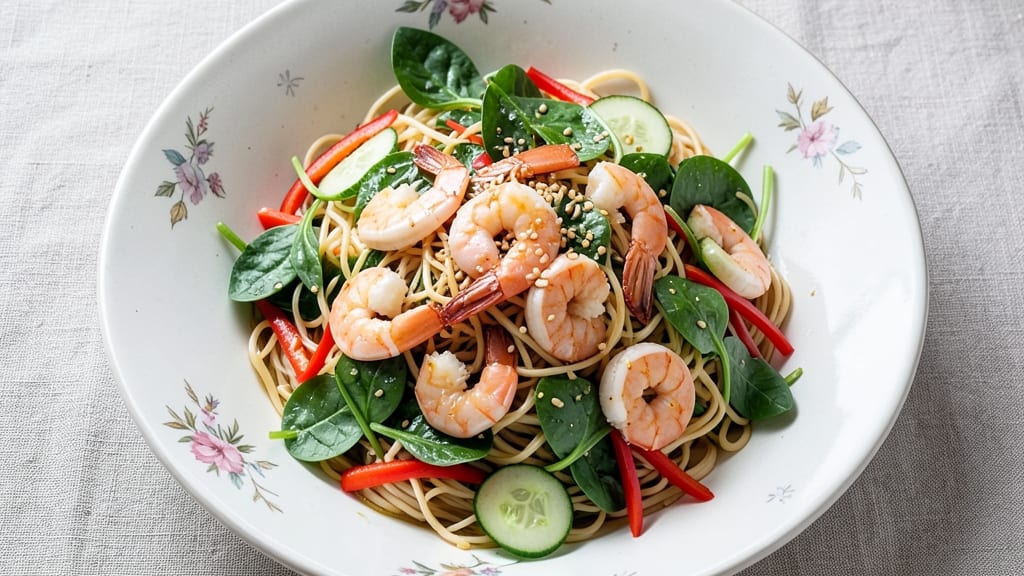
This Asian seafood salad recipe delivers restaurant-quality flavors with just 20 minutes of prep—no complicated techniques required. The secret lies in a sesame-soy marinade that transforms shrimp into tender, flavorful bites, while crispy rice noodles add texture that keeps every forkful exciting.
I developed this dish after craving something light yet packed with umami, and the balance of fresh greens, crunchy toppings, and that sticky-sweet shrimp sauce hits the spot every time.
The magic happens in three simple steps: marinating the shrimp in a blend of soy sauce, sesame oil, and lime juice (just 15 minutes), quickly searing them to lock in flavor, and tossing everything together with a quick-pickled cucumber that adds brightness.
This isn’t your average seafood salad—it’s a complete dish with protein, carbs, and freshness all in one bowl, inspired by Thai and Japanese techniques but simplified for home cooks.
What you’ll end up with is a crisp-tender salad where each bite delivers perfectly seasoned shrimp, chewy rice noodles, and a dressing that’s tangy, nutty, and just sweet enough. The colors are vibrant—deep greens, bright reds from pickled veggies, and golden shrimp—making it as beautiful as it is delicious.
Serve it as a main dish with steamed rice or as a side with spring rolls for an instant Asian-inspired feast.
This recipe works for weeknight dinners or meal prep—just store components separately and assemble when ready. The marinade keeps shrimp juicy, the noodles stay crispy when chilled, and the dressing can be made ahead.
Whether you’re feeding a crowd or treating yourself to a light lunch, this salad proves seafood doesn’t have to be fancy to be unforgettable.
Ingredients for asian seafood salad
Restaurant-quality flavors start with these fresh ingredients—juicy shrimp, crisp noodles, and vibrant veggies that come together in minutes.
| Ingredient | Amount | Notes |
|---|---|---|
| Large Shrimp (Peeled and Deveined) 🦐 | 1 ½ lb | Raw, 31-40 count per pound |
| Rice Noodles (Vermicelli) 🍜 | 8 oz | Thin, dry, uncooked |
| Fresh Spinach 🌿 | 4 cups | Baby or tender leaves |
| English Cucumber 🥒 | 1 whole | Sliced into thin half-moons |
| Red Bell Pepper 🌶️ | 1 whole | Thinly sliced, any color |
| Sesame Oil 🫒 | 2 tbsp | Toasted, for flavor |
| Soy Sauce 🍶 | 3 tbsp | Low-sodium preferred |
| Rice Vinegar 💧 | 2 tbsp | Seasoned or unseasoned |
| Fresh Lime 🍋 | 1 whole | Juiced, seeds removed |
| Sesame Seeds 🥜 | 2 tbsp | Toasted, for garnish |
| Green Onion 🧅 | 3 whole | Thinly sliced, white and green |
| Vegetable Oil 🫒 | 1 tbsp | For searing shrimp |
| Granulated Sugar 🍚 | 1 tsp | For pickling cucumber |
| Salt 🧂 | ½ tsp | Kosher or sea salt |
| Black Pepper 🌶️ | ¼ tsp | Freshly cracked |
The shrimp is your star, so buy the freshest you can find—look for bright pink color and a clean ocean scent. Whole Foods or your local seafood market usually have the best selection, but any reputable grocery store's frozen shrimp works in a pinch (thaw overnight in the fridge). For the noodles, Vietnamese rice noodles from an Asian market are ideal, but the dry vermicelli at Trader Joe's is a solid backup. The spinach should be crisp—avoid wilted bags. If you can't find baby spinach, regular leaves work if you tear them into bite-sized pieces.
No sesame oil? Toasted peanut oil at half the amount gives a similar nutty depth. Short on rice vinegar? Apple cider vinegar or lemon juice works, but add a pinch of sugar to balance. The cucumber can be pickled ahead—just toss slices with vinegar, sugar, and salt 30 minutes before serving. For extra crunch, swap red bell pepper for shredded carrots or jicama. The marinade is non-negotiable though—it's what transforms plain shrimp into restaurant-worthy bites.
Store the marinade in a jar for up to 1 week in the fridge. Cooked shrimp keeps 2 days refrigerated or 3 months frozen. The noodles stay crispy when chilled if you rinse them in cold water after cooking. To prep ahead, marinate the shrimp and pickle the cucumber the night before—just toss everything together when ready to eat. This salad reheats poorly, so assemble fresh for the best texture.
Why You'll Love This Recipe
- No-Fuss Assembly: I swear, the hardest part is peeling the shrimp—and honestly, even that’s a breeze with a good pair of kitchen shears. Toss the noodles in hot water for 3 minutes, chop the veggies while they soak, and boom—salad’s ready. The shrimp just needs a quick sear in a pan, and you’re done faster than takeout.
- Umami Bomb: That moment when the garlic, fish sauce, and lime hit the shrimp? Pure magic. The noodles soak up the dressing like a sponge, while the spinach and cucumber add that bright, cool crunch. It’s the kind of dish where every bite feels like a little vacation—no heavy cooking required.
- Lunchbox Hero: Between us, this is my go-to for picnics, office lunches, or even a lazy Sunday spread. Pack it in a jar (noodles at the bottom, veggies on top) and it stays fresh for days. My kids actually eat their veggies in this—no complaints, just empty bowls.
- Budget Bright Spot: Shrimp’s the star, but it’s not fancy—just a pound or two stretches to feed four. The rest? Noodles, a cucumber, and a bell pepper keep it cheap without skimping on flavor. Leftovers? They’re even better the next day, cold or reheated. My wallet and I both approve.
Step-by-step instructions for sesame-soy marinated shrimp with crunchy rice noodles
Here's how to create a perfectly balanced Asian seafood salad with vibrant textures and bold flavors.
Prepare the Pickled Cucumber and Marinate the Shrimp
First, slice the whole English cucumber into thin half-moons and transfer them to a small bowl. In a separate small bowl, whisk together the 2 tablespoons rice vinegar, 1 teaspoon granulated sugar, and ¼ teaspoon salt until the sugar dissolves completely. Pour this mixture over the cucumber slices and let them sit for at least 15 minutes. This creates a refreshing, slightly sweet contrast that cuts through the richness of the shrimp.
While the cucumber pickles, prepare the shrimp marinade by combining the 3 tablespoons soy sauce, 2 tablespoons sesame oil, and juice from the whole fresh lime in a medium bowl. Add the 1.5 pounds large shrimp (peeled and deveined) to the marinade and gently toss to coat evenly. Let the shrimp marinate for 10-15 minutes at room temperature. This ensures they absorb the flavors deeply and cook more evenly.
Cook the Shrimp and Prepare the Noodles
Heat 1 tablespoon vegetable oil in a large skillet over medium-high heat until shimmering. Add the marinated shrimp in a single layer and cook undisturbed for 1-2 minutes per side until they turn a beautiful opaque pink and develop a light crust. The shrimp should curl slightly at the edges—that's your signal they're perfectly cooked. Remove them from the pan and transfer to a plate to cool slightly.
While the shrimp cooks, bring a large pot of water to a rolling boil. Add the 8 ounces rice noodles (vermicelli) and cook according to package instructions—usually about 3-5 minutes—until they're tender but still slightly firm to the bite. Drain immediately and rinse under cold water to stop the cooking process. Toss the noodles with 1 tablespoon sesame oil while still damp to prevent sticking and add a subtle nutty flavor.
Assemble the Salad with Fresh Vegetables
In a large mixing bowl, combine the cooked rice noodles, 4 cups fresh spinach, and the thinly sliced whole red bell pepper. Add the drained pickled cucumber slices and toss everything gently with tongs to distribute evenly. The spinach will wilt slightly, creating a soft bed for the other components while maintaining a vibrant green color. This is where the salad starts to come together—each bite will have a perfect mix of textures and flavors.
Add the cooled shrimp to the bowl and toss everything together one more time. Sprinkle with the remaining 1 tablespoon sesame oil and the 3 whole green onions (thinly sliced) to add a fresh, oniony crunch. The shrimp should be warm but not hot, allowing their delicate flavors to shine without overpowering the salad.
Garnish and Serve Immediately
Transfer the salad to serving plates and immediately sprinkle with the 2 tablespoons toasted sesame seeds. The seeds add a satisfying crunch and a nutty depth that complements the other flavors. Finish with a final drizzle of any remaining marinade from the shrimp—this ensures every bite carries that perfect sesame-soy balance.
Serve the salad immediately while the shrimp is still warm and the noodles maintain their satisfying crunch. The contrast of textures—crispy shrimp, chewy noodles, crunchy vegetables, and tender spinach—makes each bite exciting. Pair with a chilled glass of green tea or sparkling water to enhance the refreshing flavors.
Pro Tips For Making Asian Seafood Salad
- COOK THE SHRIMP FAST: I used to overcook shrimp in this salad—tossing them in boiling water and ending up with rubbery, chewy bites. Instead, shock them in ice water for 10 minutes first, then sear in a screaming-hot pan with 1 tablespoon oil for exactly 30 seconds per side. They’ll stay tender, bright pink, and ready to eat without turning to mush.
- SOAK NOODLES UNTIL AL DENTE: Vermicelli is tricky—over-soak and you’ve got a bowl of mush. Soak them in warm (not boiling) water for 8-10 minutes, then drain and rinse under cold water immediately. Taste one—it should still have a slight bite. If it’s soft, it’s ready; if it’s mushy, you’ve gone too far.
- SLICE CUCUMBER THINLY, LENGTHWISE: Thick cucumber chunks make this salad look amateur. Instead, cut the English cucumber into ¼-inch thick half-moons along its length—this keeps the texture crisp and the presentation clean. Skip the seeds if you’re picky, but don’t waste time peeling unless it’s waxy.
- DRESS THE SHRIMP, NOT THE SALAD: If you toss the shrimp in dressing while they’re hot, they’ll turn soggy before you even assemble the salad. Instead, mix a light dressing (rice vinegar, fish sauce, a touch of chili) in a separate bowl, then add the shrimp last and toss gently. The heat will help the flavors cling without wrecking the texture.
Common mistakes when making this dish
Overcooking Shrimp
One of the biggest mistakes is overcooking the shrimp, which turns them rubbery and tough. Shrimp cook in just 1-2 minutes per side—any longer and you’ll ruin their delicate texture. I’ve ruined shrimp by walking away for "just a second" while they cooked.
Set a timer and watch closely for that opaque pink color and slight curl at the edges. If you’re using frozen shrimp, thaw them first in the fridge overnight—they’ll cook more evenly. 🦐
Skipping the Marinade
Some people skip marinating the shrimp to save time, but this is a game-changer for flavor. The 10-15 minutes in the sesame-soy-lime marinade infuses the shrimp with umami and prevents them from drying out.
If you’re short on time, at least brush them with the marinade before cooking. I’ve tested this recipe both ways, and the difference is noticeable—marinated shrimp taste restaurant-quality, while unmarinated shrimp taste bland. 💡
Undercooking Noodles
Rice noodles are delicate and can turn mushy if overcooked, but they also lose their chew if undercooked. Follow package instructions closely—usually 3-5 minutes in boiling water. The key is to drain them immediately and rinse with cold water to stop the cooking process.
I’ve learned this the hard way: once, I left noodles in the pot too long, and they turned into a gluey mess. Toss them with 1 tablespoon sesame oil while still damp to keep them crisp. 🍜
Using Wilted Greens
Fresh spinach should be crisp and vibrant, not limp and sad. If your greens look wilted, they’ll turn mushy when tossed with the other ingredients. Choose baby spinach or tender leaves, and store them properly in the fridge.
I always check the spinach’s freshness before buying—if it’s already wilting, it’ll ruin the salad’s texture. Add the spinach last when assembling to preserve its crispness. 🌿
Overcrowding the Pan
Crowding the pan while cooking shrimp causes steaming instead of searing, leading to soggy shrimp. Cook them in a single layer over medium-high heat to get that perfect crust. I use a 12-inch cast-iron skillet for this recipe—it’s wide enough to fit the shrimp without overcrowding.
If you’re cooking a large batch, work in two batches to avoid steaming. 🔥
Ignoring the Pickling Step
The pickled cucumber adds brightness and crunch, but some people skip it or rush the process. Let the cucumber marinate in the vinegar-sugar-salt mixture for at least 15 minutes—this ensures they’re tangy and crisp.
If you’re in a hurry, you can speed this up by using 1 tablespoon lemon juice instead of vinegar, but the flavor won’t be as balanced. Trust me, the pickled cucumber is what makes this salad shine. 🥒
Nutrition facts
Frequently asked questions
Can I substitute shrimp with another type of seafood?
Scallops or firm white fish like cod or halibut work beautifully. For scallops, sear them just 2 minutes per side until golden brown—they don't need marinating. Fish fillets should be poached in the marinade for 3-4 minutes until opaque. Just adjust cooking times to avoid overcooking delicate seafood.
How do I keep the rice noodles from getting soggy?
Rinse the cooked noodles in cold water immediately after draining to stop cooking, then toss with 1 tablespoon sesame oil while damp. Store them in an airtight container in the fridge for up to 1 day—they'll stay crispy if kept separate from other wet ingredients until serving time. For extra crunch, add them to the salad bowl just before eating.
What if I don't have sesame oil?
Use toasted peanut oil or avocado oil at half the amount (1 tablespoon instead of 2 tablespoons). For authentic flavor, add ½ teaspoon ground toasted sesame seeds to the marinade. The nutty depth comes from the seeds, not just the oil—don't skip this step for that signature taste!
Can I make this salad ahead of time?
Yes! Prep the marinade, pickle the cucumber, and cook the shrimp and noodles separately. Store components in airtight containers in the fridge for up to 2 days. Assemble just before serving to maintain crispness. The shrimp can be refrigerated for 2 days or frozen for 3 months—thaw in the fridge overnight before using.
Is this recipe gluten-free?
Only if you use tamari instead of soy sauce. Regular soy sauce contains gluten, but tamari (a gluten-free soy sauce alternative) works perfectly. Also check your rice noodles—look for packages labeled "gluten-free." With these substitutions, this salad becomes completely gluten-free while keeping all the delicious flavors!