
Salads
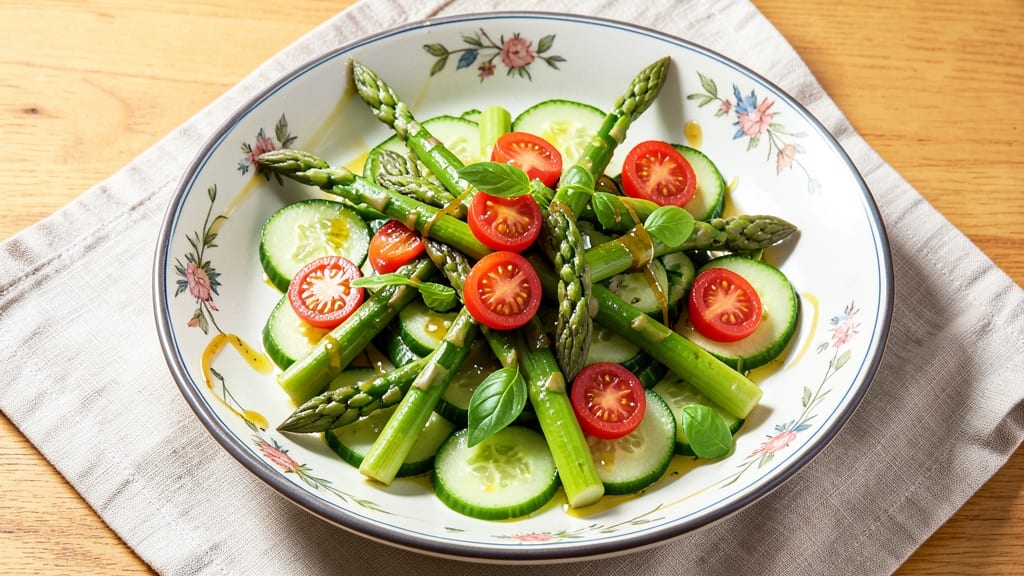
This asparagus tomato cucumber salad recipe transforms spring's freshest produce into a vibrant dish that's crisp, refreshing, and packed with herbal brightness. The secret lies in blanching asparagus for tender-crisp perfection while keeping cucumbers cool and cucumbers bright, all balanced by a zesty lemon-olive oil dressing that ties everything together.
I developed this salad after realizing how often fresh spring vegetables go underutilized in simple side dishes—this version deserves the spotlight.
What makes this salad special is the perfect texture contrast: blanched asparagus spears hold their shape beautifully, while crisp cucumber slices and juicy tomatoes add refreshing crunch.
The dressing is the game-changer—just lemon juice, extra virgin olive oil, fresh herbs, and a touch of honey create a bright, balanced flavor that enhances rather than overpowers the vegetables. This isn't just another garden salad; it's a complete vegetarian dish with satisfying substance.
By the time you're done, you'll have a salad that's visually stunning with its bright colors and elegant arrangement, while delivering complex flavors in every bite. The asparagus brings earthy sweetness, tomatoes add juicy freshness, and cucumbers provide crisp coolness—all perfectly balanced by the herby dressing.
It's the kind of salad that makes you want to eat straight from the bowl, no fork required.
This recipe works beautifully as a light lunch, refreshing side dish, or even a vegetarian main course when paired with grilled proteins or crusty bread. The flavors develop even better when allowed to sit for 30 minutes before serving, giving the dressing time to fully infuse the vegetables.
Let's get started on creating this spring-inspired masterpiece.
Ingredients for asparagus tomato cucumber salad
Spring's freshest trio meets zesty dressing for a salad that's vibrant, crisp, and full of herbal brightness.
| Ingredient | Amount | Notes |
|---|---|---|
| Asparagus Spears 🌱 | 1 lb | Medium thickness, trimmed ends |
| Cherry Tomatoes 🍅 | 1 ½ lb | Heirloom or vine-ripened preferred |
| Persian Cucumbers 🥒 | 2 whole | Seedless, skin-on for texture |
| Extra-Virgin Olive Oil 🫒 | ½ cup | Fruity, peppery variety preferred |
| Fresh Lemon Juice 🍋 | ¼ cup | From 2 large lemons, freshly squeezed |
| Raw Honey 🍯 | 2 tbsp | Wildflower or clover preferred |
| Fresh Dill 🌿 | ¼ cup | Finely chopped, stems removed |
| Fresh Mint Leaves 🍃 | ⅛ cup | Finely chopped, for brightness |
| Diamond Crystal Kosher Salt 🧂 | 1 tsp | Fine grain for delicate seasoning |
| Freshly Ground Black Pepper 🌶️ | ½ tsp | Cracked peppercorns preferred |
| Ice Water 💧 | 1 cup | For blanching asparagus |
| Crusty Baguette 🥖 | 1 whole | Optional, for serving |
The asparagus is the star—look for bright green spears with tight tips at the farmers market or grocery store's produce section. Whole Foods or Trader Joe's usually carry the best quality, but any well-stocked market will do. Medium thickness (about 1/4-inch diameter) cooks perfectly without turning mushy. If you can't find Persian cucumbers, regular cucumbers work (just peel them first), but the skin-on Persian variety adds that perfect crunch. For tomatoes, heirloom or vine-ripened makes all the difference—they're sweeter and juicier than those big, bland grocery store tomatoes. Pro tip: Pat everything dry before assembling to keep your salad crisp longer.
No fresh dill? Dried dill at one-third the amount works in a pinch, but fresh is ideal for that bright herbal note. Substituting mint for basil won't work here—the mint's cool brightness is essential. Running out of honey? Agave nectar or maple syrup works in the dressing, though honey's floral notes are unique. For the olive oil, avoid the cheap stuff—look for extra-virgin with at least 70% oleic acid. If you're short on time, room-temperature asparagus is fine, but chilled asparagus (after blanching) gives that perfect tender-crisp texture. The tomatoes can be halved or quartered depending on size—just keep them consistent so the salad looks elegant.
This salad tastes even better when dressed and chilled for 30 minutes to an hour—the flavors meld beautifully. Store leftovers in an airtight container with a paper towel to absorb moisture, and keep them in the fridge for up to 2 days. The dressing separates slightly after a day, so give it a good stir before serving. For extra crunch, add cucumber slices just before eating. The baguette, if using, should be toasted and served on the side—it's not part of the salad but pairs perfectly for a complete meal. Freezing isn't recommended as it ruins the texture, but you can freeze the dressing separately for up to 3 months.
Why You'll Love This Recipe
- No-Cook Magic: I swear by this—just slice, toss, and serve. The asparagus stays crisp, the tomatoes burst with juice, and those Persian cucumbers add that melt-in-your-mouth texture without a single pan in sight.
- Bright & Tangy: That lemon juice and olive oil combo? It’s the secret to a salad that doesn’t taste like "just salad." The asparagus gets a little charred (if you’re feeling fancy) while the tomatoes and cucumbers soak up the bright, zesty dressing—simple, but ridiculously good.
- Picnic to Potluck: Pack it in a jar for lunch, bring it to a BBQ, or serve it alongside grilled anything. It’s my go-to for summer gatherings—no one bats an eye at how effortless it is, and it always gets polished off first.
- Budget Brightener: Fresh asparagus and tomatoes might seem pricier, but this recipe stretches them far. A single bunch of asparagus and a handful of tomatoes go a long way when paired with cucumbers, and the dressing costs pennies. Leftovers? They last three days in the fridge, tasting just as fresh.
Step-by-step instructions for crisp asparagus, tomato, and cucumber salad
Here's how to transform fresh spring vegetables into a vibrant, herb-infused salad that's perfect for warm days.
Blanch and Shock the Asparagus
Fill a large pot with 1 cup ice water and bring to a rolling boil. While waiting, trim the tough ends from the 1 lb asparagus spears by bending each spear until it snaps naturally—this is where the fibrous ends break. Drop the spears into the boiling water and cook for exactly 2 minutes until bright green and just tender.
Immediately drain the asparagus and plunge into the ice water bath for 1 minute to halt cooking and maintain crispness. Drain again thoroughly and pat dry with paper towels. This blanching technique preserves the vibrant color and crisp texture that makes this salad so refreshing. Don't skip this step—raw asparagus will be tough and unappetizing in the salad.
Prepare the Vegetable Components
Halve the 1.5 lb cherry tomatoes and remove any stems. For the 2 whole Persian cucumbers, slice them lengthwise into quarters and then into ½-inch thick half-moons. Remove any seeds from the cucumber halves if they're not seedless. This cut maximizes surface area for even dressing absorption while maintaining texture.
Gently combine the blanched asparagus, halved cherry tomatoes, and cucumber slices in a large mixing bowl. Here's the thing—handle the vegetables with care to avoid bruising, especially the tomatoes and cucumbers. Their delicate skins hold flavor, so avoid aggressive tossing that could make them mushy. Arrange them in a single layer if you're layering for presentation later.
Create the Herbal Honey Dressing
In a small bowl, whisk together the 0.5 cup extra-virgin olive oil, 0.25 cup fresh lemon juice, 2 tbsp raw honey, 0.25 cup finely chopped fresh dill, 0.125 cup finely chopped fresh mint leaves, 1 tsp Diamond Crystal kosher salt, and 0.5 tsp freshly ground black pepper until completely emulsified. The dressing should be smooth with no visible streaks of oil.
Taste the dressing before adding it to the salad—you want a perfect balance of bright lemon, sweet honey, and herbal notes. If it needs more acidity, add another 1 tablespoon lemon juice. If it's too sweet, add a pinch more salt. This is your chance to adjust before committing to the entire salad. The dressing should coat the back of a spoon but still allow for easy drizzling.
Assemble and Marinate the Salad
Pour the dressing over the vegetable mixture in the bowl and gently toss everything together just until the vegetables are evenly coated. I use two large spoons—one to hold the vegetables and another to drizzle the dressing—to avoid over-tossing. Let the salad marinate at room temperature for 15-20 minutes before serving. This resting time allows the flavors to meld and the dressing to penetrate the vegetables.
For best results, serve the salad immediately after marinating while the vegetables are still crisp. If you need to prepare ahead, assemble the salad (without the dressing) up to 4 hours in advance and store it in an airtight container in the refrigerator. Add the dressing just before serving to maintain optimal texture. The optional 1 whole crusty baguette makes a perfect companion for soaking up any extra dressing.
Pro Tips For Making Asparagus Tomato Cucumber Salad
- Blanch Asparagus First: I learned this the hard way—raw asparagus is tough and bitter. Drop spears in boiling water for 30 seconds, then shock in ice water. This softens them just enough to eat without turning to mush later. (Yes, even if you're impatient like me.)
- Halve Tomatoes Unevenly: Cut cherry tomatoes in half lengthwise—but don’t split them perfectly down the middle. Leave one side slightly thicker so they don’t bleed juice all over your salad. Trust me, it stays fresher longer.
- Salt Cucumbers Before Dressing: Toss Persian cucumbers with a pinch of salt and let them sit for 5 minutes before adding anything else. This draws out excess water so your salad stays crisp, not soggy. (Skip this, and you’re basically making cucumber soup.)
- Dress Salad Last Minute: Extra-virgin olive oil and lemon juice oxidize fast—so mix the dressing separately and toss it in right before serving. Your salad will taste brighter, and you won’t waste good oil. (I used to add it hours ahead and wondered why it tasted dull.)
Common mistakes when making perfect results
Over-Blanching Asparagus
Blanching asparagus for more than 2 minutes turns it mushy instead of tender-crisp. I've learned this the hard way—once, I left it in for 3 minutes and ended up with sad, limp spears.
The key is timing: 2 minutes in boiling water, then 1 minute in ice water. Set a timer so you don't lose focus. 🌱
Skipping the Ice Bath
Plunging blanched asparagus into ice water isn't just about stopping cooking—it preserves that vibrant green color and keeps the texture perfect. Without it, your asparagus will continue cooking in the dressing, becoming soft and unappetizing.
I always keep a bowl of ice water ready when blanching vegetables. The 1-minute ice bath is non-negotiable for this salad.
Uneven Tomato Halving
Halving cherry tomatoes unevenly creates a messy salad that looks unprofessional. Use a sharp knife and cut through the stem end first, then gently squeeze the tomato to guide the knife through the middle.
If you're nervous about cutting tomatoes, practice on a few first—they're forgiving if you're gentle. Uneven pieces make the salad look sloppy and can cause dressing to pool in the bottom of the bowl.
Over-Tossing Vegetables
Aggressive tossing bruises delicate vegetables like tomatoes and cucumbers, turning your crisp salad into a soggy mess. Instead, use a gentle folding motion with two spoons—one to hold the vegetables and another to drizzle dressing.
I promise, the salad will still be perfectly coated without the texture compromise. This is where most home cooks go wrong—they think more tossing equals better mixing. 🥗
Using Old Ingredients
Wilted asparagus, mealy cucumbers, and bland tomatoes ruin this salad before you even start. Always use the freshest produce possible—look for asparagus with tightly closed tips, cucumbers that are firm and cool to the touch, and tomatoes that yield slightly to gentle pressure.
I check the "use by" dates on my herbs too; wilted dill or mint makes the dressing taste dull. When in doubt, buy from a trusted farmers market where you can see the produce was harvested that morning.
Adding Dressing Too Early
While it might seem convenient to add dressing immediately, the vegetables need time to absorb flavors without becoming waterlogged. Add dressing just before serving for maximum crispness. If you're prepping ahead, store the vegetables and dressing separately until the last minute.
I've made the mistake of dressing too early and ended up with a sad, limp salad that lost all its appeal. The 15-20 minute marinating time before serving is crucial for flavor development without sacrificing texture.
Nutrition facts
Frequently asked questions
Can I make this salad without blanching the asparagus?
While you can use raw asparagus, blanching is key for that perfect tender-crisp texture. Raw asparagus will be tough and unappetizing in the salad. If you're short on time, microwave blanching works too: Pierce asparagus with a fork, microwave for 1-2 minutes with 1 tablespoon water, then shock in ice water. This still gives you that ideal texture without the stove!
What's the best way to store leftovers?
Store the dressed salad in an airtight container with a paper towel to absorb moisture. Keep it refrigerated for up to 2 days. For maximum crispness, add cucumber slices fresh before serving. Never store the dressing separately from the vegetables—it prevents sogginess. The asparagus will soften over time, so enjoy this salad fresh whenever possible.
Can I substitute any of the vegetables?
Swap asparagus for green beans (blanch them first) or sugar snap peas for a different texture. Use radishes instead of cucumbers for extra bite, or try bell peppers for color. Just maintain the balance of crisp and tender elements. The key is keeping the salad vibrant and fresh-tasting.
How do I make this salad more substantial as a main course?
Add protein like grilled chicken, white beans, or feta cheese to turn this into a complete meal. For extra heartiness, toast pine nuts or walnuts and sprinkle on top. The salad's bright flavors pair beautifully with grilled proteins or even a poached egg. Serve with crusty bread for a satisfying vegetarian lunch.
Why does my dressing separate after mixing?
Dressing separation is normal! The oil and lemon juice naturally separate when not constantly stirred. Just give it a good whisk before using. For a more stable dressing, add 1 teaspoon Dijon mustard or 1 tablespoon Greek yogurt as an emulsifier. The salad will still taste great—it's all about the fresh ingredients that shine through.