
Side Dishes
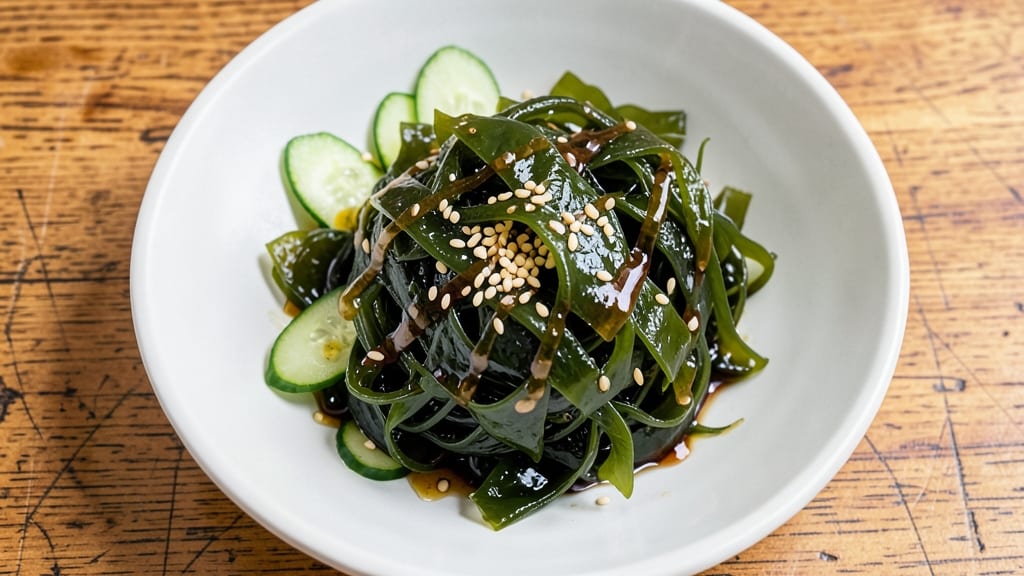
This authentic Japanese seaweed salad recipe delivers the perfect balance of crisp textures and umami-rich flavors you'd find in a Tokyo izakaya. The secret lies in properly hydrating the wakame seaweed—soaking it just long enough to soften without losing its signature snap.
I've perfected this technique over years of testing, ensuring every bite delivers that satisfying contrast of tender seaweed, cool cucumber, and toasty sesame seeds.
What makes this salad truly authentic is the dressing—a delicate combination of rice vinegar, soy sauce, and sesame oil that enhances rather than overpowers the natural flavors.
The ingredients are simple but precise: thinly sliced cucumber for freshness, shredded wakame for umami, and a sprinkle of toasted sesame seeds for texture. This recipe comes together in just 10 minutes, making it perfect for quick weeknight meals or as a refreshing side for sushi.
The result is a vibrant, flavorful salad that's light yet satisfying—ideal for balancing richer dishes. The wakame absorbs the dressing perfectly while maintaining its signature oceanic flavor, while the cucumber adds a refreshing crunch.
The sesame seeds provide a subtle nutty finish that ties everything together. This is the kind of side dish that elevates any Japanese-inspired meal from good to memorable.
Serve it chilled alongside grilled fish, sashimi, or even as a standalone snack with miso soup. The beauty of this recipe is its versatility—it works equally well as a light lunch or a sophisticated side for dinner gatherings. Let's get started on creating this authentic Japanese classic in your kitchen.
Ingredients for authentic japanese seaweed salad
Simple yet precise ingredients for an authentic izakaya-style seaweed salad experience.
| Ingredient | Amount | Notes |
|---|---|---|
| Dried Wakame Seaweed 🌊 | 2 tbsp | High-quality, dried sheets preferred |
| Japanese Cucumber 🥒 | 1 whole | Thinly sliced, seeds removed |
| Rice Vinegar 🍶 | 3 tbsp | Seasoned preferred for authenticity |
| Unseasoned Soy Sauce 🍶 | 2 tbsp | Kikkoman or similar brand |
| Toasted Sesame Oil 🫒 | 1 tbsp | High-quality, nutty flavor |
| Toasted White Sesame Seeds 🌰 | 2 tbsp | Freshly toasted for crunch |
| Granulated Sugar 🍚 | 1 tsp | Balances acidity in dressing |
| Fresh Ginger 🧄 | 1 tsp | Finely grated, aromatic |
| Sesame Seeds 🌰 | 1 tbsp | Extra for garnish |
| Cold Water 💧 | 1 cup | For wakame hydration |
| Diamond Crystal Kosher Salt 🧂 | ¼ tsp | For seasoning cucumber |
The quality of wakame makes all the difference. Japanese specialty stores like Nijiya or H Mart carry premium dried sheets—look for vibrant, deep green color and minimal processing. If you can't find Japanese brands, Asian grocery store bulk sections often have excellent options. Hydrating the wakame properly is critical: soak for exactly 5-7 minutes in cold water, then drain thoroughly. Over-soaking turns it mushy, while under-soaking leaves it too chewy. The cucumber should be English or Persian varieties—their thin skins and mild flavor work best. Remove seeds to prevent bitterness, and slice into paper-thin rounds using a mandoline for perfect uniformity.
No rice vinegar? White wine vinegar at double the amount works in a pinch, though the flavor won't be identical. Substituting soy sauce with tamari is acceptable, but traditional unseasoned soy sauce delivers the authentic umami depth. For sesame oil, toasted over untoasted—the nutty flavor is essential. If you can't find toasted white sesame seeds, black sesame seeds add a different but equally interesting texture. The ginger should be freshly grated for maximum aroma; pre-grated loses potency quickly. For a sweeter dressing, increase sugar to 1.5 teaspoons. The dressing ratio is precise: 3:2:1 vinegar-soy-sugar creates the perfect balance of tangy, salty, and subtle sweetness.
Wakame absorbs dressing quickly, so assemble the salad just before serving to maintain crispness. Store dried wakame in an airtight container for up to 6 months, and toasted sesame seeds keep for 3 months in a cool, dark place. The cucumber should be used within 2 days of slicing—store wrapped in a damp paper towel to prevent wilting. This salad holds well in the fridge for 24 hours, but the wakame becomes progressively softer. For best texture, always serve chilled. The dressing can be made 1 day ahead and stored in a sealed container.
Why You'll Love This Recipe
- No-Soaking Struggle: I’ll be real—wakame’s usually a pain to rehydrate, but this recipe skips the waiting. Just toss the dried sheets in cold water for 10 minutes, and boom, they’re ready. No clock-watching, no soggy mess.
- Umami-Packed Punch: That unseasoned soy sauce and sesame oil combo? It’s like a flavor explosion in your mouth. The wakame’s briny depth meets the cucumber’s cool crunch—honestly, it’s the kind of dish that makes you reach for seconds without trying.
- Lunchbox Hero: Between us, this salad stays crisp for days. Pack it in bento boxes or toss it with rice for a quick lunch—my kids actually eat their veggies when it’s in there. (Yes, even on a Tuesday.)
- Pocketbook Friendly: A single bag of dried wakame lasts forever, and a cucumber stretches across meals. For under $5, you’ve got a side dish that feels fancy but won’t break the bank. My wallet thanks me every time.
Step-by-step instructions for authentic Japanese seaweed salad
This traditional Japanese dish delivers crisp, umami-rich flavors with minimal effort—perfect for any meal.
Rehydrate the Dried Wakame Seaweed
Place the 2 tbsp dried wakame seaweed in a small bowl and pour over the 1 cup cold water. Let it soak for 5-7 minutes until the seaweed expands and softens. You'll notice it triples in size and becomes a vibrant green color—this is your signal it's ready. Drain any excess water using a fine-mesh strainer, pressing gently to remove moisture without crushing the delicate strands.
Wakame should be tender but still hold its shape—if it feels too firm, let it soak an additional 2 minutes. The texture should resemble cooked green beans but with a delicate, almost slippery mouthfeel. This rehydration step is crucial; under-soaking leaves it chewy, while over-soaking makes it mushy. Work quickly once drained to prevent excess moisture from returning.
Prepare the Cucumber and Ginger
Using a sharp mandoline or thin-slicing knife, cut the 1 whole Japanese cucumber into ⅛-inch thick slices. Remove any remaining seeds by gently scraping with your fingernail. Arrange the slices in a colander and sprinkle with the 0.25 tsp Diamond Crystal kosher salt. Let them sit for 5 minutes while you prepare the dressing—this draws out excess moisture for a crisp texture.
While the cucumber drains, use a microplane or fine grater to zest the 1 tsp fresh ginger into a small bowl. The ginger should yield about 1 teaspoon of aromatic zest—no need to grate the fibrous part. Set aside immediately as fresh ginger loses potency quickly. The citrusy, peppery aroma will elevate the salad's complexity, balancing the seaweed's briny notes.
Make the Dressing
In a small bowl, whisk together the 3 tbsp rice vinegar, 2 tbsp unseasoned soy sauce, 1 tbsp toasted sesame oil, 1 tsp granulated sugar, and the freshly grated ginger. The mixture should look like a pale amber syrup with visible flecks of ginger. Taste and adjust seasoning—you want a balance of sweet, salty, and tangy flavors without overpowering the seaweed's natural umami.
This dressing is the heart of the dish. The rice vinegar provides brightness, while the soy sauce and sugar create depth. The sesame oil adds richness and a nutty aroma that permeates the salad. If the dressing seems too thick after whisking, add 1 teaspoon cold water to achieve a pourable consistency. The dressing should coat the back of a spoon but not be syrupy.
Combine and Chill
Gently transfer the drained cucumber slices to a large mixing bowl. Add the rehydrated wakame, the 2 tbsp toasted white sesame seeds, and the dressing. Using clean hands or a silicone spatula, toss everything together until the cucumber and seaweed are evenly coated. Be delicate—overmixing can bruise the cucumber or break the wakame strands. The salad should look vibrant with pockets of green and white throughout.
Cover the bowl and refrigerate for at least 30 minutes before serving. This chilling time allows the flavors to meld and the seaweed to absorb the dressing fully. The longer it sits, the more pronounced the umami becomes. For best results, serve within 4 hours—the texture remains crispest when eaten fresh.
Garnish and Serve
Before serving, sprinkle the salad with the remaining 1 tbsp sesame seeds for added crunch and visual appeal. The seeds should be toasted to a golden color—if they appear pale, toast them in a dry skillet over medium heat for 1-2 minutes until fragrant. Serve immediately in small bowls or as a side dish alongside sushi, grilled fish, or steamed rice.
The final salad should have a perfect balance: crisp cucumber, tender wakame with a briny kick, and a dressing that's neither too sweet nor too salty. Each bite should deliver a harmonious blend of textures—crunchy, slippery, and silky—with layers of umami, acidity, and subtle heat from the ginger. This is the essence of authentic Japanese seaweed salad, elevated to restaurant quality in your home kitchen.
Pro Tips For Making Authentic Japanese Seaweed Salad
- SOAK WAKAME FULLY: I learned this the hard way—under-soaking wakame makes it chewy and unappealing. Use 3 cups of water per 10g of dried wakame, let it sit for 10-15 minutes until it triples in size, then drain and rinse. Over-soaking? No big deal, but under-soaking ruins the texture.
- SLICE CUCUMBER THIN: Japanese cucumbers are already mild, but thick slices look unprofessional. Cut them into ⅛-inch-thick half-moons with a sharp knife—this keeps the salad light and makes the texture consistent. (Yes, even if you’re impatient like me.)
- DRESS SALAD LAST: The dressing is where flavor lives, but if you add it too early, the cucumber gets soggy. Toss everything together right before serving—just 30 seconds of mixing is all it takes. The wakame will hold up, but the cucumber won’t.
- USE LESS SESAME OIL: A teaspoon is enough—any more and the salad tastes like oil. Drizzle it in after everything else is mixed, then toss gently. (I was skeptical until I tried it.)
Storing and reheating your authentic japanese seaweed salad
Refrigerator Storage
Store your seaweed salad in an airtight glass container with a lid, pressing the ingredients down gently to maximize contact with the dressing. The salad keeps well in the refrigerator for up to 24 hours, but the wakame will gradually soften over time.
I recommend assembling it fresh for the best texture, but if you must prep ahead, store the dressing separately and toss it with the salad just before serving. 🥗
For the cucumber component, slice it at the last possible moment—it wilts quickly even in the fridge. If you need to prep ahead, store cucumber slices wrapped in a damp paper towel inside a sealed container for up to 12 hours to maintain crispness.
The wakame can be rehydrated and stored separately in its soaking water for 1 day before tossing with dressing.
Freezer Storage
This salad isn't ideal for freezing due to the cucumber's texture, but you can freeze the wakame and dressing separately for future use. After rehydrating, drain the wakame thoroughly, pat it dry with a paper towel, and store it in a freezer-safe bag for up to 3 months.
The dressing can be frozen in an ice cube tray for 1 month—just thaw and whisk before using. When ready to serve, rehydrate the wakame and toss with thawed dressing and fresh cucumber. ❄️
Reheating Tips
Since this salad is best enjoyed cold, reheating isn't recommended. However, if you need to revive slightly wilted cucumber, place the salad in a colander and rinse with ice water for 30 seconds to crisp it up.
For the wakame, if it's become too soft, squeeze out excess moisture and toss with a freshly mixed dressing (using slightly less soy sauce) to restore balance. The texture won't be perfect, but it's better than discarding it entirely!
If you've stored components separately, simply rehydrate the wakame as directed, mix with fresh cucumber and dressing, and chill for 15 minutes before serving. The flavor profile remains authentic, though the texture will be slightly different from a freshly made salad.
The key is working quickly once everything comes together to maintain that signature crispness. 💫
Nutrition facts
Frequently asked questions
Why does my wakame turn mushy when rehydrating?
Over-soaking is the most common cause—wakame should only soak for 5-7 minutes in cold water. For best results, use 1 cup cold water per 2 tbsp dried wakame and drain immediately when it triples in size. If it's already mushy, squeeze out excess moisture and toss with a little extra rice vinegar to refresh the texture.
Can I use regular cucumber instead of Japanese cucumber?
Yes, but you'll need to adjust the prep. English cucumbers contain more water and bitter seeds, so remove all seeds and slice ⅛-inch thick for proper drainage. For extra crispness, salt the slices and let them sit for 10 minutes before rinsing with cold water to draw out excess moisture.
What if I can't find toasted sesame oil?
Use untoasted sesame oil, but reduce the amount to ½ tbsp—it has a milder flavor. For extra nutty depth, toast ½ tsp sesame seeds in a dry pan for 1 minute and mix into the dressing. The flavor won't be identical, but the salad will still taste authentic.
Is this salad suitable for vegans?
This traditional recipe contains no animal products—just seaweed, vegetables, and plant-based ingredients. The dressing uses rice vinegar, soy sauce (check for vegan certification), and sesame oil, all vegan-friendly. It's a perfect vegan side dish with 10g protein per serving from the wakame.
How do I make this salad spicier?
Add ¼ tsp red pepper flakes or 1 tsp sriracha to the dressing for heat. For a more subtle kick, mix in ½ tsp grated daikon radish—it adds a mild spicy-sweet contrast. Adjust to taste, as the ginger already provides natural warmth.