
Salads
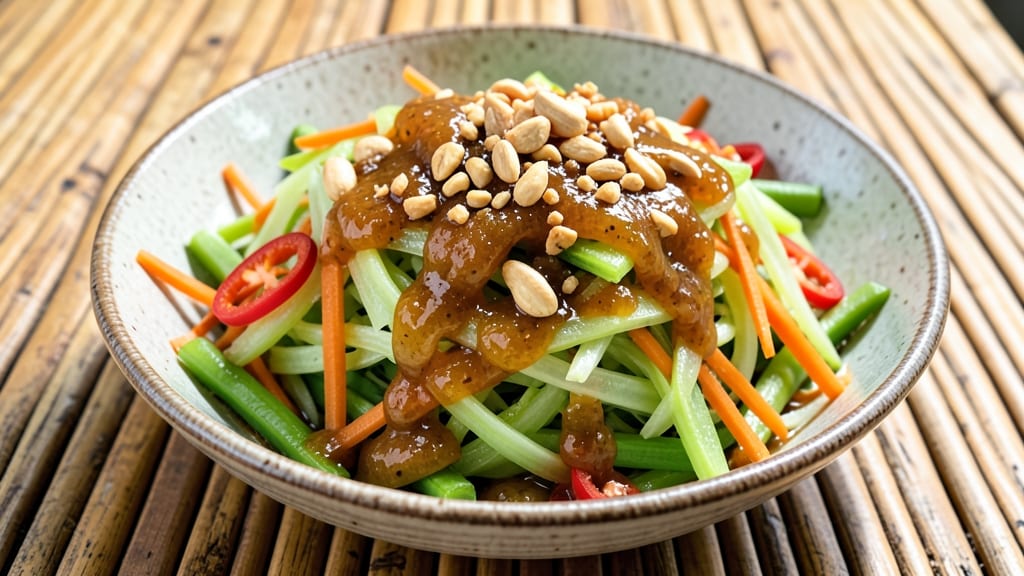
This authentic papaya salad recipe delivers the perfect balance of tangy, spicy, and crunchy flavors that define Thai street food culture. The key lies in properly massaging the shredded papaya with a vibrant dressing of lime, tamarind, and chili—creating a dish that's as refreshing as it is complex.
I've refined this recipe over years of testing, ensuring every bite captures the true essence of Som Tum without relying on hard-to-find ingredients.
The secret to authentic texture begins with ripe papaya—its sweetness mellows as it mixes with the dressing, while the lime juice brightens the flavors and tenderizes the fruit just enough.
Traditional ingredients like tamarind paste and palm sugar provide that signature Thai tang and subtle sweetness, while crushed peanuts add satisfying crunch. For a vegetarian version, we'll substitute fish sauce with a soy sauce and lime blend that mimics its umami depth.
What you'll end up with is a salad that's vibrant green, sticky from the dressing, and packed with contrasting textures—creamy papaya, crisp vegetables, and crunchy peanuts. The heat from the chili balances the sweetness, creating a flavor profile that's both addictive and refreshing.
This version stays true to Thai traditions while being accessible to home cooks with simple substitutions.
Perfect for hot days, as a side dish, or even as a light main course, this papaya salad comes together in just 20 minutes with minimal prep. The technique of massaging the salad ensures the flavors meld perfectly, delivering that restaurant-quality tang and crunch you crave.
Let's get started on creating this authentic Thai classic.
Ingredients for authentic papaya salad
These vibrant ingredients transform into Thailand's iconic street food salad with perfect tangy-spicy balance.
| Ingredient | Amount | Notes |
|---|---|---|
| Ripe Green Papaya 🥒 | 4 cups | Shredded, seeds removed |
| Fresh Lime Juice 🍋 | ½ cup | From about 4-5 limes |
| Tamarind Paste 🍯 | ¼ cup | Thai brand preferred |
| Palm Sugar 🍬 | ¼ cup | Or light brown sugar |
| Crushed Peanuts 🥜 | ½ cup | Roasted, unsalted |
| Red Chili Peppers 🌶️ | 2 whole | Bird's eye or Thai chili |
| Garlic Cloves 🧄 | 4 cloves | Minced finely |
| Shallots 🧅 | ¼ cup | Minced finely |
| Carrots 🥕 | 1 medium | Julienned, about 1 cup |
| Green Beans 🌱 | ½ cup | Trimmed, cut into 1-inch pieces |
| Vegetarian Fish Sauce Substitute 🥫 | ¼ cup | Soy sauce + lime juice blend |
| Kosher Salt 🧂 | 1 tsp | Diamond Crystal preferred |
| Fresh Cilantro 🌿 | ¼ cup | Stems removed, chopped |
| Extra-Virgin Olive Oil 🫒 | 1 tbsp | For tossing |
For authentic Thai flavors, Thai Kitchen brand tamarind paste and palm sugar are ideal—both available at Asian markets or well-stocked grocery stores like Whole Foods. The papaya should be firm yet yielding when pressed, with bright green skin. Look for green papayas labeled 'salad' or 'Som Tum' at specialty stores. For chili peppers, Thai bird's eye chilies deliver the signature heat, but sub with serrano peppers if unavailable. Fresh lime juice is non-negotiable—bottled lacks the bright acidity needed for authentic tang.
No tamarind paste? Substitute 1 tbsp lime juice + 1 tsp brown sugar for the same tangy-sweet balance. Running short on palm sugar? Light brown sugar or coconut sugar work equally well. For the vegetarian fish sauce substitute, mix 0.25 cup soy sauce + 1 tbsp lime juice—this replicates the umami depth while keeping it plant-based. The carrots and green beans should be julienned uniformly to maintain that signature Thai crunch. Pre-cut vegetable mixes from the produce section save time but lack the freshness of hand-cut pieces.
This salad holds beautifully for 24 hours in an airtight container, though the papaya softens slightly after 8 hours. For best texture, assemble just before serving. Store the dressing components separately and mix just before tossing. Keep peanuts in the freezer to maintain crispness—toss them straight from the freezer into the salad for maximum crunch. The dressing can be prepped 2 days ahead and stored in the fridge, making this an excellent make-ahead dish for gatherings.
Why You'll Love This Recipe
- No-Sharp-Knife Night: I’ll admit, shaving green papaya used to intimidate me—until I realized a box grater does 90% of the work. Ten minutes later, you’ve got that signature shredded texture without slicing my fingers off. (Yes, even on a Tuesday night.)
- Tangy-Sweet Magic: The tamarind and palm sugar combo is where this salad gets its soul—sour enough to make your mouth pucker, then sweet enough to smooth it right out. Add a squeeze of lime, and suddenly you’re not just eating a salad; you’re tasting Thailand in a bowl.
- Picnic to Party: This isn’t just lunchbox-friendly—it’s the star of potlucks, BBQs, or lazy Sunday brunches. Serve it over rice for a quick meal, stuff it in wraps for a grab-and-go lunch, or let guests build their own bowls at a gathering. It’s the crowd-pleaser that actually is crowd-pleasing.
- Leftovers That Lie: Between us, this salad tastes better the next day. The flavors meld, the peanuts get even crunchier, and somehow it always disappears faster cold than fresh. Plus, it keeps for days in the fridge—meaning less takeout and more savings. (My wallet thanks me.)
Step-by-step instructions for authentic papaya salad
Master this Thai classic with precise technique and bold flavors—every element must balance for perfect harmony.
Prepare the Vegetable Base
Start by julienning the 1 medium carrot into thin matchsticks about ¼-inch wide. Trim the 0.5 cup green beans and cut them into 1-inch pieces. These should be cut uniformly to ensure even distribution in the salad. I like to use a sharp mandoline for the carrots—it gives you consistent slices every time.
Next, shred the 4 cups ripe green papaya using a sharp knife or a mandoline set to ¼-inch thickness. Remove all seeds and fibrous core first—this prevents bitterness in your salad. Lay the shredded papaya on a clean kitchen towel and gently pat dry with another towel. This step is crucial for achieving that signature crunch without sogginess.
Create the Tangy Dressing
In a small bowl, combine the 0.25 cup tamarind paste with 0.25 cup palm sugar and 0.25 cup vegetarian fish sauce substitute. Stir until the sugar dissolves completely—this creates the foundation of your dressing. The tamarind should be fully incorporated without any graininess.
Add the 0.5 cup fresh lime juice and mix well. The dressing should be thick but pourable—if it's too stiff, add 1-2 tablespoons of water to reach the right consistency. Taste and adjust: you want a balance of sweet, sour, and umami. This is where authenticity comes through—don't skimp on the tamarind or lime, as these create the signature Thai tang.
Build the Flavor Foundation
In a separate small bowl, finely mince the 4 cloves garlic and 0.25 cup shallots together. Heat 1 tablespoon extra-virgin olive oil in a small skillet over medium-low heat. Add the garlic and shallots, cooking for 2-3 minutes until fragrant but not browned—this prevents bitterness. Remove from heat and let cool completely before adding to the dressing.
Next, finely chop the 2 whole red chili peppers (keep seeds for heat). Add them to the cooled garlic mixture along with 1 teaspoon kosher salt. This combination forms the aromatic backbone of your salad. The chili should be finely minced so it distributes evenly without overwhelming any single bite.
Assemble and Toss the Salad
In a large mixing bowl, combine the prepared vegetables: shredded papaya, julienned carrots, and green beans. Pour the dressing over the vegetables and toss gently but thoroughly to coat everything evenly. The salad should glisten slightly from the dressing—this indicates proper distribution.
Add the 0.25 cup chopped fresh cilantro and 0.5 cup crushed peanuts to the bowl. Toss again, being careful not to crush the peanuts further. The peanuts should remain whole for maximum texture contrast. Let the salad sit for 5-10 minutes before serving—this allows the flavors to meld together perfectly.
Pro Tips For Making Authentic Papaya Salad
- SHRED THIN, NOT FINE: I learned this the hard way—grating papaya too finely turns it into mush. Use a sharp knife to slice it paper-thin, then stack and cut into matchsticks. This keeps the texture crisp and the salad’s integrity intact.
- MIX TAMARIND LAST: Tamarind paste is potent. Start with just half the recipe’s amount, then taste as you go—you can always add more. Mixing it in early risks overpowering the bright lime and sweetness, which throws off the balance.
- SALT THE PEANUTS: Skip the pre-salted crushed peanuts. Toss them with a pinch of salt and a drizzle of oil before adding to the salad. This makes them crunchier and prevents them from getting soggy from the lime juice.
- CHILL BEFORE SERVING: Papaya salad tastes best when the flavors meld. Let it sit in the fridge for at least 20 minutes before serving—this lets the lime juice tenderize the papaya just enough without turning it to sludge. (Yes, even if you’re impatient like me.)
Serving suggestions for this authentic papaya salad
Presentation Plating
Serve this vibrant salad in wide, shallow bowls to showcase its colorful layers. I like using banana leaves for an authentic Thai touch—simply lay the leaf on a plate, mound the salad in the center, and garnish with extra peanuts and cilantro.
For a modern twist, arrange the salad on a slate serving board with lime wedges on the side. The key is to keep the presentation bright and inviting, emphasizing the salad's natural colors. 🌿
Garnish Ideas
Fresh Thai basil leaves add a fragrant aroma and beautiful color contrast. Tear them gently and sprinkle over the top just before serving. Another great option is toasted coconut flakes—sprinkle 2 tablespoons for a tropical touch.
For extra heat, serve with chili oil drizzle on the side. These garnishes elevate the dish without overpowering its natural flavors.
Side Dish Pairings
This salad pairs wonderfully with steamed jasmine rice—its mild flavor complements the bold tang. For a heartier meal, serve with grilled lemongrass chicken or tofu satay.
The protein balances the salad's acidity while keeping the meal light. I also love adding Thai iced tea or coconut water to complete the experience. 🥢
Serving Temperature
Serve immediately after tossing while the vegetables retain their crisp texture. The salad's temperature should be room temperature—never chilled, as this dulls the flavors. If prepping ahead, store components separately and assemble just before serving.
The dressing should be slightly sticky but not watery, ensuring perfect texture contrast with each bite.
Portion Sizes
For a light meal, serve 1.5 cups per person. As a side dish, 1 cup pairs perfectly with grilled meats or rice. When serving at gatherings, use small individual bowls to encourage sharing and maintain freshness. The salad's bold flavors make it a crowd-pleaser—just be prepared for seconds! 🍽️
Dietary Adaptations
For gluten-free guests, ensure all ingredients are certified gluten-free (especially soy sauce substitutes). To make it nut-free, omit peanuts and add toasted pumpkin seeds instead. For a spicier version, add 1 extra chili pepper or serve with sriracha on the side.
These adaptations keep the dish inclusive while maintaining its authentic essence. ✨
Nutrition facts
Frequently asked questions
Why does authentic papaya salad need to be massaged?
The massage technique is key to developing the salad's signature sticky texture and flavor balance. When you work the dressing into the shredded papaya, it breaks down the fibers slightly while distributing the tangy-sweet sauce evenly. This creates that signature tangy-spicy crunch that defines Thai street food. Pro tip: Use your hands for best results—forks won't give you that authentic texture!
Can I use regular sugar instead of palm sugar?
Yes, but you'll miss some of the authentic caramel notes. For a 1:1 substitution, use light brown sugar which has molasses that mimics palm sugar's depth. White sugar works in a pinch, but add ½ teaspoon vanilla extract to compensate for the lost complexity. The salad will still taste great—just slightly less traditional.
What's the best way to find ripe green papaya?
Look for papayas that are firm but yield slightly when pressed near the stem. The skin should be bright green, not yellowing. At Asian markets, ask for "Som Tum" papayas—they're specifically grown for salads. In regular grocery stores, check the international produce section. Avoid papayas with soft spots or wrinkled skin, as they'll be too mushy for the salad.
How spicy should this salad be?
The heat level depends on the chili peppers used. Thai bird's eye chilies deliver authentic fiery heat, while serrano peppers offer milder but still noticeable spice. For a mild version, remove seeds and membranes, or use only 1 chili pepper. For extra heat, add ½ teaspoon chili flakes to the dressing. Always taste as you go!
Can I make this salad ahead of time?
Yes, but with smart prep! Store the dressing components separately in the fridge for up to 2 days. Keep the vegetables dry and refrigerated for 1 day max. When ready to serve, mix everything together and let it sit 10 minutes before eating. The papaya will soften slightly if stored too long, but the flavors will still be vibrant.