
Salads
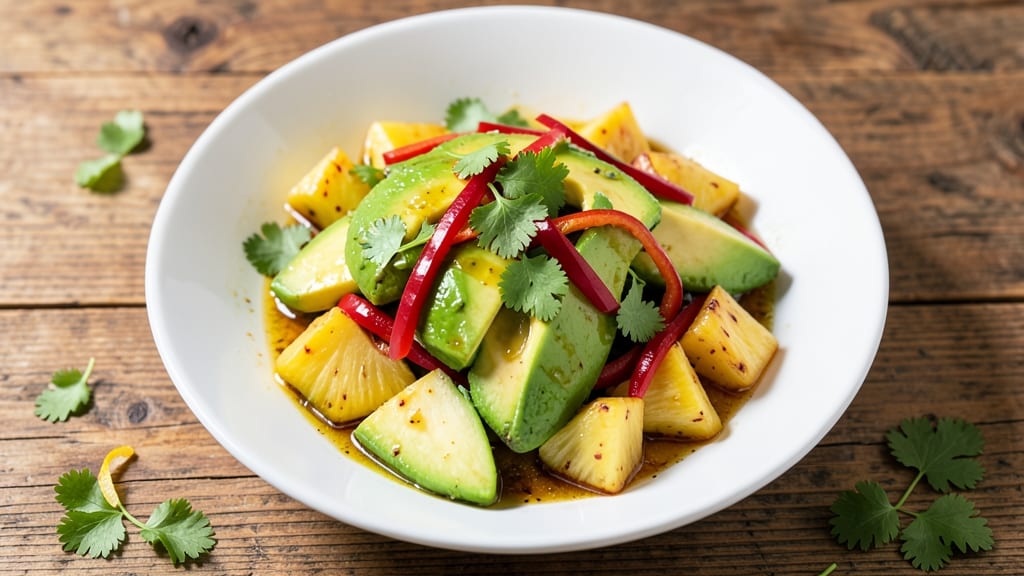
This avocado and pineapple salad recipe delivers the perfect balance of creamy avocado and tropical pineapple sweetness in every bite. The secret lies in ripe avocados that blend into a velvety base, while fresh pineapple adds just the right amount of tangy brightness.
I developed this recipe after craving a refreshing dish that felt light yet satisfying—ideal for summer lunches or vibrant side dishes.
What makes this salad truly special is the texture contrast: the creamy avocado provides a rich foundation, while the crisp pineapple and crunchy toppings add a refreshing bite. The dressing—a zesty lime-cilantro blend—ties everything together with a bright, citrusy finish.
It’s a dish that feels indulgent yet light, perfect for those who love bold flavors without heavy ingredients.
By the time you assemble this salad, you’ll have a vibrant, restaurant-worthy dish that’s ready in just 15 minutes. The avocado stays creamy, the pineapple remains juicy, and the dressing enhances every component without overpowering.
Serve it as a side, in wraps, or over greens for a meal that’s as beautiful as it is delicious.
This recipe is also incredibly versatile—add fresh herbs, toasted nuts, or a drizzle of honey for extra depth. The key is balancing sweetness and acidity, ensuring each bite is harmonious. Let’s get started on this tropical-inspired creation!
Ingredients for avocado and pineapple salad
Tropical flavors meet creamy avocado in this vibrant vegan salad—simple ingredients, bold results.
| Ingredient | Amount | Notes |
|---|---|---|
| Ripe Avocados 🥑 | 2 whole | Firm but yielding when pressed |
| Fresh Pineapple 🍍 | 1 ½ cups | Diced, fresh or thawed frozen |
| Fresh Cilantro 🌿 | ¼ cup | Chopped, stems removed |
| Red Bell Pepper 🌶️ | ½ cup | Diced, any color |
| Lime Juice 🍋 | ¼ cup | Freshly squeezed |
| Extra-Virgin Olive Oil 🫒 | ¼ cup | Light, fruity variety |
| Maple Syrup 🍯 | 1 tbsp | For subtle sweetness |
| Salt 🧂 | ½ tsp | Diamond Crystal preferred |
| Black Pepper 🌶️ | ¼ tsp | Freshly cracked |
| Red Onion 🧅 | ¼ cup | Thinly sliced |
| Toasted Almonds 🥜 | ¼ cup | Sliced, for crunch |
| Sesame Seeds 🌾 | 1 tsp | Toasted lightly |
| Jalapeño Pepper 🌶️ | 1 whole | Seeded, finely diced |
| Coconut Milk 🥥 | ¼ cup | Light, for creamy finish |
Avocados are the star here—pick ones that yield slightly when pressed but aren't mushy. Whole Foods or Trader Joe's usually carry the ripest ones, but check your local market's produce section first. Fresh pineapple is ideal, but thawed frozen works too—just pat it dry to avoid sogginess. For the cilantro, avoid the bagged stuff—it's often wilted. Grab a bunch, wash it, and chop the leaves only. The red bell pepper adds a nice crunch, but any color works—just make sure it's firm and vibrant.
No fresh lime? Bottled lime juice works in a pinch, but it lacks that bright punch. The olive oil should be light and fruity—none of that heavy, peppery stuff. Swap maple syrup for agave or date syrup if needed, but keep it to about the same amount. For extra crunch, toasted pecans or walnuts work great instead of almonds. The jalapeño is optional but adds a nice kick—remove seeds for less heat. If you can't find fresh jalapeños, pickled jalapeños work too, just drain them well.
This salad keeps best in the fridge for 2 days, but the avocado will darken—just toss it with a little extra lime juice when ready to serve. The pineapple stays juicy for 3 days if stored separately. For meal prep, store components separately and assemble when ready to eat. The dressing can be made a day ahead and keeps for 5 days in the fridge. Double the batch—it's perfect for wraps, bowls, or as a topping for grain salads.
Why You'll Love This Recipe
- No-Chop Nightmare: I swear by this one—just halve the avocado, cube the pineapple (or buy pre-cut if you’re that busy), and toss. The bell pepper adds crunch without extra work, and the lime juice keeps everything fresh. Honestly, it’s the kind of salad that makes me feel productive even when I’m scrolling TikTok.
- Tropical Twist: That bright, tangy lime cutting through the creamy avocado? Chef’s kiss. The pineapple’s sweetness balances the pepper’s bite, and the cilantro adds this fresh, herbal lift that makes it taste like a vacation in a bowl. (Yes, even on a Tuesday night.)
- Lunchbox Hero: Between us, this is my go-to for packed lunches—holds up for days, no sad wilted lettuce here. Add a sprinkle of chili flakes for heat, and it’s a full meal. My kid picks out the pineapple chunks first, but still asks for seconds. (Not the prettiest, but the taste makes up for it.)
- Budget Brightener: Avocados and pineapple stretch further than you’d think, especially when you bulk it up with bell pepper. I’ve fed four people for under $10 with this—plus, it’s one of those salads that tastes better the next day. (Pro tip: Keep the lime juice separate until serving.)
Step-by-step instructions for avocado and pineapple salad
Here's how to blend tropical flavors with creamy avocado perfection—no fancy techniques required.
Prepare the Avocado Base for Maximum Creaminess
Cut the 2 whole ripe avocados in half, remove the pits, and scoop the flesh into a food processor. The avocados should be firm but yield slightly when pressed—this ensures a thick, velvety texture without turning mushy. Add the 0.25 cup extra-virgin olive oil, 0.25 cup lime juice, 1 tablespoon maple syrup, 0.5 teaspoon salt, and 0.25 teaspoon black pepper to the processor. Pulse until completely smooth, scraping down the sides as needed. Here's the thing—don't skip the lime juice. It brightens the avocado and prevents browning while adding that essential tang.
Taste the mixture and adjust seasoning if needed. I usually add a pinch more salt or lime juice at this stage, depending on the avocados' natural saltiness. The goal is a balance between creamy richness and vibrant acidity. If the mixture seems too thick, add 1-2 tablespoons of water to reach your desired consistency. This base is the foundation of your salad, so take your time getting it right.
Assemble the Tropical Vegetable Mixture
In a large mixing bowl, combine the 1.5 cups diced fresh pineapple, 0.5 cup diced red bell pepper, 0.25 cup thinly sliced red onion, and 1 whole seeded, finely diced jalapeño pepper. I like to use a sharp chef's knife for this step—it gives you more control over the dice size. The pineapple should be cut into small, even pieces so it distributes evenly throughout the salad. If you're using frozen pineapple, make sure it's completely thawed and drained before adding it to the mix.
Gently toss the vegetable mixture with 0.25 cup chopped fresh cilantro. The cilantro adds freshness and a pop of color, but don't over-mix or the leaves will turn to mush. Here's where it gets fun—taste the mixture before adding the avocado base. The pineapple should be slightly sweet, the bell pepper crisp, and the jalapeño adding just a hint of heat. If you want to mellow the spice, remove the seeds from the jalapeño before dicing.
Combine and Add Crunchy Toppings
Pour the avocado mixture over the vegetable blend and gently fold everything together with a spatula. Be careful not to overmix—we want to maintain that rustic, textured look. The avocado base should coat the vegetables evenly, creating a creamy yet light salad. If the mixture seems too thick after combining, add 1-2 tablespoons of coconut milk to loosen it slightly. The coconut milk adds a subtle creaminess that complements the tropical flavors perfectly.
Transfer the salad to a serving bowl and top with 0.25 cup toasted sliced almonds and 1 teaspoon toasted sesame seeds. The almonds provide a satisfying crunch that contrasts beautifully with the creamy avocado, while the sesame seeds add a nutty depth. I like to toast the almonds and sesame seeds separately in a dry skillet over medium heat for about 2-3 minutes until fragrant. This extra step elevates the salad from good to extraordinary.
Chill and Serve for Optimal Texture
Cover the salad and refrigerate for at least 30 minutes before serving. This chilling time allows the flavors to meld together and the avocado to firm up slightly, preventing it from turning brown. The salad will taste even better after resting—trust me, it's worth the wait. When ready to serve, give the salad a gentle stir to redistribute any toppings that may have settled.
Serve immediately while the ingredients are at their peak texture and temperature. The contrast between the creamy avocado base, juicy pineapple, crisp vegetables, and crunchy toppings makes every bite exciting. This salad pairs beautifully with grilled fish, shrimp cocktails, or even as a standalone light lunch. The creamy avocado base ensures richness without heaviness, making it perfect for warm weather or as a refreshing side dish.
Pro Tips For Making Avocado And Pineapple Salad
- PREP AVOCADOS LAST: Avocados brown fast once cut—toss them with lime juice right before assembling the salad, not while prepping other ingredients. If you’re ahead, store the flesh in a bowl with plastic wrap pressed directly on the surface to slow oxidation.
- CUT PINEAPPLE SMALL: Dice that pineapple into ½-inch cubes, not thick chunks. Smaller pieces soak up dressing better and let the flavors meld faster. (Yes, it looks less "restaurant-plated," but it tastes like a million times more.)
- DRESS IN STAGES: Toss the salad in two parts: first with half the lime juice to brighten the flavors, then add the rest just before serving. This keeps the avocado from turning gray and the pineapple from getting soggy—trust me, you’ll notice the difference.
- USE COLD BELL PEPPER: Run the red bell pepper under cold water before dicing to firm it up—it slices cleaner and holds its shape better in the salad. Skip the hot water rinse; you’re not trying to blanch it, just shock it into submission.
Essential equipment for avocado and pineapple salad
Food Processor
This is the most important tool for creating the creamy avocado base. I use a Ninja BN601 food processor because it handles avocados beautifully without overheating. The blades should be sharp enough to puree the avocados into a smooth, velvety texture in 30-45 seconds.
If you don’t have a food processor, a high-powered blender like the Vitamix 5200 works too—just pulse instead of blending continuously to avoid overheating. 🥑
Mixing Bowls
Use a large glass mixing bowl (at least 8-inch diameter) for assembling the salad. Glass bowls keep ingredients cold and are easy to clean. I prefer Pyrex bowls because they’re sturdy and stackable.
For serving, a wide, shallow bowl helps showcase the vibrant colors—think Le Creuset stoneware if you want a restaurant-style presentation. Avoid metal bowls, as they can react with acidic ingredients like lime juice.
Knife and Cutting Board
A sharp chef’s knife (like the Wüsthof Classic 8-inch) is essential for dicing pineapple, bell pepper, and red onion evenly. I always use a cutting board (preferably bamboo or plastic) to protect my knives. For pineapple, a serrated knife helps cut through the tough skin without slipping.
Pro tip: Score the pineapple’s base first to create a stable cutting surface. The goal is small, even dice—about ¼-inch pieces—for consistent texture throughout the salad. 🍍
Measuring Tools
Precision matters in this recipe, so invest in a stainless steel measuring set (like OXO Good Grips). For the lime juice and olive oil, a small liquid measuring cup with markings in tablespoons ensures accuracy.
The 1 tablespoon maple syrup and ½ teaspoon salt need exact measurements—too much sweetness or salt can overpower the delicate flavors. A spoon rest keeps your knives safe while you measure, and a microplane comes in handy for zesting lime if you want extra brightness.
Skillet for Toasting
Toast the almonds and sesame seeds in a nonstick skillet over medium heat for 2-3 minutes until fragrant. I use an All-Clad Stainless Steel skillet because it heats evenly and won’t stick. Keep a close eye on them—they burn quickly!
A small saucepan works too if you’re toasting just the seeds. The nutty aroma from toasting enhances the salad’s depth, so don’t skip this step. For extra crunch, spread the toasted toppings on a wire rack to cool before adding them to the salad. ✨
Serving Tools
Serve the salad in a wide, shallow dish to highlight its vibrant colors. A ceramic or glass platter (like Corelle stoneware) keeps the salad cold and looks elegant. For garnishing, a small spoon helps distribute the sesame seeds and almonds evenly.
If you’re serving this as a side, a slotted spoon makes it easy to scoop without disturbing the toppings. For meal prep, store leftovers in airtight glass containers (like Mason jars) to maintain freshness for up to 2 days. 💫
Nutrition facts
Frequently asked questions
Can I make this salad without avocado?
The avocado is key for that creamy texture, but you can substitute with ½ cup mashed silken tofu or ¼ cup Greek yogurt for a similar consistency. Just add a splash of lime juice to balance the flavors. For a tropical twist, try ½ cup blended coconut cream instead—it adds a subtle sweetness that complements the pineapple beautifully.
How do I prevent the avocado from turning brown? Lime juice is your best friend here!
What's the best way to store leftovers?
Store the salad in an airtight container with a layer of plastic wrap pressed directly on the surface to minimize air exposure. Keep it refrigerated for up to 2 days. For longer storage, separate the avocado base and pineapple mixture—store them in separate containers and reassemble when ready to eat. The pineapple stays fresh for 3 days this way, while the avocado base keeps its texture for 2 days.
Can I use frozen pineapple instead of fresh?
Yes, but thaw it completely first and pat it very dry with paper towels to remove excess moisture. Frozen pineapple works well, but fresh gives the best texture and flavor. If using frozen, you might want to add 1 extra tablespoon of lime juice to compensate for the lack of natural juiciness. For even better results, drain the thawed pineapple in a colander for 10 minutes before using.
What makes this salad vegan?
This recipe is naturally vegan because it contains no animal products—just plant-based ingredients like avocado, pineapple, vegetables, and coconut milk. The dressing uses olive oil and maple syrup instead of dairy or eggs. The only potential concern is cross-contamination if you're serving it in a restaurant setting, but at home, this salad is completely plant-powered and packed with tropical flavors.