
Side Dishes
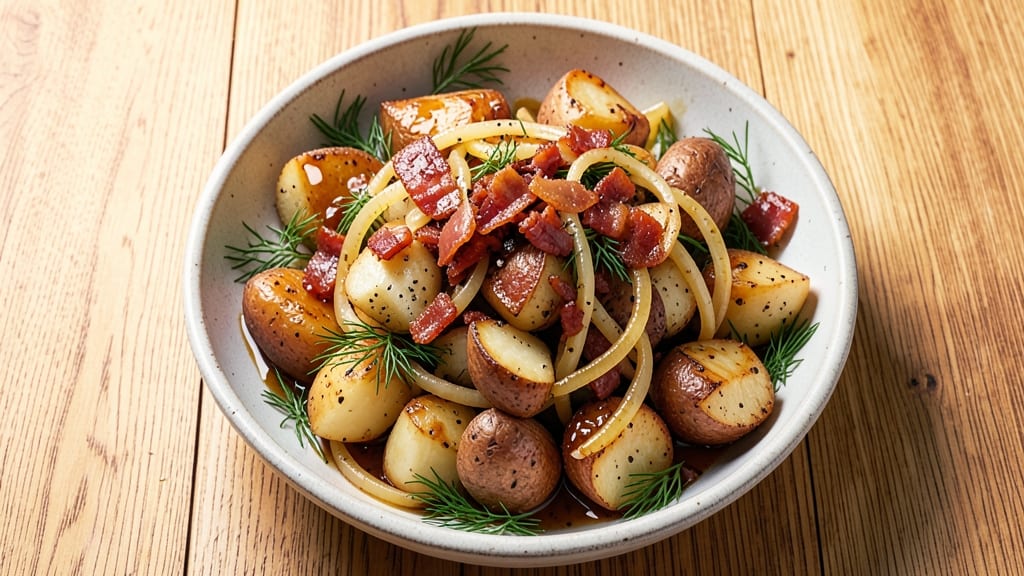
This baked German potato salad recipe transforms simple potatoes into a warm, crispy-edged masterpiece that steals every meal. The secret lies in baking the potatoes until tender and golden, then topping them with caramelized onions and a tangy vinegar dressing that cuts through the richness. I developed this version after years of testing—it’s the one that finally delivers that perfect balance of textures and flavors.
The beauty of this recipe is its simplicity: just a handful of ingredients, a single baking sheet, and about 45 minutes of hands-off time. The potatoes develop a crispy exterior while staying fluffy inside, and the onions caramelize into sweet, crunchy bits that add depth.
This isn’t your average cold potato salad—it’s a warm, satisfying side that pairs perfectly with roasted meats or hearty sandwiches.
What you’ll end up with is a dish that’s crispy on the edges, tender in the center, and topped with a glossy, tangy dressing that ties everything together.
The onions add a sweet, caramelized crunch that contrasts beautifully with the soft potatoes, while the vinegar dressing keeps the flavors bright and balanced. It’s the kind of side that makes people ask for seconds—and the recipe.
Serve it warm alongside roasted chicken, pork chops, or even as a hearty sandwich filling. The leftovers reheat beautifully, making it perfect for meal prep or feeding a crowd. Let’s get started—this recipe is about to become your new favorite side dish.
Ingredients for baked german potato salad
Just twelve ingredients transform humble potatoes into crispy-edged, caramelized-onion-topped German potato salad perfection.
| Ingredient | Amount | Notes |
|---|---|---|
| Russet Potatoes 🥔 | 3 lb | Large, unpeeled, cut into 2-inch chunks |
| Yellow Onions 🧅 | 2 whole | Medium, thinly sliced for caramelizing |
| Extra-Virgin Olive Oil 🫒 | ½ cup | For tossing and baking potatoes |
| White Vinegar 💧 | ¼ cup | White or apple cider vinegar |
| Dijon Mustard 🌶️ | 1 tbsp | For tangy dressing depth |
| Granulated Sugar 🍚 | 2 tbsp | Balances vinegar sharpness |
| Salt 🧂 | 1 ½ tsp | Kosher or sea salt preferred |
| Black Pepper 🌶️ | ½ tsp | Freshly ground for best flavor |
| Fresh Parsley 🌿 | ¼ cup | Chopped, for fresh garnish |
| Garlic Cloves 🧄 | 3 cloves | Minced for dressing flavor |
| Balsamic Vinegar 💧 | 1 tbsp | For final dressing richness |
| Fresh Thyme Leaves 🌿 | 1 tsp | Optional, for herbal depth |
The potatoes are the foundation—Russet gives the best crispy texture, but Yukon Gold works too. Buy them fresh (within a week of harvest) for maximum starch and crispiness. I prefer Whole Foods or local farmers markets for the best quality, but any grocery store's Russets will do. For the onions, yellow onions caramelize best—red onions add color but burn faster. Thinly slice them about 1/8-inch thick for even cooking. The key is patience here: let them caramelize slowly until deep golden brown.
No white vinegar? Apple cider vinegar or lemon juice works in a pinch, though the flavor will differ slightly. Fresh thyme is ideal, but dried thyme at half the amount gets you close. The Dijon mustard adds depth—skip it if you dislike tang, but I recommend keeping it. For the onions, if you burn them, start over—they should be sweet and glossy, not bitter. The sugar in the dressing balances the vinegar; if you prefer less sweetness, reduce to 1 tbsp. And if you're short on parsley, chives or green onions work beautifully.
Potatoes keep in a cool, dark place for 2 weeks—use the oldest first. Once baked, store leftovers in the fridge for 4-5 days (they reheat beautifully). For meal prep, I portion the dressing separately and toss it in just before serving to keep the potatoes crispy. The onions can be caramelized ahead and stored in the fridge for 5 days—just reheat gently before adding to the potatoes. This dish also freezes well for up to 3 months, though texture may soften slightly.
Why You'll Love This Recipe
- No Boil, No Stress: I just toss halved Russets and sliced onions on a sheet pan, drizzle with olive oil, and let the oven do the work. Zero chopping stress, zero stove clutter—just crispy edges and tender centers by the time you’re done.
- Tangy Crispy Magic: That vinegar-Dijon dressing clings to every bite, cutting through the richness while the onions caramelize into sweet, jammy perfection. Honestly, the flavor balance is what makes this salad stand out—no mayo, no fuss, just bold taste.
- Picnic or Potluck Hero: Between us, this is my go-to for summer gatherings because it travels well, stays fresh for days, and even my picky uncle loves it. Serve it warm or cold—it’s just as good the next day, which means less stress for you.
- Budget-Friendly Staple: Russets and onions are cheap, and this recipe stretches easily for leftovers. I’ll be real: I’ve fed a crowd of eight with one big pan, and the cost per serving is laughably low. Plus, the dressing lasts for weeks if you make extra.
Step-by-step instructions for warm potatoes with crispy onion crunch
Here's how to create tender baked potatoes with perfectly caramelized onions and a tangy dressing.
Prepare and Bake the Potatoes
Preheat your oven to 400°F and line two large baking sheets with parchment paper. Cut the 3 lb Russet Potatoes into 2-inch chunks, leaving the skin on for texture. Toss the potato pieces with 0.5 cup Extra-Virgin Olive Oil and 1.5 tsp Salt until evenly coated.
Spread the potatoes in a single layer on the baking sheets, ensuring they don't overlap. Bake for 30-35 minutes, stirring once halfway through, until the potatoes are fork-tender with slightly crisp edges. You'll know they're done when they yield easily to a fork but still hold their shape. Remove from the oven and let them cool slightly while you prepare the onions.
Caramelize the Onions
While the potatoes bake, thinly slice the 2 whole Yellow Onions and separate the rings. Heat 1 tablespoon of the Extra-Virgin Olive Oil in a large skillet over medium-low heat. Add the onions and cook, stirring occasionally, for 20-25 minutes until they turn a deep golden brown and are tender.
This slow cooking process is crucial for developing the onions' natural sweetness and achieving that signature crispy texture. If the onions start to stick, add a splash of water and stir to deglaze. Once caramelized, transfer the onions to a plate and set aside.
Make the Tangy Dressing
In a small bowl, whisk together 0.25 cup White Vinegar, 1 tbsp Dijon Mustard, 2 tbsp Granulated Sugar, 0.5 tsp Black Pepper, 3 cloves Garlic Cloves (minced), 1 tbsp Balsamic Vinegar, and 1 tsp Fresh Thyme Leaves. Gradually whisk in 2 tablespoons of the Extra-Virgin Olive Oil from the potatoes until the dressing emulsifies.
The sugar balances the acidity of the vinegar, while the mustard adds depth. The thyme and garlic provide an aromatic backbone that ties everything together. Taste and adjust seasoning if needed, adding a pinch more salt or sugar as necessary.
Combine and Serve
In a large bowl, gently toss the warm potatoes with the caramelized onions and the dressing. Fold carefully to avoid breaking the potatoes or onions. Let the salad sit for 5 minutes to allow the flavors to meld together.
Garnish with 0.25 cup Fresh Parsley (chopped) just before serving. The parsley adds a fresh contrast to the rich, tangy flavors. Serve immediately while the potatoes are still warm and the onions retain their crisp texture. This salad tastes even better the next day as the flavors develop further.
Pro Tips For Making Baked German Potato Salad
- Parboil First, Bake Twice: I learned this the hard way—skipping the parboil leaves you with uneven doneness and a gummy center. Cut Russets into 1-inch chunks, boil them 8 minutes in salted water, then drain and let them steam-dry for 5 minutes before baking. The second bake at 400°F (200°C) for 25-30 minutes turns them crispy outside while keeping them fluffy inside—no one wants a sad, mealy potato.
- Slice Onions Thin, Soak Them: Yellow onions add bite, but raw slices turn bitter and watery in the dressing. Thinly slice them (almost translucent) and toss with 1 tablespoon of vinegar and a pinch of salt for 10 minutes. This softens their edge and keeps the salad from turning into a mushy onion stew—trust me, your taste buds will notice.
- Toss Dressing Early, Let It Marinate: Dumping the vinegar, mustard, and oil on potatoes right before serving? You’re missing out. Mix the dressing (start with 3 tablespoons vinegar, 1 tablespoon Dijon, and ¼ cup olive oil) and toss it with the warm potatoes right after they come out of the oven. Let the bowl sit 10 minutes—this lets flavors meld and the potatoes absorb the tang instead of sitting in a pool of dressing.
- Check Potatoes for Doneness: The oven’s hot, you’re distracted, and suddenly your potatoes are either raw or burnt. Pierce them with a fork or skewer after 25 minutes—if it slides in like butter, they’re done. If it meets resistance, bake another 5-10 minutes. Overlooking this leads to either undercooked chunks or charred edges, and neither makes for a satisfying salad. (Yes, even if you’re impatient like me.)
Regional styles of these flavors
Bavarian Crispy Style
In Bavaria, this potato salad is known as "Kartoffelsalat mit Zwiebeln" and often includes a touch of smoked bacon or speck for extra richness. I like to add 2 oz diced bacon, cooked until crispy, and fold it into the potatoes just before serving.
The smoky flavor pairs perfectly with the caramelized onions and tangy dressing. For an authentic touch, use apple cider vinegar instead of white vinegar—it adds a subtle sweetness that balances the bacon’s saltiness. 🔥
Saxony Warm Version
Saxony’s version, called "Sächsischer Kartoffelsalat", often includes pickled mustard seeds and a splash of beer in the dressing. I substitute 2 tbsp of light lager (like Stella Artois) for part of the white vinegar—just reduce the vinegar to ¼ cup and add 2 tbsp beer to the dressing.
The beer’s maltiness softens the acidity, creating a smoother, more rounded flavor. For the mustard seeds, toss in 1 tsp yellow mustard seeds (pickled in vinegar) while the potatoes are still warm for a crunchy, tangy bite.
Swabian Mustard Twist
Swabia’s take, "Schwäbischer Kartoffelsalat", leans heavily on Dijon mustard and often includes a splash of cream for a velvety texture. I boost the Dijon to 2 tbsp and stir in 2 tbsp of heavy cream at the end to bind everything together.
The cream adds a luxurious mouthfeel while keeping the dish tangy. For extra depth, I add ½ tsp of ground nutmeg to the dressing—it’s subtle but elevates the dish with a warm, earthy note. ✨
Northern German Crunch
In Northern Germany, this salad often features thinly sliced apples and a sprinkle of poppy seeds for texture. I add 1 small apple (like Granny Smith), thinly sliced, along with 1 tsp poppy seeds to the dressing mixture.
The apples add a crisp, slightly tart contrast to the rich potatoes, while the poppy seeds provide a nutty crunch. For a smoky twist, I sometimes toss in ½ tsp of smoked paprika with the poppy seeds—it’s a game-changer for adding depth without overpowering the dish.
Modern German Fusion
For a contemporary twist, I’ve experimented with roasted garlic and goat cheese crumbles. Replace the minced garlic with 3 cloves of roasted garlic (roasted at 400°F for 20 minutes) and fold in ½ cup crumbled goat cheese just before serving.
The roasted garlic adds a mellow sweetness, while the goat cheese introduces a creamy, tangy element that brightens the dish. This version is perfect for brunch or as a side for grilled lamb. 💫
Nutrition facts
Frequently asked questions
Can I use red potatoes instead of Russets?
Red potatoes work but won't give the same crispy texture. They're waxier and hold their shape better, but they won't develop that satisfying golden crust. If you prefer them, try baking them at 375°F for 40-45 minutes and add an extra 1 tbsp olive oil to help create some crispiness. For best results, stick with Russets or Yukon Golds—they're designed for this baking method.
How do I prevent the potatoes from sticking to the baking sheet?
Line your baking sheets with parchment paper or use silicone baking mats—they create a non-stick surface. If you're worried about sticking, toss the potato chunks with an extra 1 tbsp olive oil before baking. Also, make sure your potatoes aren't overlapping on the sheet, as this can cause steam and sticking. For extra insurance, flip them halfway through baking.
Can I make this potato salad ahead of time?
This salad actually tastes better the next day as the flavors meld together. Bake the potatoes and caramelize the onions as directed, then store them separately in the fridge. When ready to serve, simply toss with the dressing and reheat gently in the oven at 350°F for 10 minutes to restore crispiness. The onions can be caramelized up to 5 days ahead and stored in the fridge.
What's the secret to perfectly caramelized onions?
Patience is key! Cook them over medium-low heat for 20-25 minutes without stirring too frequently. The longer they cook, the sweeter they become. If they start to stick, add a splash of water and scrape up any browned bits from the pan. The onions should be deep golden brown and tender—almost jammy in texture. Never rush this step, as it makes all the difference in flavor.
Can I make this vegetarian?
This recipe is already vegetarian, but you can boost the flavor with vegetarian-friendly additions. Try adding 2 oz of crispy fried onions or ½ cup of smoked paprika to the dressing for extra depth. For a protein boost, fold in ½ cup of chickpeas (roasted with olive oil and smoked paprika) or ½ cup of crumbled feta cheese before serving.