
Main Courses
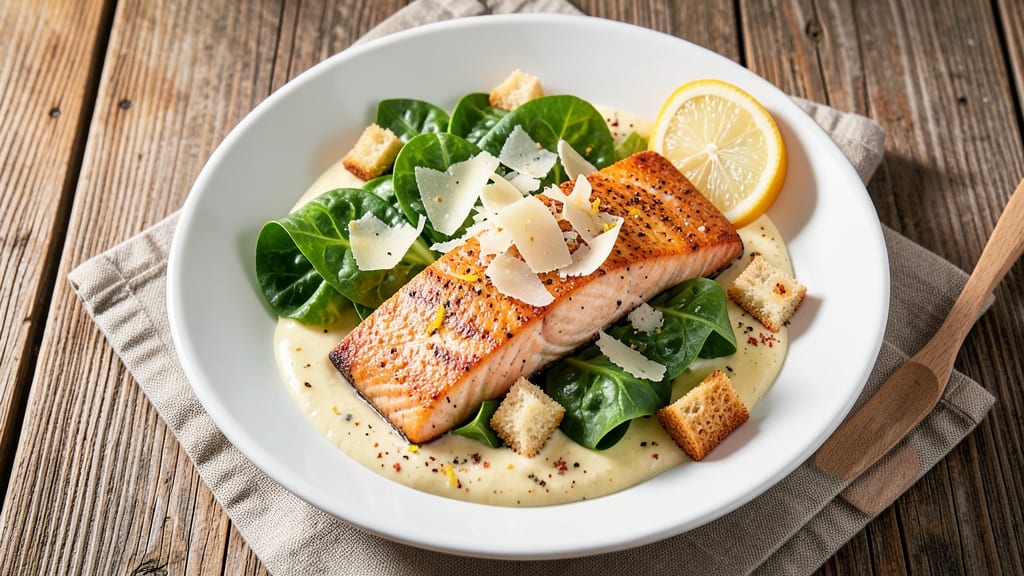
This baked salmon Caesar salad recipe delivers restaurant-quality flakiness and crispy Parmesan crunch in one elegant dish. The secret lies in perfectly seasoned salmon that bakes to tender perfection while the Caesar dressing transforms crisp romaine into a satisfying meal.
I've refined this combination over years of testing—balancing the richness of the salmon with the tangy, creamy elements of the salad creates harmony in every bite.
What sets this recipe apart is the foolproof technique for achieving both crispy Parmesan and flaky salmon simultaneously.
The salmon gets a light seasoning of lemon, garlic, and dill before baking at just the right temperature, while the Caesar dressing (homemade or store-bought) gets tossed with romaine, croutons, and freshly grated Parmesan. The result?
A dish that's as impressive as it is delicious, with textures that contrast beautifully—crispy, creamy, crunchy, and tender all working together.
The assembly is simple but strategic: baked salmon rests while the salad comes together, ensuring warm fish meets cool, crisp components. This isn't just a salad—it's a complete meal with protein, freshness, and satisfying crunch.
The lemon wedges add a bright finish, and a drizzle of extra dressing ties everything together. Perfect for weeknight dinners or special occasions, this recipe proves healthy eating can be indulgent.
Pair with a crisp white wine or sparkling water with lemon for the ultimate dining experience. The key to success? Don't overcook the salmon, and use freshly grated Parmesan for that signature crispy texture. Let's create this balanced, satisfying dish that's sure to become a favorite.
Ingredients for baked salmon caesar salad
Restaurant-quality ingredients ensure flaky salmon and crispy Parmesan in every bite of this elegant dish.
| Ingredient | Amount | Notes |
|---|---|---|
| Center-Cut Salmon Fillets 🐟 | 1 ½ lb | Skin-on for crispier texture |
| Romaine Lettuce Hearts 🥬 | 2 whole | Heads split into leaves |
| Fresh Parmesan Cheese 🧀 | ½ cup | Freshly grated from block |
| Caesar Dressing 🥄 | ¾ cup | Homemade or high-quality store-bought |
| Plain Croutons 🍞 | ½ cup | Toasted for extra crunch |
| Lemon Wedges 🍋 | 2 whole | For garnish and serving |
| Extra-Virgin Olive Oil 🫒 | 1 tbsp | For salmon seasoning |
| Fresh Dill 🌿 | ¼ cup | Chopped finely for salmon |
| Garlic Cloves 🧄 | 2 cloves | Minced for salmon and dressing |
| Diamond Crystal Kosher Salt 🧂 | ½ tsp | For seasoning salmon |
| Freshly Ground Black Pepper 🌶️ | ¼ tsp | For salmon seasoning |
| Anchovy Fillets 🐟 | 2 whole | Optional for dressing depth |
| Mayonnaise 🥄 | ¼ cup | For homemade dressing base |
| Worcestershire Sauce 🍶 | 1 tbsp | For homemade dressing |
| Dijon Mustard 🍯 | 1 tsp | For homemade dressing |
The salmon fillets are non-negotiable for texture—center-cut ensures even cooking and that prized flakiness. Wild-caught Alaskan salmon from Trader Joe's or Whole Foods delivers superior flavor, but any high-quality fillet works. Look for vibrant color and firmness when purchasing. Fresh dill and garlic are essential for the salmon's seasoning; Penzeys Spices carries excellent dried alternatives if fresh isn't available. The Parmesan must be freshly grated—pre-shredded lacks the crispy texture this dish demands. For the dressing, Primal Kitchen or Bolthouse Farms offer reliable store-bought options, but homemade elevates the dish significantly.
No anchovies? Omit them entirely—the dressing still works beautifully. For the croutons, homemade from sourdough adds depth, but store-bought works in a pinch. The Caesar dressing can be made ahead; store it in an airtight container for up to 5 days. If using homemade dressing, balance the flavors carefully: the mayo provides creaminess, while the Worcestershire and Dijon add tang. For the salmon, don't overcrowd the pan—leave space for even baking. The lemon wedges should be freshly squeezed; bottled juice lacks the bright finish needed to cut through the richness of the salmon and dressing.
Salmon should rest for 5-10 minutes after baking before serving—this ensures clean slices and maintains moisture. Store any leftover dressing in the fridge for up to 5 days, but the croutons lose their crunch after 2 days, so make them fresh if possible. The grated Parmesan keeps well in the freezer for 3 months when stored in an airtight container. For meal prep, assemble the salad components separately and combine just before serving to maintain crispness. This dish reheats poorly, so it's best enjoyed fresh from the oven.
Why You'll Love This Recipe
- Foolproof Salmon: I swear by center-cut fillets—they stay together perfectly while baking, no flaking drama. Just season, bake at 400°F for 12-15 minutes, and you’ve got restaurant-quality protein with zero fuss.
- Umami Bomb: That crispy salmon skin paired with fresh Parmesan shavings and tangy Caesar dressing? It’s the kind of combo that makes you pause mid-bite. Honestly, the dressing’s garlic-forward punch cuts through the richness like a dream.
- Lunchbox Hero: Between us, this is my go-to for meal prep—salmon holds up for days, and the lettuce stays crisp if you store it separately. Toss everything together in the morning, and you’ve got a protein-packed lunch that feels fancy but costs next to nothing.
- Weeknight Magic: One sheet pan, 20 minutes, and zero last-minute stress. I’ll take that over takeout any day—especially when the croutons add that satisfying crunch without needing to toast them separately. (Yes, even on a Tuesday night.)
Step-by-step instructions for baked salmon Caesar salad
Here's how to achieve perfectly flaky salmon with a crispy Parmesan crust and vibrant Caesar components.
Prepare the Salmon for Baking
Preheat your oven to 400°F and line a baking sheet with parchment paper. Pat the 1.5 lb center-cut salmon fillets completely dry with paper towels—this ensures maximum crispiness. Place the fillets skin-side down on the prepared sheet.
In a small bowl, combine the 1 tbsp extra-virgin olive oil, 0.5 tsp diamond crystal kosher salt, 0.25 tsp freshly ground black pepper, and 0.25 cup finely chopped fresh dill. Rub this mixture evenly over both sides of each salmon fillet, pressing gently to help the seasoning adhere. The skin should be completely coated with oil for that signature crispy texture.
Let the salmon sit at room temperature for 10 minutes before baking—this ensures even cooking from edge to center. I know it's tempting to skip this step, but it makes all the difference in preventing cold spots in the finished fillets.
Bake the Salmon to Flaky Perfection
Bake the salmon for 12-15 minutes, depending on thickness, until the internal temperature reaches 145°F and the edges are golden brown. You'll notice the skin will crisp up beautifully while the flesh remains perfectly moist. The salmon is done when it flakes easily with a fork and pulls away cleanly from the skin.
Here's the thing—I always check the skin first. If it's not crispy enough after 12 minutes, return it to the oven for another 1-2 minutes. Overcooking is easy, so resist the urge to peek at the oven window during the last 5 minutes of baking.
Once done, carefully transfer the salmon to a serving platter and let it rest for 5 minutes. This resting period allows the juices to redistribute, ensuring every bite stays deliciously moist. If you cut into it too soon, you'll lose all that precious flavor.
Assemble the Caesar Salad Base
While the salmon bakes, split the 2 whole romaine lettuce hearts into individual leaves and arrange them on a large platter or individual plates. The crisp texture of romaine provides the perfect foundation for this dish. I like to fan the leaves slightly to create an attractive presentation.
Drizzle the 0.75 cup Caesar dressing evenly over the lettuce, being careful not to oversaturate. The dressing should coat the leaves lightly, allowing each bite to deliver that classic tangy flavor without making the salad soggy. If you're using homemade dressing, this is where those anchovy fillets, Worcestershire sauce, and Dijon mustard really shine.
Sprinkle the 0.5 cup plain croutons evenly over the dressed lettuce. The croutons should be toasted and still warm for maximum crunch. If they've cooled completely, you can quickly toast them in a dry skillet over medium heat for 2-3 minutes to restore their crispness.
Finish with Parmesan and Garnish
Generously sprinkle the 0.5 cup freshly grated Parmesan cheese over the assembled salad. I use a microplane for this step—it creates those perfect, fine shavings that melt slightly when the salad is served. The cheese should cover the lettuce completely, creating that signature Caesar look.
Finally, garnish each serving with the 2 whole lemon wedges and any remaining chopped fresh dill. The lemon adds a bright, citrusy contrast to the rich flavors, while the dill ties everything together with its fresh aroma. Serve the salmon immediately alongside the Caesar salad for the ultimate dining experience.
Here's a pro tip: If you're serving this dish immediately, I like to place the salmon fillets directly on top of the Caesar salad just before serving. The warm salmon will melt the Parmesan slightly, creating a delicious sauce that coats every bite.
Pro Tips For Making Baked Salmon Caesar Salad
- Bake Salmon Skin-Side Up: The skin won’t stick if you flip it halfway—just slide a spatula under the fillet at 12 minutes. I learned this the hard way after wrestling with stuck salmon for years. Center-cut fillets are thick; 14-16 minutes at 400°F (until internal temp hits 135°F) gives you flaky perfection without drying it out.
- Dry the Lettuce First: Toss romaine hearts with paper towels to remove excess moisture—wet leaves make the dressing slide off instead of clinging. I skip this sometimes, and the salad feels soggy by the time the salmon’s done. Takes 30 seconds but makes a real difference.
- Shave, Don’t Grate Parmesan: Use a microplane or sharp knife to shave fresh Parmesan over the salad right before serving. Grated cheese loses its texture and melts into the dressing. Sounds fussy, but it’s the thing that matters most for that restaurant-quality crunch and depth.
- Toast Croutons Separately: Toss croutons in the oven for 3-4 minutes at 375°F while the salmon bakes—they’ll get crispier without stealing heat from your fish. I was skeptical until I tried it; now I never skip this step. Just don’t overcrowd the pan, or they’ll steam instead of crisp.
Troubleshooting great baked salmon caesar salad
Salmon Overcooking
Your salmon turns dry and rubbery when baked beyond 145°F internal temperature. I've ruined many fillets by leaving them in too long—always use an instant-read thermometer. For 1-inch thick fillets, 12-15 minutes at 400°F is ideal.
If the skin isn't crispy enough after this time, broil for 1-2 minutes instead of baking longer. 🌡️
Skin Not Crispy
The secret to crispy salmon skin is dry patting and even oil application. Use paper towels to remove all moisture before seasoning, then rub 1 tbsp olive oil directly on the skin-side.
If the skin still doesn't crisp, try baking skin-side up on a wire rack over the baking sheet for better airflow. A 1-minute broil at the end can also help.
Salad Dressing Too Thin
Homemade Caesar dressing often separates or becomes too thin. The fix? Add 1 tbsp Dijon mustard or 1 tsp mayonnaise as a binder. For extra richness, whisk in 1 tbsp grated Parmesan while making the dressing.
If using store-bought, check the label—some brands are thinner than others. I like Primal Kitchen for its balanced consistency.
Parmesan Losing Crunch
Pre-shredded Parmesan melts too quickly when heated. Always use freshly grated cheese from a block with a microplane. For extra crunch, sprinkle the Parmesan on top of the salad just before serving.
If you must use pre-shredded, store it in the freezer to maintain texture—it loses crispness faster at room temperature. 🧀
Lettuce Turning Soggy
Over-dressing or wet croutons cause soggy romaine. Drizzle the Caesar dressing lightly over the lettuce and toss gently—just until each leaf is lightly coated. For croutons, toast them fresh in a dry skillet for 2-3 minutes before adding.
If using homemade croutons, bake them until golden brown and store in an airtight container to maintain crispness.
Uneven Cooking
Thick and thin portions of salmon cook at different rates. For even results, place thicker sides of the fillets toward the center of the baking sheet. If your salmon has varying thickness, cut it into equal-sized portions before baking.
Another trick? Let the salmon rest at room temperature for 10 minutes before baking—this helps even out the internal temperature. ⏱️
Nutrition facts
Frequently asked questions
Can I use frozen salmon for this recipe?
Yes, but thaw it properly first! Place frozen salmon in the refrigerator for 24 hours or use the quick thaw method: seal in a bag and submerge in cold water (change water every 30 minutes). Never thaw at room temperature—it promotes bacterial growth. Pat completely dry before seasoning to ensure crispy skin.
How do I make this dish gluten-free?
Swap regular croutons for gluten-free breadcrumbs toasted in olive oil until crispy. Use tamari instead of soy sauce in homemade dressing, and verify all store-bought Caesar dressing ingredients for hidden gluten. For extra crunch, add gluten-free corn nuts or toasted pumpkin seeds to the salad.
What's the best way to reheat leftovers?
Reheat salmon gently in a 350°F oven for 5-7 minutes on a parchment-lined tray to maintain moisture. The Caesar salad doesn't reheat well—assemble fresh components when serving leftovers. For extra flavor, warm the dressing separately and drizzle over the salad just before eating.
Can I make the Caesar dressing ahead of time?
Store homemade dressing in an airtight container in the fridge for up to 5 days. For best texture, whisk vigorously before using. Store-bought dressings typically last 3-4 days once opened. Keep the croutons separate until ready to serve to maintain crispness.
What's the ideal wine pairing for this dish?
A crisp Sauvignon Blanc or Pinot Grigio complements the salmon beautifully. The acidity cuts through the richness while enhancing the lemon and Parmesan flavors. For red wine lovers, a light Pinot Noir works surprisingly well with the salmon's natural oils. Chill white wines to 45-50°F for optimal balance.