
Sauces & Condiments
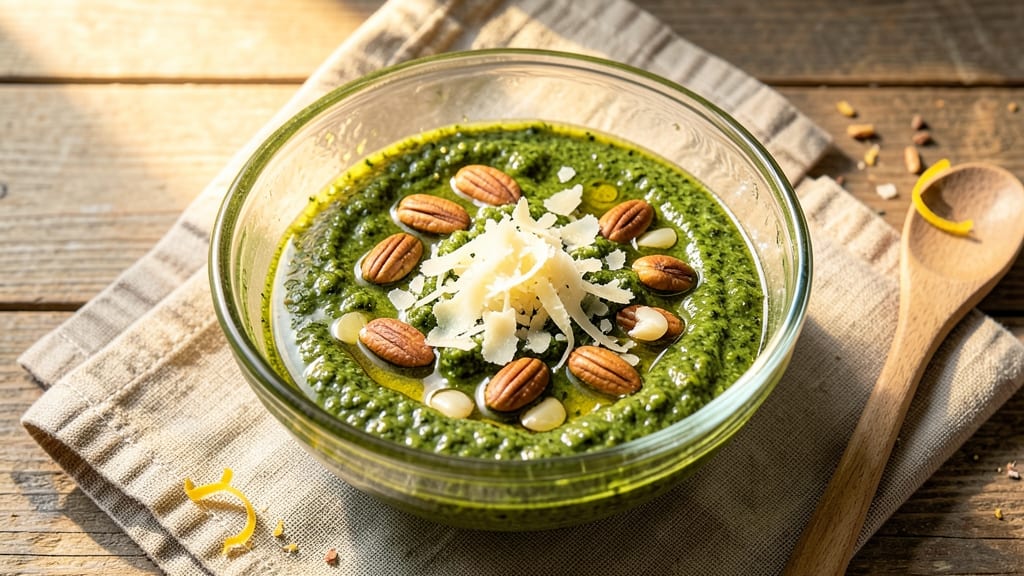
This basil pesto salad dressing recipe transforms fresh basil into a vibrant, herb-packed sauce that elevates every dish it touches. The secret lies in blending bright basil with garlic, olive oil, and toasted nuts for a texture that's creamy yet light—perfect for salads, pasta, or sandwiches.
I developed this version to capture that restaurant-quality pesto flavor without the heaviness, using just 5 ingredients and 10 minutes of prep time.
The beauty of this dressing is its versatility. It works as a tangy vinaigrette when thinned with lemon juice or a rich, creamy sauce when blended with a touch of dairy (or vegan alternatives).
The toasted pine nuts add crunch and depth, while Parmesan cheese—if using—brings a salty, umami kick that ties everything together. What makes it truly special is how it transforms simple greens into a gourmet meal in minutes.
What you'll end up with is a dressing that's bright, herbaceous, and packed with flavor—far superior to anything store-bought. It keeps beautifully in the fridge for up to a week, making it ideal for meal prep, and freezes well for up to three months if you want to stock up.
The best part? It's ready in just 10 minutes, so you can have dinner on the table without sacrificing freshness or quality.
Use it to dress your favorite salads, drizzle over pasta, or even spread it on sandwiches for an instant flavor boost. Here's how to make it—simple, foolproof, and guaranteed to become a staple in your kitchen.
Ingredients for basil pesto salad dressing
Five simple ingredients create this vibrant, restaurant-quality dressing in minutes.
| Ingredient | Amount | Notes |
|---|---|---|
| Fresh Basil Leaves 🌿 | 2 cups | Packed, stems removed for best flavor |
| Pine Nuts 🥜 | ½ cup | Toasted lightly for nutty depth |
| Garlic Cloves 🧄 | 3 cloves | Peeled, roughly chopped for bold flavor |
| Extra-Virgin Olive Oil 🫒 | ¾ cup | High-quality, fruity variety preferred |
| Lemon Juice 🍋 | 1 tbsp | Freshly squeezed for bright acidity |
| Parmesan Cheese 🧀 | ½ cup | Freshly grated from block (optional) |
| Salt 🧂 | ½ tsp | Diamond Crystal preferred for balance |
| Black Pepper 🌶️ | ¼ tsp | Freshly ground for subtle heat |
The basil is your star player—farmers market bunches have the most vibrant flavor, but grocery store containers work too (just pick the freshest ones). Pine nuts can be pricey, but Trader Joe's has the best bulk deals. If you skip Parmesan, the dressing still works—just add a pinch of salt to compensate. For the olive oil, California avocado oil is my go-to for high heat, but classic extra-virgin olive oil works perfectly here. The garlic should be fresh, not that jarred stuff—it makes all the difference.
No pine nuts? Walnuts or cashews add a different but delicious crunch. Fresh basil wilted? Dried basil at half the amount is a decent swap, though it won't be as bright. Want it tangier? Add another tablespoon of lemon juice. For a dairy-free version, skip the Parmesan and add 1 tablespoon of nutritional yeast for that cheesy kick. The lemon juice can be bottled, but fresh is always better—Meyer lemons add a sweet twist if you're feeling fancy.
This dressing keeps beautifully—1 week in the fridge sealed tight, or 3 months frozen in ice cube trays for single servings. To store, press plastic wrap directly on the surface to prevent browning. The flavor actually improves after a day or two as everything melds together. I like to make a double batch so I always have some on hand—it's perfect for quick lunches or last-minute dinner upgrades.
Why You'll Love This Recipe
- Here’s what sold me: I make a big batch on Sunday, store it in the fridge for up to five days, and it only gets better as the flavors meld. The pine nuts stay crisp, the garlic mellows into richness, and the lemon brightens instead of fading. Plus, it’s cheap to make—just a handful of basil and a few cloves of garlic stretch into enough dressing for a week of meals. No waste, all flavor.
- No Food Processor Needed: I’ll admit, I used to avoid pesto because I didn’t want to fuss with a food processor. But this version? Just pulse the basil, pine nuts, and garlic in a mini chopper—or even smash them by hand with a mortar and pestle if you’re feeling old-school. The olive oil and lemon juice come together in seconds, and you’re done. That’s how effortless good food should be.
- Bright, Herby Magic: The moment I taste this dressing, I’m transported to a sunlit Italian terrace. The basil is the star—fresh, aromatic, and bright—but the garlic gives it a punch that lingers, while the lemon juice cuts through the richness of the olive oil. Honestly, it’s the kind of flavor that makes you want to drizzle it on everything, not just salads.
- Weeknight Workhorse: Between us, this is my go-to for lazy dinners. Toss it with grilled chicken and cherry tomatoes for a 15-minute meal, or use it as a marinade for fish before roasting. It even elevates simple pasta—just add a handful of pasta water to loosen it up. My kids ask for it at least twice a week, and I never get tired of making it.
Step-by-step instructions for basil pesto salad dressing
Here's how to make vibrant, restaurant-quality basil pesto in minutes—no fancy tools needed.
Toast the Pine Nuts for Rich Flavor
Heat a dry skillet over medium heat and add the 0.5 cup pine nuts. Toast them for 3-4 minutes, stirring constantly, until they turn a light golden brown and smell deeply nutty. Watch closely—they burn quickly once they start to color.
Remove the pan from heat immediately once toasted. Let the pine nuts cool for 2 minutes before transferring them to a food processor or blender. This toasting step is crucial—it prevents the pesto from tasting raw and adds that toasty depth that makes it special.
Process the Garlic and Basil Until Smooth
Add the 3 cloves garlic cloves and 2 cups fresh basil leaves to the food processor. Pulse a few times just to chop the garlic slightly—you don't want it to turn into a paste. Then add the toasted pine nuts and pulse again until everything is finely chopped but not yet smooth.
Here's the thing—you want to preserve some texture in the pesto. If you blend too long, you'll lose that beautiful herby bite. We're aiming for a chunky texture that still coats your salad perfectly. Stop blending when the mixture looks like coarse sand with visible basil flecks.
Slowly Incorporate the Olive Oil
With the processor running on low speed, slowly drizzle in the 0.75 cup extra-virgin olive oil. This gradual addition prevents the mixture from splattering and allows the oil to properly emulsify with the herbs. I like to use a high-quality, fruity olive oil here—the flavor difference is noticeable in the finished dressing.
Let the processor run for another 10-15 seconds after all the oil is added. The mixture should look like a thick, vibrant green paste. If it's too thick, we'll fix that in the next step. The key here is patience—rushing this step can lead to a separated dressing later.
Add Cheese and Seasonings for Balance
Add the 0.5 cup freshly grated Parmesan cheese, 0.5 teaspoon salt, and 0.25 teaspoon black pepper to the processor. Pulse just until everything is evenly combined. Taste the mixture at this point—it should be intensely herby and rich, but still need that bright lemon touch.
Now add the 1 tablespoon freshly squeezed lemon juice and pulse once more. The lemon brightens the whole dressing and cuts through the richness of the cheese and nuts. If the mixture is too thick after adding all ingredients, add 1-2 teaspoons of water at a time until it reaches a smooth, pourable consistency.
Adjust and Store for Freshness
Transfer the pesto to a bowl and taste it one final time. You might need to adjust the seasoning—add a pinch more salt if it tastes bland, or a splash more lemon juice if it needs more brightness. The dressing should be vibrant green, intensely herby, and perfectly balanced between rich and bright flavors.
For best results, use the pesto immediately to dress your favorite greens. If storing, transfer it to an airtight container and cover the surface with a thin layer of olive oil to prevent browning. It'll keep in the refrigerator for up to 5 days, though the flavor is freshest within the first couple of days. This dressing makes any salad taste like a gourmet meal!
Pro Tips For Making Basil Pesto Salad Dressing
- STRIP THE STEMS: Basil stems are tough and bitter—toss them in the compost. The leaves are what you want, and they’ll pack more flavor per bite. (Yes, even the thick stems at the base—just pull them apart like you’re separating threads.)
- TOAST NUTS LOW: Pine nuts burn faster than you think. Cook them in a dry pan over medium-low heat, stirring constantly, until they’re golden—not brown. If you walk away for 30 seconds, you’ll end up with bitter, crunchless dust. (I learned this the hard way.)
- PULSE DON’T PUREE: Use a food processor, not a blender, for pesto. Pulse in short bursts—about 10-15 seconds at a time—so the basil stays bright green and the texture stays chunky. A blender turns it into a sad, watery paste. (Your salad deserves better.)
- LEMON JUICE FIRST: Add the lemon juice before the olive oil. It brightens the basil and cuts through the richness of the nuts and garlic right away. If you add oil first, you’ll have to fight to emulsify it later. (Sounds weird, but it works—trust me.)
Storing and reheating your basil pesto salad dressing
Refrigerator Storage
Transfer your freshly made basil pesto to an airtight glass container—I prefer Pyrex with a snap-on lid—and press plastic wrap directly onto the surface to prevent browning.
Store it in the fridge at 40°F or below for up to 5 days, though the flavor peaks within the first 24 hours. The lemon juice helps preserve freshness, but a thin layer of extra-virgin olive oil on top adds an extra protective barrier. 🌿
Freezer Preservation
For long-term storage, divide your pesto into 1-tablespoon portions in silicone ice cube trays. Freeze for 2 hours, then transfer the cubes to a freezer bag with all air removed. This method keeps the pesto fresh for up to 3 months without texture loss.
When ready to use, thaw a cube in the fridge overnight or at room temperature for 10 minutes. The texture may separate slightly after freezing—just stir vigorously to re-emulsify.
Reheating Methods
Never microwave pesto—it destroys the delicate herb flavors. Instead, gently reheat in a small saucepan over low heat with 1 tablespoon of water for 2-3 minutes, stirring constantly. For best results, add a splash of fresh lemon juice after reheating to restore brightness.
If the pesto thickens during storage, thin it with 1 teaspoon of water or olive oil before using. 🔥
Reviving Stale Pesto
If your pesto has lost its vibrant color or flavor after a few days, don't toss it! Stir in 1 teaspoon of fresh lemon juice and 1 tablespoon of olive oil to revive it.
For extra freshness, add 1 tablespoon of finely chopped fresh basil and pulse briefly in a food processor. This trick works wonders for pesto that's been stored for 3-4 days—it'll taste almost as good as fresh!
Portion Control Tips
Make single-serving portions by storing 1-tablespoon servings in small glass jars with tight-sealing lids. This prevents oxidation and makes it easy to grab just what you need for a quick salad or pasta dish.
Label the jars with the date to track freshness. I keep a jar in my fridge specifically for last-minute meal prep—it's a game-changer for busy weeknights. ✨
Freezing Variations
For a smoother texture after freezing, blend your pesto slightly thicker before portioning. If you prefer chunkier pesto, freeze it in small glass jars instead of ice cube trays—this preserves more of the basil's texture.
Always leave ½-inch headspace in containers to account for expansion. When thawing, give the jar a gentle shake to redistribute any separated oils before using. 💫
Nutrition facts
Frequently asked questions
Can I make this basil pesto without nuts?
Swap pine nuts for walnuts, cashews, or even sunflower seeds for a nut-free version. Toast them first to enhance flavor, just like the original recipe. For a completely seed-free option, omit the nuts entirely and add 1 extra tablespoon of olive oil to maintain creaminess.
How can I make this dressing dairy-free?
Skip the Parmesan and replace it with 1 tablespoon of nutritional yeast for that cheesy umami flavor. For extra richness, add 1 tablespoon of vegan mayo or silken tofu. The texture will be slightly different but still delicious—just blend everything together until smooth.
Why did my pesto turn brown after storing?
Basil oxidizes when exposed to air, causing browning. Prevent this by pressing plastic wrap directly on the surface before sealing the container. If it's already browned, stir in 1 teaspoon of fresh lemon juice and 1 tablespoon of olive oil to revive the color and flavor.
Can I use this dressing on hot dishes?
Yes, but add it at the last minute to preserve freshness. For pasta or soups, toss the pesto in after cooking and reheating. If you need to reheat it first, do so gently over low heat with 1 tablespoon of water to prevent curdling.
What's the best way to use leftover pesto?
Get creative! Spread it on toast with avocado, mix it into hummus, or use it as a marinade for grilled chicken. For a quick meal, stir it into scrambled eggs or blend it into a creamy soup base. Even stale pesto makes great flavor for homemade flatbread or pizza sauce!