
Side Dishes
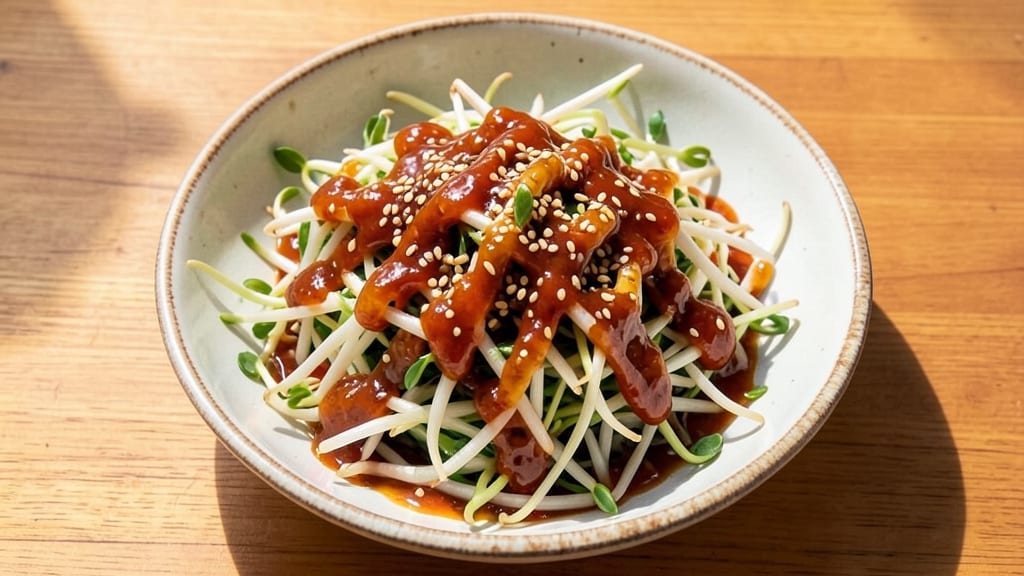
This Korean bean sprout salad recipe delivers the perfect balance of crunch, tang, and spice in just 15 minutes—ideal for side dishes or light meals. The secret lies in blanching the sprouts for crisp-tender texture, then tossing them with a bright sesame-garlic dressing that’s both savory and aromatic.
I’ve perfected this version to be vegan-friendly, using no fish sauce or honey, while keeping the flavors bold and authentic.
The dressing is where the magic happens—a blend of toasted sesame oil, soy sauce, rice vinegar, and a touch of gochujang for heat. This combination penetrates the sprouts, creating a dish that’s packed with umami and a subtle kick.
The optional toppings—thinly sliced green onions, toasted sesame seeds, and a sprinkle of chili flakes—add layers of texture and color that make this salad as visually appealing as it is delicious.
What you’ll end up with is a crispy, tangy, and slightly spicy salad that’s light yet satisfying, perfect for pairing with grilled meats, rice bowls, or even as a standalone meal.
The blanching step ensures the sprouts stay crisp, while the dressing ties everything together with a perfect balance of flavors. This recipe is foolproof, requires minimal prep, and delivers restaurant-quality results every time.
Whether you’re serving it at a Korean BBQ spread or as a refreshing side for weeknight dinners, this salad is versatile and always a crowd-pleaser. Ready to make it? Let’s get started with the ingredients and a step-by-step guide that keeps the process simple and efficient.
Ingredients for bean sprout salad recipe korean
Crispy sprouts, bold flavors, and zero fuss—this Korean salad comes together fast.
| Ingredient | Amount | Notes |
|---|---|---|
| Mung Bean Sprouts 🌱 | 4 cups | Fresh, crisp-tender preferred |
| Toasted Sesame Oil 🫒 | 2 tbsp | For authentic aroma |
| Soy Sauce 🍶 | 3 tbsp | Use light or tamari |
| Rice Vinegar 🍶 | 2 tbsp | White or seasoned |
| Gochujang 🌶️ | 1 tbsp | Korean chili paste |
| Sesame Seeds 🥜 | 1 tbsp | Toasted for crunch |
| Green Onions 🧅 | 3 whole | Thinly sliced |
| Garlic Cloves 🧄 | 2 cloves | Minced for dressing |
| Sesame Seeds 🥜 | 1 tbsp | Extra for garnish |
| Red Chili Flakes 🌶️ | ½ tsp | Optional for heat |
| Salt 🧂 | ½ tsp | Adjust to taste |
| Granulated Sugar 🍚 | 1 tsp | Balances flavors |
The mung bean sprouts are your star—fresh is non-negotiable. Korean markets or the produce section at Whole Foods usually carry the best, bright green ones. If yours are limp, give them a quick soak in ice water for 10 minutes before using. The gochujang (Korean chili paste) is what gives this dish its signature kick—Maesil Gochujang is my go-to, but Dae Jang Gochujang works too. For the sesame oil, toast it in a dry pan for 30 seconds to deepen the flavor—trust me, it’s worth it.
No gochujang? Sriracha or sambal oelek at half the amount gets you close. Running low on sesame seeds? Sunflower seeds work in a pinch, though they won’t have the same nutty depth. The green onions can be swapped for chives or scallions, but keep the white and green parts separate—chop the whites finely, slice the greens thinly for garnish. If your rice vinegar tastes too mild, add a splash of apple cider vinegar for brightness. And if you’re avoiding sugar, maple syrup at half the amount does the trick.
This salad stays fresh for 3 days in the fridge, but the sprouts get soggy fast—keep them dry in a breathable container. For extra crunch, blanch the sprouts right before serving. The dressing keeps for 1 week in the fridge, so make extra—it’s perfect for drizzling on rice bowls or noodles. Pro tip: Toast the sesame seeds in a dry pan for 2 minutes until golden—they’ll add insane crunch and depth to every bite.
Why You'll Love This Recipe
- No-Chop Nightmare: I swear, this salad is my lifesaver when I’m too tired to chop. Just rinse those mung bean sprouts (no soaking, no fuss) and toss them with the dressing—voilà. The gochujang does all the flavor work for you.
- Umami Bomb: That combo of toasted sesame oil, soy sauce, and a generous splash of gochujang? It’s like a flavor explosion in your mouth. The vinegar cuts through the richness, but honestly, I could eat this plain—it’s that good.
- Lunchbox Legend: Between us, this keeps perfectly for days in the fridge. Pack it in bento boxes for work or school lunches—crunchy, tangy, and still exciting by day three. My kids actually finish their lunches now.
- Pocketbook Hero: Sprouts are dirt cheap, and you only need a few tablespoons of gochujang to make it sing. I’ve made this for under $3 a serving, and it feels like a restaurant dish. Budget win, flavor win.
Step-by-step instructions for Korean bean sprout salad
This vibrant, crunchy salad comes together in minutes with bold flavors you'll crave.
Prepare the Bean Sprouts
Rinse the 4 cups Mung Bean Sprouts thoroughly under cold water to remove any dirt, then drain well in a colander. Shake gently to remove excess water—you want them damp but not dripping. I like to spread them on a clean kitchen towel and pat them dry with another towel. This ensures they stay crispy rather than soggy in the salad.
For best texture, work quickly once the sprouts are dry. If they start to wilt, give them a quick shake to revive them. The fresher they are, the more satisfying that crunch will be in every bite. Set them aside while you prepare the dressing.
Make the Flavorful Dressing
In a small bowl, whisk together the 3 tablespoons Soy Sauce, 2 tablespoons Rice Vinegar, 1 tablespoon Gochujang, 1 teaspoon Granulated Sugar, 0.5 teaspoon Salt, and 0.5 teaspoon Red Chili Flakes. This combination creates the perfect balance of salty, tangy, sweet, and spicy flavors that define Korean cuisine.
Next, add the 2 tablespoons Toasted Sesame Oil and 2 minced Garlic Cloves, whisking until fully combined. The sesame oil adds depth of flavor and a nutty aroma that ties everything together. Taste the dressing and adjust seasoning if needed—you might want to add a touch more sugar to balance the saltiness or a pinch more chili flakes for extra heat.
Combine and Toss
In a large bowl, gently toss the prepared 4 cups Mung Bean Sprouts with the dressing. Use your hands or a large spoon to mix everything thoroughly, ensuring each sprout is coated in the flavorful sauce. The key here is to work quickly to prevent the sprouts from becoming mushy.
Let the salad sit for 5 minutes while you prepare the toppings. This brief resting time allows the flavors to meld together, making each bite more cohesive and delicious. You'll notice the sprouts will soften slightly but still maintain their satisfying crunch.
Add Toppings and Serve
Thinly slice the 3 whole Green Onions and sprinkle them over the salad. Add the 1 tablespoon Sesame Seeds (both the ones for crunch and the extra for garnish) and give everything one final toss. The sesame seeds add a wonderful nutty crunch that contrasts beautifully with the tender sprouts.
Serve immediately while the sprouts are still crisp. This salad is best enjoyed fresh, straight from the bowl. The combination of textures—crunchy sprouts, crisp onions, and toasted sesame seeds—makes every bite exciting. Pair it with grilled meats or enjoy it as a refreshing side dish on its own.
Pro Tips For Making Bean Sprout Salad Recipe Korean
- Rinse Sprouts Twice: Cold water only—no soap—and give them a good shake after the first rinse. I learned this the hard way: soggy sprouts ruin the texture, and leftover dirt makes the dressing cling like glue instead of coating evenly.
- Toast Sesame Oil Fast: Heat a dry pan to medium-high, then add the oil—it should sizzle for 30 seconds max. Overheating turns it bitter, and you’ll taste it in every bite. (Yes, even if you’re impatient like me.)
- Balance Gochujang Early: Taste the dressing before adding the sprouts—gochujang’s heat sneaks up on you. Start with half the recipe’s amount, then adjust. I once served a bowl so spicy my roommate cried. (We still laugh about it.)
- Dress Sprouts Immediately: Toss them with the dressing right after rinsing while still damp—this keeps them crisp. Waiting 10 minutes means wilted, sad sprouts. (Your future self will thank you.)
Troubleshooting this recipe
Soggy Sprouts Fix
If your bean sprouts turn mushy after tossing, the issue is likely excess moisture. I’ve found that over-rinsing or not draining thoroughly causes this. After rinsing, spread sprouts on a clean kitchen towel and pat them dry with another towel—this removes surface water while keeping them crisp.
If they’re already soggy, blot them with paper towels before tossing with dressing. For extra insurance, work in small batches so the sprouts don’t sit too long in the bowl.
Dressing Too Mild
The dressing might taste weak if you skipped the toasted sesame oil or used low-quality gochujang. Always toast your sesame oil in a dry pan for 30 seconds to deepen its flavor. For gochujang, Maesil Gochujang has a brighter taste than Dae Jang Gochujang, which is fermented longer.
If your dressing lacks depth, add ½ tsp more gochujang or a splash of rice vinegar for tang. Taste as you go—this is where most flavor adjustments happen!
Uneven Seasoning
If the salad tastes too salty or bland, the dressing might not have distributed evenly. I recommend tossing the sprouts in two batches—first with half the dressing, then the rest—to ensure every sprout gets coated.
For extra insurance, cut the dressing in half and toss the sprouts, then mix everything together. If you’re still off, adjust with a pinch of salt or a drizzle of rice vinegar after tossing. Remember, gochujang adds heat and depth, so don’t skimp!
Toppings Overpowering
Too many toppings can make the salad taste cluttered. Start with just the green onions and sesame seeds, then add chili flakes or extra gochujang only if you want more heat. If your toppings seem overwhelming, reduce them by half—sometimes less is more.
For a vegan-friendly twist, skip any optional fish sauce-based toppings (like jeotgal, fermented seafood) and stick to toasted nuts or extra sesame seeds for crunch.
Storage Gone Wrong
If your salad loses crunch after storing, it’s likely not dried enough before refrigeration. Always pat sprouts thoroughly dry before tossing with dressing. Store in an airtight container with a paper towel on top to absorb moisture.
For reheating, blanch fresh sprouts for 30 seconds in boiling water, then shock in ice water to revive their crunch. The dressing should be stored separately and mixed in just before serving to keep everything fresh.
Nutrition facts
Frequently asked questions about Korean bean sprout salad
Can I use other types of bean sprouts instead of mung bean sprouts?
Mung bean sprouts are traditional, but you can use soybean sprouts or adzuki bean sprouts for a slightly different texture. Just note that soybean sprouts have a stronger flavor, while adzuki sprouts are sweeter. Avoid alfalfa sprouts—they’re too mild and won’t hold up well in the dressing.
How do I make this salad spicier?
Double the gochujang to 2 tablespoons or add 1 teaspoon gochugaru (Korean red pepper flakes) to the dressing. For extra heat, sprinkle ½ teaspoon cayenne pepper on top before serving. Adjust gradually—Korean chili paste packs serious flavor!
Is this recipe gluten-free?
Not as written, but it’s easy to adapt! Use tamari (gluten-free soy sauce) instead of regular soy sauce and check your gochujang label—some brands contain wheat. The rest of the ingredients are naturally gluten-free, so this becomes a perfect side for gluten-free meals.
Can I prepare this salad ahead of time?
Yes, but with a trick: store the dressing separately from the sprouts. Keep the sprouts in an airtight container with a paper towel to absorb moisture, and mix everything just before serving. This keeps the crunch intact. The dressing stays fresh for 1 week in the fridge.
What’s the best way to serve this salad?
This salad pairs perfectly with grilled meats, rice bowls, or Korean pancakes (bindaetteok). For a complete meal, serve it alongside steamed rice and kimchi. It’s also great as a vegan appetizer or light lunch—just add toasted cashews for extra protein!