
Sauces & Condiments
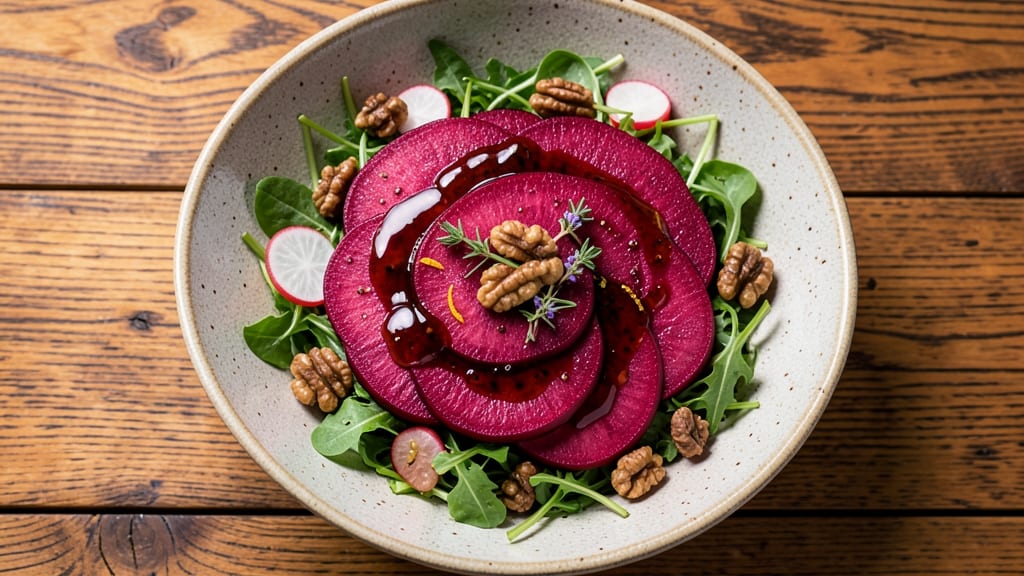
This beet salad vinaigrette recipe transforms simple greens into a vibrant, earthy-sweet masterpiece—no honey or dairy required. The secret lies in balancing beet juice with tangy vinegar and olive oil, creating a dressing that enhances rather than overpowers the natural sweetness of roasted beets.
I developed this recipe after realizing store-bought vinaigrettes lacked the depth that fresh beet juice provides.
The foundation is simple: high-quality olive oil, apple cider vinegar, and beet juice (strained from roasted beets) create a silky texture that clings perfectly to greens. A touch of maple syrup adds subtle sweetness, while Dijon mustard ensures a smooth emulsion.
Fresh herbs like thyme or parsley brighten the flavor profile, making this dressing versatile enough for salads, roasted vegetables, or even as a marinade.
What sets this vinaigrette apart is its 5-minute prep time and long shelf life—it stays fresh for up to 5 days in the fridge, making it ideal for meal prep. The emulsion technique (whisking vigorously before adding oil) guarantees a creamy, stable dressing that won’t separate.
Whether you prefer a bold, beet-forward flavor or a more balanced sweet-tangy profile, this recipe adapts effortlessly.
For extra depth, consider adding a splash of citrus juice or a pinch of smoked paprika. The possibilities are endless, but the core technique remains foolproof. Let’s create a dressing that elevates every bite—without compromise.
Ingredients for beet salad vinaigrette
High-quality olive oil, fresh beet juice, and vinegar create a silky, earthy-sweet dressing that elevates any salad.
| Ingredient | Amount | Notes |
|---|---|---|
| Fresh Beet Juice 🍠 | ½ cup | Strained from roasted beets |
| Extra-Virgin Olive Oil 🫒 | ½ cup | High-quality, fruity variety |
| Apple Cider Vinegar 🍏 | ¼ cup | Raw, unfiltered preferred |
| Pure Maple Syrup 🍁 | 1 ½ tbsp | Grade B for deeper flavor |
| Dijon Mustard 🌶️ | 1 ½ tbsp | Whole-grain variety recommended |
| Fresh Thyme Leaves 🌿 | 1 tbsp | Finely chopped, stems removed |
| Fresh Parsley Leaves 🌿 | 1 tbsp | Finely chopped, flat-leaf preferred |
| Sea Salt 🧂 | ½ tsp | Diamond Crystal preferred |
| Freshly Ground Black Pepper 🌶️ | ¼ tsp | Cracked peppercorns preferred |
| Lemon Juice 🍋 | 1 tbsp | Freshly squeezed, optional |
The fresh beet juice is non-negotiable for authentic flavor—roast 2 medium beets until tender, then strain through a fine-mesh sieve. Whole Foods or local farmers' markets often sell pre-roasted beets if you're short on time. For the olive oil, California extra-virgin brands like Corto or Lucini deliver the fruity notes that prevent bitterness. Apple cider vinegar should be raw and unfiltered—Bragg or Glug are reliable choices. The maple syrup adds depth, but Grade B (darker) has a richer caramel flavor that complements the beets better than Grade A.
No fresh beet juice? Store-bought unsweetened beet juice works in a pinch, though it lacks the caramelized depth of homemade. Substitute maple syrup with agave nectar at equal amounts—it’s neutral enough not to overpower. For the herbs, dried thyme or parsley at one-third the amount works, but fresh is worth the effort. The Dijon mustard is key for emulsion—Maille or Amora are professional-grade choices. Skip the lemon juice if you prefer a more neutral profile, but it brightens the dressing beautifully when added.
This vinaigrette emulsifies immediately when whisked properly—add the oil in a slow stream while whisking vigorously. Store in an airtight jar with a tight seal to prevent oxidation. Keeps for 5 days refrigerated and 3 months frozen (though texture may separate slightly upon thawing). For meal prep, portion into small jars—this dressing clings perfectly to greens, roasted veggies, or even grilled proteins. The emulsion will hold for up to 3 days once opened, but give it a quick whisk before each use for best results.
Why You'll Love This Recipe
- Five-Ingredient Magic: I swear by this combo—just whisk together beet juice, olive oil, vinegar, maple syrup, and mustard. No fancy gadgets, no stress, just a vibrant dressing that comes together faster than you can say "salad night."
- Earthy-Sweet Balance: That deep beet juice meets the tangy vinegar and sweet maple syrup—it’s like a flavor party in your mouth. Honestly, the Dijon mustard ties it all together with just the right kick.
- Meal Prep MVP: Make a big batch on Sunday, and you’ve got dressing for salads, roasted veggies, or even drizzled over grilled chicken all week. Between us, it’s my secret weapon for busy nights.
- Budget Brightener: Fresh beets are affordable, and this recipe stretches a little juice a long way. Plus, using pantry staples like olive oil and vinegar keeps costs low without sacrificing taste. (Yes, even on a Tuesday night.)
Step-by-step instructions for beet salad vinaigrette
This earthy-sweet dressing comes together in minutes with precise technique.
Whisk Together the Base Ingredients
In a medium bowl, combine the 0.5 cup fresh beet juice with the 0.25 cup apple cider vinegar and 1.5 tablespoons pure maple syrup. Use a whisk to blend thoroughly until completely smooth—this ensures even distribution of flavors throughout the dressing. The beet juice should be strained and free of any pulp to prevent graininess in the final product.
Next, add the 1.5 tablespoons Dijon mustard and continue whisking until fully incorporated. The mustard acts as an emulsifier, helping to bind the oil later. If using Grade B maple syrup, you'll notice its deeper caramel notes begin to develop immediately—this is what gives the dressing its signature complexity.
Gradually Incorporate the Olive Oil
With the whisk moving continuously, begin adding the 0.5 cup extra-virgin olive oil in a slow, steady stream. This gradual approach prevents the dressing from separating. I like to pour the oil from a height of about 6 inches to create a gentle cascade that helps emulsify the mixture more effectively.
Keep whisking vigorously for 1-2 minutes until the dressing thickens noticeably and achieves a glossy sheen. The texture should resemble heavy cream rather than a thin liquid. If the dressing begins to look too thick, add 1 teaspoon water at a time until it reaches your desired consistency—this is especially important if you plan to use it on leafy greens that might absorb excess moisture.
Season and Finish with Herbs
Add the 0.5 teaspoon sea salt and 0.25 teaspoon freshly ground black pepper, whisking immediately to distribute evenly. The salt should dissolve completely, and you should be able to taste its presence without any graininess. Next, stir in the 1 tablespoon finely chopped fresh thyme leaves and 1 tablespoon finely chopped fresh parsley leaves using a small fork or spoon—this preserves their delicate texture.
Finally, add the 1 tablespoon lemon juice (if using) and give the dressing one last stir. The lemon brightens the earthy beet flavors while adding a subtle acidity that balances the sweetness. Taste and adjust seasoning if needed—you might want to add a touch more salt or vinegar depending on your preference for acidity levels.
Rest and Emulsify
Transfer the dressing to a clean jar with a tight-fitting lid and let it rest at room temperature for 10-15 minutes. This resting period allows the flavors to fully meld and any slight separation to re-emulsify naturally. The dressing should eventually become completely homogeneous with a velvety texture.
Before using, give the dressing one final shake or stir. The finished product should coat the back of a spoon smoothly without separating. This vinaigrette keeps well in the refrigerator for up to 5 days, though I recommend using it within 3 days for optimal freshness and herb potency. The color will be a deep ruby red with subtle earthy undertones that perfectly complement roasted beets or mixed greens.
Pro Tips For Making Beet Salad Vinaigrette
- Whisk in stages: Start by mixing the Dijon mustard with the apple cider vinegar—this emulsifies the mustard first, so it blends smoother later. Then drizzle in the olive oil slowly while whisking like you’re stirring a pot of soup. I used to pour it all at once and ended up with a greasy, separated mess every time.
- Strain that juice: Fresh beet juice is full of grit, and you will taste it if you skip this. Line a fine-mesh strainer with cheesecloth or a clean kitchen towel, then pour the juice through—it’s the only way to keep your vinaigrette silky. (Yes, it’s extra work, but trust me, your mouth will notice.)
- Taste before sweetening: Add the maple syrup last and adjust in tiny amounts—just ½ teaspoon at a time. The fresh beet juice is already sweet, and you’ll regret overdoing it when the salad sits for 10 minutes. I learned this after making a batch that tasted like dessert instead of dressing.
- Store it right: Keep the vinaigrette in a sealed jar in the fridge, but give it a shake before using—it’ll naturally separate. If it splits badly, just whisk it back together; no need to start over. (Pro move: Use a small jar so you’re not tempted to make it last longer than 3 days.)
Make-ahead tips for this dish
Prep Ahead for Perfection
Make your beet juice in advance by roasting 2 medium beets at 400°F for 45-60 minutes until tender. Store the cooked beets in an airtight container for up to 5 days in the fridge.
When ready to make the dressing, simply strain the juice through a fine-mesh sieve and refrigerate it separately until use. This step saves 30 minutes of active prep time later. 💫
Portioning for Meal Prep
Divide the finished vinaigrette into 4-ounce glass jars with snap-on lids before refrigerating. This prevents oxidation and makes it easy to grab a portion for salads or roasted veggies throughout the week.
I like to store these in the fridge door for quick access—just give each jar a shake before using. The dressing will stay fresh for 5 days this way, with no separation if stored properly.
Freezing for Long-Term Use
For extended storage, freeze the vinaigrette in ice cube trays—each cube makes a perfect single serving. Once frozen, transfer the cubes to a quart-sized freezer bag and flatten to save space. Thaw overnight in the fridge, then shake vigorously to re-emulsify.
The texture may separate slightly after freezing, but a quick whisk restores its creaminess. This method works best if you use the dressing within 3 months.
Prep Ingredients Simultaneously
While your beets roast, chop your fresh thyme and parsley and store them in a small airtight container with a damp paper towel to maintain freshness. Measure out all your dry ingredients—salt, pepper, maple syrup—into a separate bowl.
This mise en place technique ensures you’re ready to whisk the dressing together as soon as the beet juice is ready. Trust me, it makes the whole process feel effortless. ✨
Reusing Beet Pulp
Don’t toss that leftover beet pulp! Blend it with a splash of water and a pinch of salt to create a beet hummus or spread it on toast with a sprinkle of feta or goat cheese (if not vegan).
Alternatively, mix it into mashed potatoes or roasted vegetable medleys for extra earthy depth. This zero-waste trick turns scraps into flavor boosters without extra effort.
Nutrition facts
Frequently asked questions
Can I substitute store-bought beet juice for fresh?
Yes, but expect a slightly less complex flavor. Use unsweetened store-bought beet juice at the same 0.5 cup measurement, but add an extra 0.5 teaspoon of maple syrup to compensate for the missing caramelized depth. For best results, choose a brand without added preservatives. The texture will still emulsify well, though the earthy richness won't be as pronounced.
Why did my dressing separate? How can I fix it?
Separation usually happens when oil isn't incorporated slowly enough or the mixture sits too long before emulsifying. To fix it, simply whisk vigorously or use an immersion blender for 10-15 seconds—this re-emulsifies the oil perfectly. For prevention, always add oil in a slow stream while whisking continuously. If the dressing continues to separate after fixing, it may need more mustard (0.5 teaspoon extra) as an emulsifier.
Can I make this vinaigrette without mustard?
You can try, but the emulsion may be less stable. Replace the 1.5 tablespoons Dijon mustard with 1 tablespoon ground flaxseed or chia seeds mixed with 1 tablespoon water (let sit for 5 minutes to thicken). Alternatively, use 1 tablespoon aquafaba (chickpea brine) for a vegan binder. Whisk especially vigorously when adding oil to compensate for the weaker emulsifier.
How much dressing should I make for a salad?
For a standard 8-cup mixed greens salad, this recipe yields about 1 cup of dressing—enough for 2 generous servings. For heartier salads with roasted vegetables, multiply the recipe by 1.5x. The dressing clings beautifully to greens, so 1-2 tablespoons per serving is perfect. Store leftovers in an airtight container for up to 5 days in the fridge.
What other vegetables pair well with this dressing?
This earthy-sweet vinaigrette works beautifully with roasted Brussels sprouts, asparagus, or sweet potatoes. It also elevates grain bowls (quinoa, farro) and even grilled tofu or tempeh. For a unique twist, drizzle it over warm polenta or mashed potatoes—the beet flavors complement their creamy texture perfectly. The dressing's balance of sweet and tang makes it versatile for both cold and warm dishes.