
Sauces & Condiments
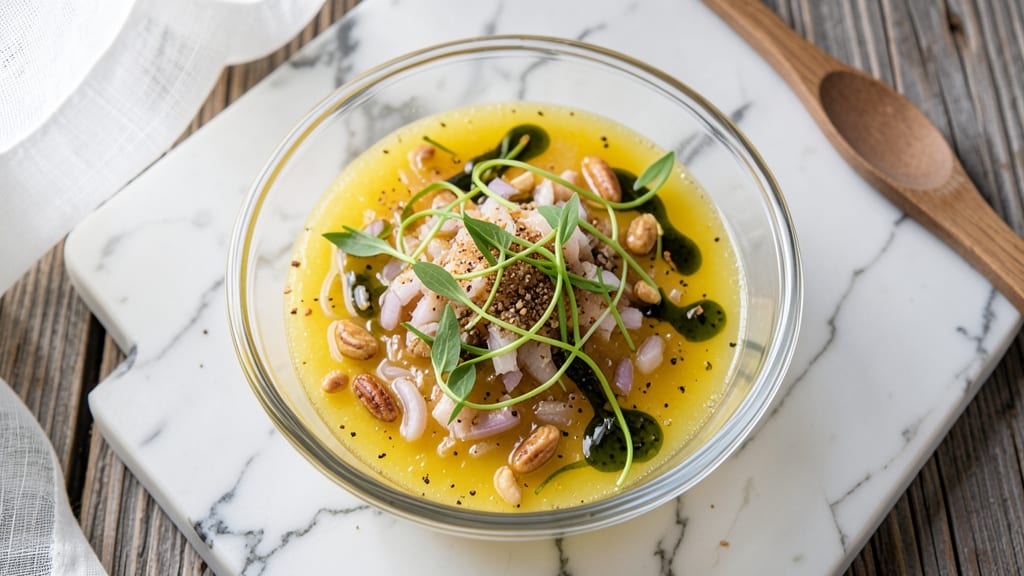
This bonefish salad dressing recipe transports you to the Florida Keys with every drizzle—bright citrus, fresh herbs, and a velouté texture that clings to greens like a sea breeze. 🌊 The secret lies in balancing tart lemon and orange juice with white wine vinegar, creating a dressing that's tangy yet refined, with tarragon and shallots adding depth reminiscent of classic bonefish cuisine.
Unlike heavy ranch or creamy dressings, this one delivers crisp, herbaceous notes that elevate any salad without overpowering delicate greens.
What sets this dressing apart is its foolproof emulsification—no blender required. A simple whisking technique combines the citrus, wine, and herbs into a silky, velvety texture that stays consistent even after refrigeration.
The recipe uses just 6 ingredients, all of which you likely already have in your pantry, making it the perfect last-minute solution for a restaurant-quality meal without the fuss. Perfect for mixed greens, grilled fish, or even drizzled over avocado toast, it transforms ordinary salads into something truly special.
The dressing's versatility makes it a pantry staple—store it in an airtight container for up to 5 days, and it only gets better as the flavors meld. The citrus brightens with time, while the tarragon and shallots deepen, ensuring every use tastes fresher than the last.
Whether you're prepping for a weeknight dinner or a weekend brunch, this dressing delivers restaurant-quality flavor with minimal effort. The key is patience: let it sit for 10 minutes before serving to allow the herbs to infuse fully.
Pair it with grilled shrimp, arugula, or even as a marinade for chicken—its seafood-forward profile makes it a standout in any dish. The recipe scales effortlessly, so double the batch for gatherings or meal prep.
Once you taste the difference between this and store-bought dressings, you’ll never go back. Let’s make it—your salads will never be the same.
Ingredients for bonefish salad dressing
Six ingredients transform ordinary salads into Florida Keys-inspired culinary magic.
| Ingredient | Amount | Notes |
|---|---|---|
| Fresh Lemon Juice 🍋 | ½ cup | Freshly squeezed for brightest flavor |
| Fresh Orange Juice 🍊 | ½ cup | Navel or Valencia for sweetness |
| White Wine Vinegar 🍷 | ¼ cup | Dry variety preferred |
| Fresh Tarragon Leaves 🌿 | ¼ cup | Finely chopped, stems removed |
| Shallots 🧅 | 2 whole | Minced, not sliced |
| Extra-Virgin Olive Oil 🫒 | ½ cup | Light, fruity variety |
| Diamond Crystal Kosher Salt 🧂 | ½ tsp | Fine grain preferred |
| Freshly Ground Black Pepper 🌶️ | ¼ tsp | Freshly cracked preferred |
The citrus juices are the heart of this dressing—freshly squeezed makes all the difference. Whole Foods or local farmers markets often have the brightest lemons and oranges, but the grocery store works too if you grab them ripe. Tarragon can be tricky to find, but most specialty stores carry it fresh or frozen. Penzeys is my go-to for dried if fresh isn't available, though fresh is ideal here. The shallots should be firm and pale purple—avoid any that feel soft or sprouting. For the olive oil, California avocado oil or Spanish Picual adds that perfect lightness without overpowering the citrus notes.
No tarragon? Fresh dill or basil at half the amount works in a pinch, though it'll change the flavor profile slightly. Running out of white wine vinegar? Apple cider vinegar with a pinch of sugar mimics the brightness. The dressing relies on emulsification, so mustard powder (1/4 tsp) can help stabilize if it separates. For extra depth, add a pinch of smoked paprika—it enhances the seafood-forward character without overpowering. The shallots can be swapped for regular onions if needed, but mincing them finely is key for that velouté texture.
This dressing keeps beautifully in an airtight jar for 5-7 days in the fridge, with flavors actually improving as the citrus brightens. For longer storage, freeze in ice cube trays—3 months with no texture loss. I always make a double batch because it disappears fast. The dressing thickens slightly when chilled, so give it a quick whisk before serving. Perfect for prepping ahead—just add it to your salad mix right before eating to keep the greens crisp.
Why You'll Love This Recipe
- No-Chop Nightmare: I swear by this dressing because the shallots only need a quick dice—no mincing, no tears. Between us, that’s the difference between a salad I’ll actually eat and one that gets ignored in the fridge.
- Bright & Tangy Magic: That lemon-orange-vinegar combo? It’s like sunshine in a bottle. The tarragon adds this herbal whisper that makes it taste like a fancy bistro, not just a jarred dressing.
- Weeknight Superhero: I keep this in my fridge for everything—tossed with greens, drizzled on grilled fish, even mixed into marinades. It’s my go-to when I’m too tired to think but still want flavor.
- Pantry-Friendly Power: Shallots last weeks, citrus juice freezes perfectly, and tarragon stays fresh longer than most herbs. Plus, a little goes a long way—this dressing stretches across multiple meals without breaking the bank.
Step-by-step instructions for bonefish salad dressing
Here's how to blend vibrant citrus with aromatic herbs for a velouté that elevates any seafood salad.
👨🍳 Step 1: Prepare the Citrus Base
In a medium bowl, combine the 0.5 cup fresh lemon juice and 0.5 cup fresh orange juice. I like to use a fine-mesh strainer to remove any pulp if you prefer a smoother texture—this ensures your dressing stays silky rather than grainy. The citrus should be freshly squeezed within the last 30 minutes for maximum brightness.
Add the 0.25 cup white wine vinegar and stir gently to integrate. This acid component is crucial—it balances the sweetness of the citrus while creating the tangy backbone of the dressing. The mixture should smell vibrant and slightly sharp, like a burst of sunshine with a hint of acidity. If you're using a dry white wine vinegar, you'll notice a more pronounced herbal note that pairs beautifully with the tarragon.
👨🍳 Step 2: Build the Herb and Aromatic Foundation
Finely mince the 2 whole shallots using a sharp chef's knife—you want tiny, almost paste-like pieces that will dissolve completely. Add them to the citrus mixture and let them sit for 5 minutes while you prepare the tarragon. This brief resting period allows the shallots to soften slightly, releasing their sweet, oniony depth without becoming bitter.
Meanwhile, chop the 0.25 cup fresh tarragon leaves into very small pieces—think confetti-sized rather than large leaves. Tarragon has a delicate anise-like flavor, so you want it finely distributed throughout the dressing. Add the chopped tarragon to the shallot mixture and stir thoroughly. You should already notice the dressing taking on a lush green hue and a complex aroma that's both citrusy and subtly herbal.
🥘 Step 3: Emulsify with Olive Oil
With the motor running on low speed in a blender or using an immersion blender, slowly drizzle in the 0.5 cup extra-virgin olive oil. This gradual addition is critical—it prevents the dressing from breaking and creates that signature velouté texture. Start with just a few drops, then increase to a steady stream while blending continuously.
The key here is patience. You're creating an emulsion where oil and vinegar become one, not separate. After adding all the oil, continue blending for an additional 30 seconds to ensure everything is perfectly combined. The dressing should look like a thick, glossy sauce with no visible oil separation. If you see any separation, simply blend again for another 10-15 seconds—this happens occasionally with citrus-based dressings.
🍽️ Step 4: Season and Adjust
Remove the dressing from the blender and transfer it to a clean bowl or jar. Add the 0.5 teaspoon diamond crystal kosher salt and 0.25 teaspoon freshly ground black pepper, then whisk vigorously for 30 seconds to fully incorporate. Taste immediately—this is your quality control moment.
At this stage, the dressing should be bright, tangy, and herbaceous with a perfect balance between sweet citrus and sharp acidity. If it needs more acidity, add a splash more white wine vinegar. If it's too sharp, a tiny amount of fresh orange juice can help mellow it. Remember, you can always adjust later, but you can't take out what's already in there. The dressing should coat the back of a spoon and have a velvety texture that's neither too thin nor too thick.
Pro Tips For Making Bonefish Salad Dressing
- Mince Shallots Fine: Fresh shallots taste best when you take the time to mince them into tiny, even pieces—no bigger than a grain of rice. I learned this the hard way when I left chunks in once and they just sat there, bitter and unyielding. A sharp knife and a steady hand make all the difference here.
- Steep Tarragon First: Tear the tarragon leaves and let them sit in the citrus juices for at least 10 minutes before adding vinegar. This draws out the flavor without turning the dressing bitter—like a quick, no-fuss infusion. Skip this, and you’ll end up with a dressings that tastes more like vinegar than anything else.
- Balance Vinegar Last: Add the white wine vinegar drop by drop until the dressing tastes bright, not sour. I used to pour it all in at once and then wonder why my salad tasted like a pickling brine. Taste as you go—this isn’t the time to guess.
- Strain for Smoothness: If you’re serving this dressing over delicate greens or fish, strain out the tarragon and shallot bits with a fine-mesh sieve. It’s a little extra work, but the result is silky and elegant—no one wants to chew through herbs in their dressing. (Yes, even if you’re impatient like me.)
Serving suggestions for this dish
Salad Pairings
This dressing shines brightest with mixed greens like butter lettuce or arugula—its citrusy tang cuts through delicate leaves beautifully. I toss 4 cups baby spinach with ½ cup sliced strawberries and ¼ cup shaved fennel for a refreshing summer salad.
The tarragon's anise notes complement the fennel's licorice flavor perfectly. 🌿
For a seafood-focused bowl, pair it with grilled shrimp or seared scallops. The dressing's acidity balances the richness of cooked fish while enhancing the natural sweetness.
I like adding ½ cup diced cucumber and ¼ cup crumbled feta to create a Mediterranean-inspired bowl that feels like a vacation in every bite.
Protein Enhancements
Use this dressing as a marinade for chicken or fish—its citrus and herbs tenderize while adding incredible flavor. I marinate 1 lb boneless chicken breast for 30 minutes before grilling, then drizzle extra dressing on top after cooking. The result? Juicy, flavorful protein with a restaurant-quality finish. 🍗
For a cold salad, try it with poached salmon or smoked trout. The dressing's brightness contrasts beautifully with the richness of smoked fish.
I often serve it with ¼ cup pickled red onions and 2 tbsp capers for an extra layer of complexity that feels like a Florida Keys brunch.
Creative Uses Beyond Salads
This dressing transforms avocado toast into a gourmet meal. Spread mashed avocado on toasted sourdough, drizzle with dressing, and top with crumbled goat cheese and everything bagel seasoning. The citrus cuts through the creaminess while the tarragon adds an unexpected herbal note. 🥑
Drizzle it over grilled vegetables like zucchini, bell peppers, and eggplant for a vibrant side dish. The dressing's acidity helps charred flavors shine while adding freshness. I love serving it with warm polenta> for a hearty vegetarian main course that feels special without being complicated.
Presentation Tips
For restaurant-style plating, drizzle the dressing in zigzag patterns over the salad using a squeeze bottle. This creates visual appeal while ensuring even distribution. I like adding edible flowers> like nasturtiums or microgreens for a pop of color that makes any dish look elegant.
Serve the dressing in a small cruet at the table so guests can adjust to taste. This also makes it perfect for buffet-style meals where people can customize their portions. The dressing's vibrant color makes it a natural garnish—just a few drops around the plate elevate the presentation instantly. ✨
Nutrition facts
Frequently asked questions
Can I make this dressing without a blender?
While a blender creates the smoothest texture, you can emulsify it by hand. Start by whisking the citrus, vinegar, and herbs together in a bowl. Then, slowly drizzle in the olive oil while whisking continuously. For extra stability, add ¼ teaspoon mustard powder to the citrus mixture before whisking. This method takes a bit more elbow grease but achieves the same velouté texture with patience.
How long does this dressing last in the fridge?
The dressing stays fresh for 5-7 days when stored in an airtight container. Its flavors actually improve as the citrus brightens and the tarragon deepens. For longer storage, freeze it in ice cube trays—thaw overnight in the fridge and whisk before using. The texture remains silky after freezing, making it perfect for meal prep.
What can I substitute if I don't have tarragon?
Use ½ teaspoon dried tarragon if fresh isn't available, but fresh dill or basil at half the amount (about ¼ cup) works in a pinch. For a seafood-forward flavor, try ¼ cup finely chopped chives or 1 teaspoon Old Bay seasoning. Each substitution will alter the aroma slightly but maintain the dressing's bright citrus base.
Why did my dressing separate?
Separation happens when oil and vinegar aren't properly emulsified. To fix it, whisk vigorously for 30 seconds or blend briefly. For prevention, add ¼ teaspoon mustard powder or 1 teaspoon honey to stabilize the emulsion. Citrus-based dressings are more prone to separation than creamy ones, so always whisk before serving.
Can I use this dressing on cooked proteins?
Yes! This dressing works beautifully as a marinade or finishing sauce for grilled chicken, fish, or shrimp. For marinating, combine it with 1 tablespoon olive oil and let proteins soak for 15-30 minutes. For a finishing touch, drizzle it over cooked proteins to enhance their natural flavors. The citrus helps tenderize while the herbs add aromatic depth.