
Salads
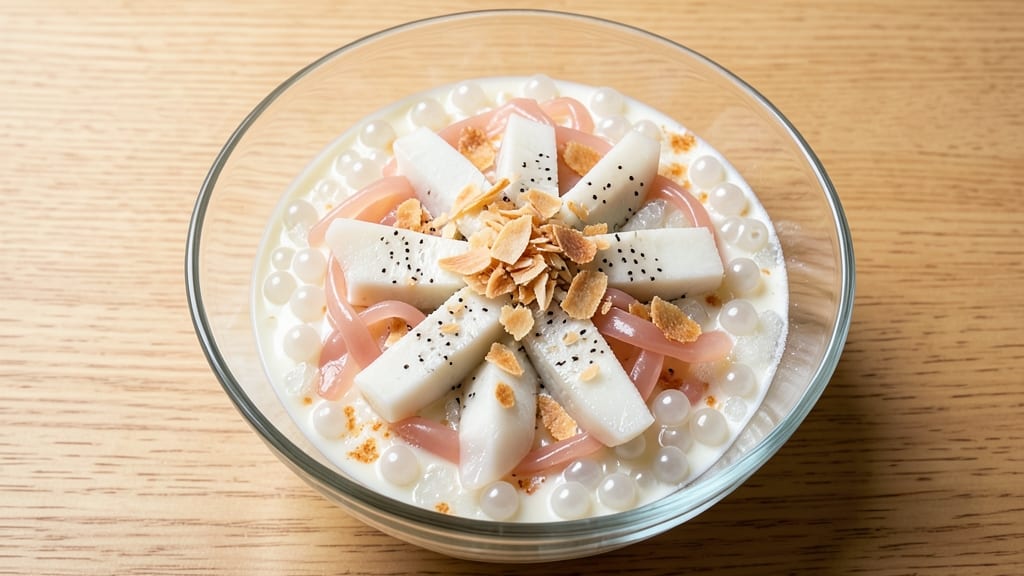
This buko sago gulaman salad recipe brings the beloved Filipino dessert to your table with chewy textures and sweet-tart harmony. 💛 The secret lies in perfectly cooked sago pearls, tender gulaman (agar-agar), and fresh young coconut—each element playing its part in creating this iconic dessert salad.
I've refined this recipe over years to ensure the right balance of textures and flavors, from the delicate bounce of gulaman to the creamy sweetness of coconut milk.
The magic begins with preparing the ingredients separately: boiling the sago until translucent, setting the gulaman in a light, jelly-like texture, and slicing the buko into bite-sized pieces. This method guarantees each component maintains its unique texture while coming together in perfect harmony.
The result is a dessert that's as visually stunning as it is delicious, with layers of colors and textures that make every bite exciting.
What you'll end up with is a refreshing, no-bake dessert that's perfect for potlucks, family gatherings, or a special treat. The combination of sweet young coconut, creamy coconut milk, and the subtle tartness of gulaman creates a flavor profile that's both nostalgic and modern.
This recipe stays true to tradition while offering flexibility for variations like adding leche flan or ube for extra richness.
Whether you're serving this as a dessert or a light snack, the presentation is just as important as the taste. Garnish with additional buko slices and a sprinkle of toasted coconut flakes for that final touch of elegance. Let's create this Filipino classic together!
Ingredients for buko sago gulaman salad
Six key ingredients transform into this iconic Filipino dessert salad with perfect textures and flavors.
| Ingredient | Amount | Notes |
|---|---|---|
| Sago Pearls (White) 🍡 | 1 ½ cups | Uncooked, rinsed before boiling |
| Gulaman (Agar-Agar) 🍬 | ½ oz | Cut into 1-inch pieces |
| Young Coconut (Buko) 🥥 | 2 cups | Fresh, peeled, sliced into chunks |
| Coconut Milk (Full-Fat) 🥛 | 1 ½ cups | Canned, well-shaken |
| Granulated Sugar 🍚 | ¾ cup | Adjust to taste |
| Water 💧 | 1 cup | For sago boiling |
| Lime Juice 🍋 | 2 tbsp | Freshly squeezed |
| Toasted Coconut Flakes 🥥 | ¼ cup | For garnish |
| Gelatin (Unflavored) 🍬 | ½ tsp | For extra chewiness (optional) |
| Vanilla Extract 🌸 | 1 tsp | Pure, for subtle flavor |
| Ice Cubes ❄️ | 1 cup | For chilling coconut milk |
| Salt 🧂 | ¼ tsp | Fine grain, for balance |
Sago pearls are the star here—Filipino markets or Asian grocery stores carry the best quality. Look for white sago pearls, not the colored ones, for that classic texture. Gulaman (agar-agar) should be firm and clear; check the expiration date since it loses potency over time. Fresh young coconut is non-negotiable for authentic flavor—Filipino specialty stores often have it pre-peeled, or ask for help slicing. If you can't find it, substitute with canned young coconut, but drain it well.
No sago pearls? Tapioca pearls work in a pinch, though they'll be slightly chewier. Running short on gulaman? Agar powder at half the amount creates a similar texture. Coconut milk can be swapped for coconut cream for extra richness, but reduce the sugar slightly. The lime juice balances sweetness—fresh is best, but bottled works if you're in a bind. For a modern twist, add a splash of ube halaya or leche flan to the mix.
Sago pearls keep for 1 month in the fridge once cooked, while gulaman stays fresh for 2 weeks if stored in water. The salad itself lasts 3-4 days refrigerated, though it's best enjoyed within 24 hours for optimal texture. For large gatherings, prep components separately and assemble just before serving—this dessert shines when it's fresh. Garnish with toasted coconut flakes right before serving for that final crunch.
Why You'll Love This Recipe
- No Boiling Fuss: I swear by the quick-soak method for sago and gulaman—just toss them in hot water for 10 minutes, no stirring, no stress. The pearls stay plump, the agar-agar melts into silky strands without turning mushy, and I’m not standing at the stove for 20 minutes.
- Coconut Bliss: That first spoonful of creamy coconut milk swirled with young coconut’s fresh, slightly sweet bite? It’s like dessert and breakfast had a baby. Honestly, I’ve tried store-bought versions, but nothing beats the real deal—where the buko’s watery sweetness cuts through the richness of the full-fat coconut milk.
- Party in a Bowl: This salad is my go-to for potlucks, office parties, or when my mom-in-law drops by unannounced. It’s cold, it’s colorful, and it doesn’t need a plate—just a big bowl and spoons. Between us, I’ve served it at weddings (yes, really) because it’s the one dish that pleases everyone, from my 80-year-old lola to my toddler who sneaks bites.
- Leftovers? Better Than Fresh: I make a double batch because the second day is even better—the sago pearls soften just enough to soak up more coconut flavor, and the gulaman strands get that perfect jelly-like chew. Plus, it keeps for five days in the fridge, which means zero waste and zero last-minute panic when I forget to pack lunch.
Step-by-step instructions for buko sago gulaman salad
Here's how to craft this iconic Filipino dessert with perfect textures and balanced flavors.
🍳 Step 1: Prepare the Sago and Gulaman
Rinse the 1.5 cups sago pearls (white) thoroughly under cold water until the water runs clear. This removes excess starch that would make them gummy. In a medium saucepan, combine the rinsed sago with 1 cup water and bring to a boil over medium-high heat. Once boiling, reduce heat to low and simmer for 15-20 minutes until the sago becomes translucent and slightly chewy.
While the sago cooks, cut the 0.5 oz gulaman (agar-agar) into 1-inch pieces. Soak these pieces in 1 cup cold water for 10 minutes until they soften. Then, transfer them to a small pot with 1 cup fresh water and simmer over low heat for 5-7 minutes until they become tender and slightly gelatinous. Drain and set aside—both components should maintain their distinct textures.
🥘 Step 2: Create the Coconut Syrup
In a separate saucepan, combine the 1.5 cups coconut milk (full-fat), 0.75 cup granulated sugar, 2 tbsp lime juice, 0.25 tsp salt, and 1 tsp vanilla extract. Warm over medium heat for 5-7 minutes, stirring constantly until the sugar dissolves completely and the mixture reaches 160°F. This creates a smooth, aromatic base that will bind all the ingredients together.
For extra chewiness, sprinkle the 0.5 tsp gelatin (unflavored) over 1 cup ice cubes in a small bowl. Let it sit for 2 minutes to bloom, then whisk it into the warm coconut mixture until fully dissolved. This step ensures the salad maintains its structure when chilled. The syrup should coat the back of a spoon and have a velvety consistency.
👨🍳 Step 3: Assemble the Salad
In a large bowl, gently combine the cooked sago pearls, gulaman pieces, and 2 cups young coconut (buko). Pour the coconut syrup over everything and toss lightly with a spatula. The goal is to coat each component without breaking the coconut chunks. Let the mixture sit for 10 minutes at room temperature—this allows the flavors to meld and the textures to soften slightly.
After resting, transfer the salad to a serving bowl or individual glasses. The sago should be tender but still hold its shape, the gulaman should be jelly-like but firm, and the coconut pieces should remain intact. The syrup should evenly distribute, creating a glossy sheen that signals perfect preparation.
🍽️ Step 4: Chill and Garnish
Refrigerate the salad for at least 2 hours (or up to 4 hours) to let the flavors develop fully. The cold temperature will firm up the gulaman and enhance the coconut's natural sweetness. Before serving, sprinkle with 0.25 cup toasted coconut flakes for added crunch and visual appeal.
Serve immediately after chilling. Each spoonful should deliver a perfect balance of textures—chewy sago, jelly-like gulaman, creamy coconut, and crisp coconut flakes—all enveloped in a sweet-tart coconut syrup. The salad should be served cold, so plan ahead to ensure optimal presentation and texture.
Pro Tips For Making Buko Sago Gulaman Salad
- SOAK SAGO OVERNIGHT: I learned this the hard way—rushing sago soaking leads to gummy, uneven pearls. Use at least 8 cups water per 1 cup sago and let it sit 12+ hours (yes, even if you’re impatient like me). Drain and rinse twice before cooking to remove excess starch, or your salad will turn gluey.
- BOIL GULAMAN LOW: Gulaman sets fast, but high heat makes it rubbery. Simmer it in 4 cups water at just a bubble—no rolling boil—until strands stretch like taffy (about 10 minutes). If you’re in a hurry, slice it into 1-inch pieces first; they cook faster and look prettier.
- SHRED BUKO DRY: Wet coconut flesh sticks to knives and turns mushy. Pat the buko flesh thoroughly with paper towels before grating—this keeps the texture crisp. Use a box grater or food processor, but pulse in short bursts to avoid pulverizing it into coconut paste.
- SWEETEN COLD: Sugar dissolves better in warm liquid, but adding it to hot coconut milk can curdle the cream. Mix sugar with a splash of cold water first, then stir into the cooled syrup (below 100°F/38°C). This keeps the salad creamy, not oily, and lets the flavors meld without breaking.
Flavor customization for this dish
Sweet-Tart Balance
Adjust the lime juice to taste—1 tbsp for mild sweetness or 3 tbsp for a tangy kick. I often start with 2 tbsp and add more after tasting. For a modern twist, swap lime for calamansi juice (Filipino lime) for a brighter, more complex flavor. 🍋
Spiced Coconut Twist
Infuse the coconut syrup with warmth by adding ½ tsp cinnamon or ¼ tsp cardamom while heating. Toast ½ tsp coconut flakes in a dry pan until golden for extra depth. This version feels like a cozy dessert salad, perfect for cooler evenings.
Fruity Additions
Toss in ½ cup diced mango or ½ cup pineapple chunks for tropical brightness. For a creamy contrast, fold in ½ cup ube halaya or ¼ cup leche flan crumbles into the final mixture. These additions work best when added just before serving to maintain texture.
Chocolate Lover's Upgrade
Stir in 2 tbsp melted dark chocolate (60% cocoa) into the warm coconut syrup for a rich contrast. Top with chopped toasted macadamia nuts for crunch. This version satisfies chocolate cravings while keeping the salad's signature textures intact.
Herbal Infusions
Add 1 tsp pandan extract or 1 tbsp fresh pandan juice to the syrup for an aromatic floral note. For a citrusy herbal twist, steep 1 tbsp dried lemongrass in the coconut milk before straining. These infusions elevate the salad to a more sophisticated dessert level.
Texture Play
Boost crunch with ¼ cup crushed graham crackers or ¼ cup toasted sesame seeds). For extra chew, add ½ cup shredded coconut meat (not flakes) to the base. These additions create satisfying contrasts that make every bite more exciting. 💫
Nutrition facts
Frequently asked questions
Can I use canned young coconut instead of fresh buko?
Yes, but with a few adjustments! Drain canned young coconut well and pat it dry to remove excess liquid. Since canned buko is often softer, reduce the amount by 10% to maintain the salad's texture balance. For extra freshness, add 1 tsp lime juice to the canned buko before mixing.
How do I prevent the sago pearls from turning mushy?
Rinse the sago thoroughly before boiling to remove excess starch—the #1 cause of mushiness. Use low heat after the initial boil and simmer for exactly 15-20 minutes. Drain immediately and rinse briefly with cold water to stop cooking. Overcooking by even 5 minutes turns them gummy.
What's the best way to store leftover salad?
Store in an airtight container for up to 3 days in the fridge. For best texture, separate components (sago, gulaman, coconut) in layers with plastic wrap between them. Refrigerate the syrup separately and mix just before serving. The gulaman will soften slightly but remains edible.
Can I make this salad without gelatin?
Skip the gelatin and simply chill the salad for 4+ hours to set the gulaman properly. For extra chewiness, add 1 tsp agar powder dissolved in 2 tbsp water to the warm coconut syrup. This creates a firmer texture without animal products.
Why did my gulaman turn cloudy?
Cloudy gulaman usually means it wasn't cooked long enough or was overworked. Simmer for the full 5-7 minutes and avoid stirring once the water returns to a boil. For clearer results, use distilled water instead of tap water and add ½ tsp lemon juice to the cooking water.