
Side Dishes
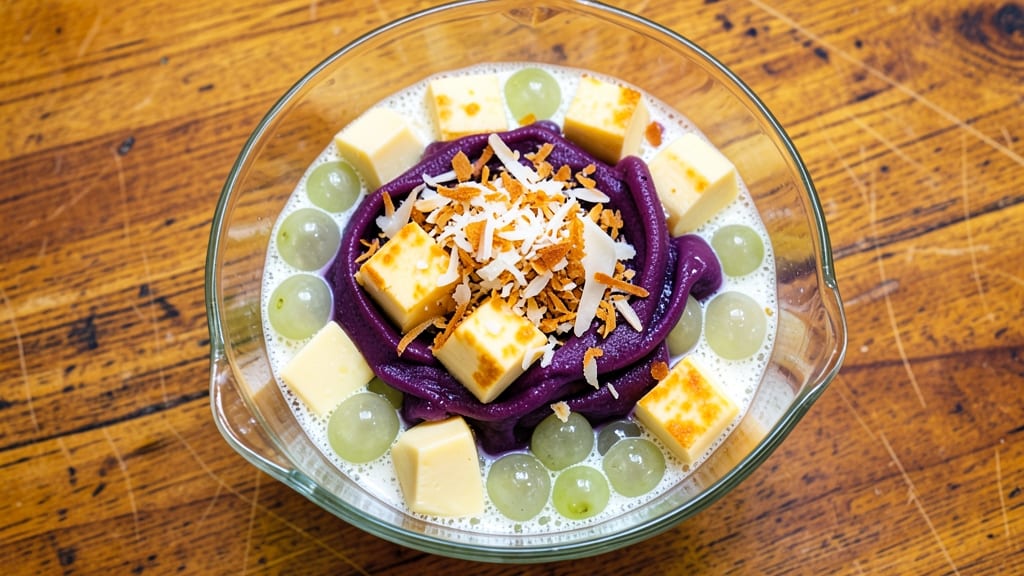
This buko salad recipe panlasang pinoy brings the creamy, chewy magic of Filipino merienda to your table with a modern twist. 💛 The star?
Young coconut (buko) pearls bathed in sweetened coconut milk, layered with leche flan and ube halaya for a vibrant, textured dessert that’s as nostalgic as it is indulgent.
I first tasted this version at a fiesta in Manila, where the perfect balance of creamy flan, purple ube jam, and tender coconut changed how I think about buko salad forever.
The beauty of this recipe lies in its layers—each ingredient plays a role in creating that signature panlasang pinoy harmony. Leche flan adds a silky, caramelized richness, while ube halaya brings a subtle floral sweetness that pairs perfectly with the coconut’s natural creaminess.
The secret? Chilling the salad for at least 4 hours lets the flavors meld into something truly special, transforming simple ingredients into a dessert that feels like a hug.
What you’ll end up with is a creamy, visually stunning dish that’s as much about texture as it is about taste—chewy coconut pearls, smooth flan, and glossy ube halaya in every bite.
It’s the kind of dessert that disappears quickly, leaving guests asking for seconds (and maybe even the recipe). Whether you’re serving it at a gathering or treating yourself to a merienda break, this buko salad delivers on comfort, tradition, and a little Filipino magic.
For those who love customization, I’ve included variations like vegan ube or dairy-free flan, so everyone can enjoy this classic. Let’s get started—your taste buds will thank you.
Ingredients for buko salad recipe panlasang pinoy
Creamy coconut milk, chewy buko pearls, and layers of leche flan—this Filipino merienda is pure comfort.
| Ingredient | Amount | Notes |
|---|---|---|
| Young Coconut (Buko) Pearls 🥥 | 3 cups | Fresh, chewy variety preferred |
| Sweetened Coconut Milk 🥥 | 1 ½ cups | Canned, full-fat preferred |
| Leche Flan 🍮 | 3 cups | Store-bought or homemade |
| Ube Halaya 💜 | 1 cup | Purple yam jam, store-bought or homemade |
| Shredded Coconut 🥥 | ½ cup | Sweetened, toasted lightly |
| Gelatin 🍬 | 2 tbsp | Unflavored, powdered |
| Water 💧 | ½ cup | For gelatin mixture |
| Granulated Sugar 🍚 | ½ cup | White sugar preferred |
| Sour Cream 🍦 | ¼ cup | Full-fat for creaminess |
| Toasted Coconut Flakes 🥥 | ¼ cup | For garnish |
| Graham Crackers 🍪 | 1 package | Crushed for base layer |
| Vanilla Extract 🌸 | 1 tsp | Pure, for extra flavor |
| Salt 🧂 | ¼ tsp | Fine sea salt |
| Lime Juice 🍋 | 1 tbsp | Freshly squeezed |
The buko pearls are non-negotiable—fresh is best, but the canned kind works in a pinch. Filipino markets or Asian grocery stores usually carry the best quality, but regular grocery stores often stock them too. Look for plump, firm pearls that don’t feel mushy. The leche flan? Store-bought is fine, but homemade elevates everything. If you're making your own, use condensed milk and egg yolks for that signature caramelized top. Ube halaya should have a vibrant purple color—no gray or brown spots—and a smooth, jam-like consistency. If you can’t find it, purple sweet potato puree is a decent substitute, though it won’t have the same depth of flavor.
No leche flan? Custard or pudding works, though the texture won’t be identical. Swap the ube halaya for strawberry jam or mango puree if you’re in a bind. The gelatin mixture is key for binding everything together—don’t skip it, or the salad will be too watery. For a vegan version, use agar-agar instead of gelatin and coconut milk-based flan. The shredded coconut should be toasted lightly—just 2-3 minutes in a dry pan—to bring out its nutty flavor. If you’re feeling fancy, add a drizzle of caramelized coconut milk on top before chilling for extra richness.
This salad tastes even better the next day, so make it ahead if you can. Store it in an airtight container in the fridge for up to 3 days, though the texture might soften slightly after 24 hours. For serving, I like to layer it in individual glasses or bowls—garnish with extra toasted coconut flakes and a sprinkle of lime zest for that final touch. If you’re serving a crowd, double the batch—it disappears fast! The graham cracker base keeps everything together, so crush it finely for the best texture. Leftovers? Refrigerate with a layer of plastic wrap pressed against the surface to prevent a skin from forming.
Why You'll Love This Recipe
- No-Chop Required: I swear, the buko pearls and leche flan cubes do all the work—just toss them in a bowl. The only prep is draining the coconut milk and scooping out the ube halaya, which takes less time than boiling water for ramen.
- Taste Like a Dessert: That creamy coconut milk with the chewy buko pearls? It’s like a tropical hug. Add the leche flan’s caramelized sweetness and ube’s violet depth, and suddenly you’ve got a flavor explosion that’s way better than store-bought pudding.
- Party in a Bowl: Between us, this is my go-to for birthdays, potlucks, or even just a lazy Sunday. The colors are vibrant, the layers are impressive, and it’s the kind of dish that makes people ask, “What’s in this?”—then immediately want seconds.
- Leftovers? Best Ever: Honestly, I make a big batch because the next day it’s even better. The leche flan soaks up the coconut milk, the buko pearls soften just enough, and the shredded coconut adds crunch. It’s the kind of dessert that tastes like a treat but won’t break the bank.
Step-by-step instructions for buko salad recipe panlasang pinoy
Here's how to create this creamy, tropical delight with layers of texture and flavor.
👨🍳 Step 1: Prepare the Gelatin Mixture
In a medium bowl, sprinkle the 2 tbsp gelatin evenly over the 0.5 cup water. Let it sit for 5 minutes to bloom completely—you'll see it transform into a jelly-like consistency. This step is crucial because blooming ensures the gelatin dissolves evenly and creates that perfect creamy texture.
Once bloomed, gently whisk in the 0.5 cup granulated sugar and 1 tsp vanilla extract until fully dissolved. I like to use a fork for this part to avoid creating too many bubbles. Set this mixture aside—it'll need to thicken as we work on the other components.
🥘 Step 2: Assemble the Creamy Base
In a large mixing bowl, combine the 3 cups leche flan, 1.5 cups sweetened coconut milk, 1 cup ube halaya, and 0.5 cup shredded coconut. Gently fold in the 0.25 cup sour cream using a spatula, being careful not to overmix—we want to maintain that silky texture. The leche flan should be at room temperature for easier blending.
Next, add the bloomed gelatin mixture and stir until fully incorporated. The mixture will thicken slightly, but don't worry if it's not completely set yet—we'll let it chill to firm up. This is where the magic happens: the gelatin creates that signature creamy consistency that makes this dessert so irresistible.
🍳 Step 3: Layer the Buko Pearls
Add the 3 cups young coconut (buko) pearls to the mixture and gently fold them in. You want to distribute them evenly throughout the cream—think of this like tucking them in rather than stirring vigorously. The pearls should be fully coated but still retain their individual shape. If you notice any liquid separating, give it one more gentle stir.
Here's a pro tip: I like to work in batches if my bowl is too full. This ensures the pearls get proper coating and prevents them from sinking to the bottom. The texture contrast between the chewy pearls and creamy base is what makes this dessert so special.
⏰ Step 4: Build the Crunchy Base
While the buko mixture chills, crush the 1 package graham crackers into fine crumbs using a food processor or rolling pin. Spread about ½ of the crumbs evenly across the bottom of a 9x13-inch serving dish. This creates that satisfying crunch with every bite—don't skip this step!
Press the crumbs gently but firmly into the bottom to create a solid layer. You'll want about ¼-inch thickness of crumbs. This base not only adds texture but also prevents the creamy mixture from leaking out when you serve individual portions. Trust me, this makes all the difference!
🥘 Step 5: Layer and Chill for Perfect Texture
Spread the buko mixture evenly over the graham cracker base, smoothing the top with a spatula. Sprinkle the remaining ½ package graham cracker crumbs on top, pressing them lightly into the surface. Finally, drizzle the 1 tbsp lime juice evenly over the top—this brightens all the sweet flavors and balances the richness.
Cover the dish with plastic wrap and refrigerate for at least 4 hours, or until completely set. The longer it chills, the firmer the texture becomes—this is especially important if you're serving it at room temperature. When ready to serve, sprinkle with 0.25 cup toasted coconut flakes for that final touch of crunch and aroma.
Pro Tips For Making Buko Salad Recipe Panlasang Pinoy
- Drain Buko Twice: The first drain removes excess water, but the second—after a quick 1-minute soak in cold water—stops those pearls from turning mushy later. I learned this the hard way when my salad turned into a soggy mess after 20 minutes.
- Use Chilled Coconut Milk: Warm coconut milk makes the salad taste cloyingly sweet and heavy. Grab a carton straight from the fridge, or even better, chill the can for 10 minutes before opening—it balances the flavors and keeps the texture light.
- Cut Leche Flan Thin: Thick slices of flan sink like rocks, turning your salad into a bottom-heavy disaster. Slice it paper-thin (about ¼-inch) so it stays suspended and melts gently into the creamy base—no one wants a chewy surprise.
- Toast Shredded Coconut Fast: Skip the slow oven—dry-toast the shredded coconut in a skillet over medium-low for 30 seconds, stirring constantly. It browns just enough for nutty flavor without burning, and the heat kills any hidden moisture that’ll make your salad gummy.
Pro cooking tips for great buko salad recipe panlasang pinoy
Gelatin Bloom Mastery
Blooming your gelatin properly is the secret to that perfect creamy texture. Sprinkle the 2 tbsp gelatin evenly over the 0.5 cup cold water and let it sit for exactly 5 minutes—no longer or it won't dissolve properly.
I use a fine-mesh strainer to distribute it evenly, which prevents clumping. This step ensures your buko salad has that signature silky mouthfeel instead of a grainy consistency. 💫
Layering Like a Pro
When adding the 3 cups buko pearls, work gently to avoid breaking them. Use a rubber spatula to fold them into the cream mixture in a "J" motion rather than stirring vigorously. This keeps their shape intact while ensuring even distribution.
I like to divide the mixture into two batches if my bowl is crowded—this prevents the pearls from sinking and creates a more visually appealing presentation.
Graham Cracker Crumb Perfection
For that perfect crunchy base, pulse the graham crackers in a food processor until you get fine, sand-like crumbs—no large pieces should remain. Press them firmly into the bottom of your serving dish to create a solid foundation.
This prevents the creamy mixture from leaking out when you serve individual portions later. A ¼-inch layer is ideal—any thicker and you'll lose that delicate balance of textures. ✨
Chilling Time Optimization
While 4 hours is the minimum chilling time, I recommend letting it set overnight for the best texture. The longer it chills, the firmer the gelatin sets, which prevents the buko pearls from sinking and maintains that perfect bite.
If you're short on time, place the dish in the freezer for 1 hour before transferring to the fridge—this jumpstarts the setting process. Just be sure to cover it tightly with plastic wrap to prevent drying.
Lime Juice Balance
The 1 tbsp lime juice might seem like a small addition, but it's crucial for balancing all that sweetness. Drizzle it evenly over the top just before the final chilling period—this lets the acidity mellow slightly while still brightening the coconut and ube flavors.
For extra zing, add a pinch of salt with the lime juice, which enhances all the sweet components. This is where the magic of Filipino flavor balancing comes into play! 🌶️
Serving Presentation
For individual servings, use a ring mold or glass to portion out the buko salad. Press the sides gently to create clean edges, then invert onto plates. Garnish with toasted coconut flakes and a sprinkle of lime zest for that final wow factor.
I like to serve it in clear glasses at gatherings—it looks stunning and makes the vibrant purple ube halaya pop against the creamy layers. This presentation makes it feel like a restaurant-quality dessert! 💛
Nutrition facts
Frequently asked questions
Can I make this buko salad without gelatin?
Yes! For a vegetarian version, use 1 tbsp agar-agar powder mixed with ½ cup coconut milk** instead. For a dairy-free option, replace the leche flan with coconut milk-based flan or coconut pudding. The texture will be slightly firmer but still delicious.
How do I store leftovers?
Keep your buko salad in an airtight container in the fridge for up to 3 days. To prevent a skin from forming, press plastic wrap directly against the surface before sealing. For best texture, serve chilled—it tastes even better the next day!
What's the best way to serve this dessert?
Portion into individual glasses or bowls for elegant serving. Garnish with toasted coconut flakes and lime zest for that restaurant-quality touch. It's perfect as a merienda (afternoon snack) or dessert at gatherings—Filipinos love it with hot coffee or tea!
Can I use canned buko pearls instead of fresh?
Canned buko pearls work perfectly—they're pre-cooked and ready to use. Just drain them well before mixing to avoid excess liquid. For extra chewiness, soak them in sweetened coconut milk for 10 minutes before adding to the salad.
Why does my buko salad look watery?
This usually happens if the gelatin wasn't bloomed properly or the chilling time was too short.