
Side Dishes
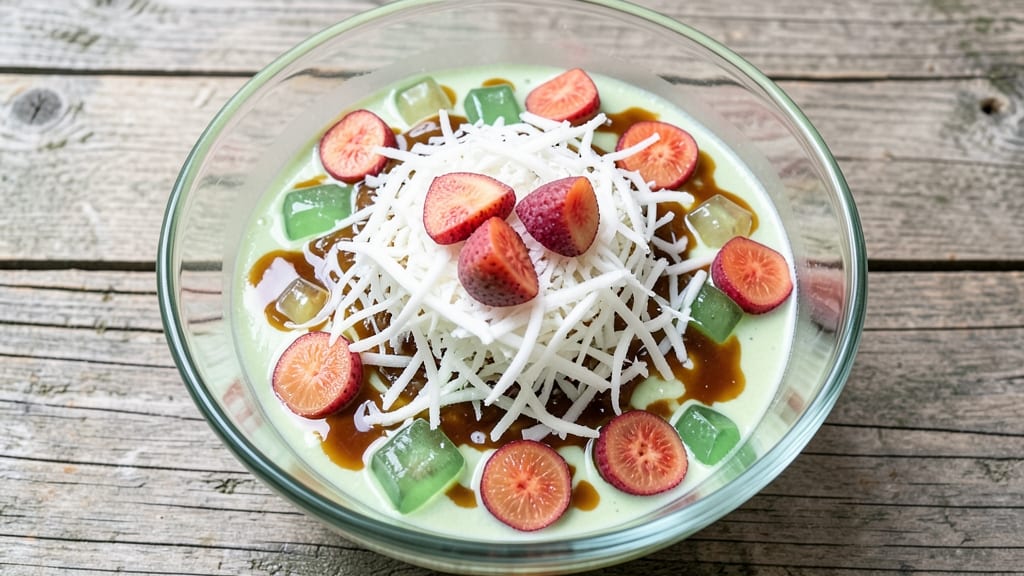
This buko salad recipe with ingredients and procedure transforms simple ingredients into a creamy, tropical dessert that tastes like sunshine in a bowl. 🌴 The secret lies in perfectly soaked coconut gel (buko), layered with sweetened fruit, gelatin, and whipped cream for that signature silky texture.
I've perfected this recipe to deliver restaurant-quality results in just 15 minutes of prep—plus chilling time—while staying true to its Filipino roots.
The magic happens when you soak the buko (shaved young coconut) in water for 30 minutes, removing excess starch for a cleaner texture. This recipe balances traditional elements—like pandan-flavored coconut milk—with modern twists, such as adding lychee or mango for extra brightness.
The gelatin layer gives it that signature wobble, while whipped cream adds a light, airy finish. Every spoonful delivers a perfect harmony of sweet, creamy, and refreshing flavors.
What makes this buko salad special is its versatility—it works as a dessert, snack, or even a light lunch. The chilling process allows flavors to meld beautifully, resulting in a dessert that's cool, creamy, and utterly addictive.
Whether you're serving it at a family gathering or enjoying it solo, this recipe guarantees a taste of the tropics without the travel.
For those who love customization, you can swap in ube (purple yam) for a vibrant twist or add crushed macadamia nuts for extra crunch. The key is balancing the sweetness of the fruit with the creaminess of the coconut and gelatin.
Let's dive into the step-by-step procedure to create this tropical masterpiece!
Ingredients for buko salad recipe with ingredients and procedure
The tropical ingredients that create this creamy, wobbly dessert masterpiece—all you need for sunshine in a bowl.
| Ingredient | Amount | Notes |
|---|---|---|
| Shaved Young Coconut (Buko) 🥥 | 2 cups | Soaked 30 mins to remove starch |
| Pandan-Flavored Coconut Milk 🥥 | 1 can | 13.5 oz can, chilled |
| Sweetened Condensed Milk 🥛 | 1 can | 14 oz can, full-fat preferred |
| Gelatin 💧 | 2 tsp | Unflavored, powdered |
| Warm Water 💧 | ½ cup | For dissolving gelatin |
| Lychee Fruit 🍈 | 1 cup | Canned in syrup, drained |
| Pineapple Chunks 🍍 | 1 cup | Fresh or canned, drained |
| Heavy Whipping Cream 🧈 | 1 cup | Chilled for whipping |
| Granulated Sugar 🍚 | ½ cup | Adjust to taste |
| Lime Juice 🍋 | 2 tbsp | Freshly squeezed |
| Toasted Coconut Flakes 🥥 | ¼ cup | For garnish |
| Orange Peel 🍊 | 1 tbsp | Thin strips, candied |
The buko is non-negotiable—Filipino markets carry the best quality, or look for pre-shaved young coconut in the international aisle at Whole Foods. Thai Kitchen brand pandan coconut milk delivers that authentic floral note, though Goya works in a pinch. For the gelatin, Knox brand dissolves perfectly—avoid the pre-mixed types, which can be too sweet. The lychee and pineapple should be vibrant; if using canned, drain well and rinse to cut excess syrup. For a premium touch, Trader Joe's carries fresh lychee in season.
No pandan coconut milk? Regular coconut milk plus 1 tsp pandan extract works, though the flavor won't be identical. Substituting lychee? Mango or jackfruit adds brightness, but texture differs. Skip the gelatin? Agar-agar at double the weight creates a vegan alternative, though the texture will be firmer. The condensed milk can be swapped for coconut cream (reduce sugar by 2 tbsp) if you prefer a lighter finish. For the whipped cream, Cool Whip saves time, but homemade yields better texture—just whip the cold heavy cream with 1 tbsp powdered sugar until stiff peaks form.
Prep the gelatin mixture first—it needs 10 minutes to set before layering. Store assembled buko salad in an airtight container for 3-4 days in the fridge, though it's best enjoyed within 24 hours for optimal creaminess. To serve, scoop with a ring mold for elegant presentation. The coconut flakes and orange peel garnish can be toasted fresh or stored in a sealed container for 2 weeks. For make-ahead convenience, assemble all layers (except whipped cream) up to 1 day ahead—add the cream just before serving.
Why You'll Love This Recipe
- No-Chop Magic: I swear by this one—just shave the buko (or grab pre-shaved if you're really lazy), dump in the gelatin mix, and stir. The pandan coconut milk does all the work, giving that dreamy floral sweetness without a single knife touch.
- Creamy-Chewy Bliss: That perfect bite? Crunchy buko wrapped in silky gelatin, all bathed in condensed milk’s rich hug. Honestly, it’s the kind of dessert that makes you pause mid-bite and go, "Wait… is this too good?" (Spoiler: Yes.)
- Party in a Bowl: Serve it chilled for potlucks, scoop it into cups for birthdays, or pack it in jars for office treats. Between us, I’ve even used it to bribe my in-laws into staying longer—works every time.
- Zero-Waste Luxury: Leftovers? Just pop them back in the fridge. Budget-friendly? Check—condensed milk and gelatin stretch this into a crowd-pleaser without breaking the bank. And the buko’s natural sweetness means no sugar crashes. Win.
Step-by-step instructions for buko salad
This tropical dessert comes together faster than you'd think—just follow these precise steps.
👨🍳 Step 1: Prepare the Gelatin Mixture
In a small bowl, sprinkle the 2 teaspoons gelatin evenly over the ½ cup warm water. Let it sit for 5 minutes until fully dissolved—you'll see it transform from powder to a jelly-like consistency. This step is crucial because undissolved gelatin creates lumps that ruin the silky texture.
Once dissolved, set the gelatin mixture aside. The warm water activates the gelatin, but don't let it get too hot or it will lose its thickening power. You'll incorporate this later when combining the creamy base.
🍳 Step 2: Combine Creamy Base Ingredients
In a large mixing bowl, combine the 1 cup heavy whipping cream, 1 can pandan-flavored coconut milk, 1 can sweetened condensed milk, and ½ cup granulated sugar. Whisk until fully blended and smooth—this creates the rich, velvety foundation of the salad.
Add the dissolved gelatin mixture and whisk vigorously for 30 seconds until fully incorporated. The mixture should thicken noticeably as the gelatin binds with the other ingredients. This is where the magic happens—the gelatin transforms the creamy base into a stable, spoonable texture.
🥘 Step 3: Add Fruit and Lime Juice
Gently fold in the 2 cups shaved young coconut (buko), 1 cup lychee fruit, and 1 cup pineapple chunks using a spatula. Work carefully to maintain the coconut's delicate texture—overmixing will crush it. Add the 2 tablespoons lime juice and the 1 tablespoon candied orange peel, stirring just until combined.
The lime juice brightens the flavors while the orange peel adds a subtle citrus aroma. At this stage, the salad should look vibrant with the coconut's white strands contrasting against the colorful fruit. Taste and adjust sweetness if needed—you can add more sugar if the fruit's acidity overpowers the sweetness.
🥘 Step 4: Fold in Toasted Coconut Flakes
In a separate small bowl, gently fold the ¼ cup toasted coconut flakes into the salad mixture. Reserve a small amount for garnish if desired. The toasted flakes add a delightful crunch that contrasts beautifully with the creamy texture. Fold just until evenly distributed—you want pockets of coconut throughout each serving.
This is the final assembly step. The toasted coconut should be evenly dispersed but still visible, adding both visual appeal and texture contrast. Don't skip this step—the toasted flakes elevate the salad from good to extraordinary.
⏰ Step 5: Chill and Serve
Transfer the buko salad to a serving bowl or individual glasses. Cover with plastic wrap pressed directly onto the surface to prevent a skin from forming. Chill in the refrigerator for at least 2 hours—this allows the flavors to meld and the gelatin to fully set.
When ready to serve, give the salad a gentle stir to redistribute any settled ingredients. The texture should be firm but still spoonable, with the coconut maintaining its distinct strands. Serve chilled with a sprinkle of reserved toasted coconut flakes on top for that final touch of tropical elegance.
Pro Tips For Making Buko Salad Recipe With Ingredients And Procedure
- Rinse Buko Twice: Fresh buko sticks cling to coconut water like glue—skip this and your salad turns into a soggy mess. Run them under cold water, then swirl in a colander for 30 seconds to dislodge every last drop. (Yes, even if you’re impatient like me.)
- Bloom Gelatin Properly: I learned this the hard way—dumping dry gelatin straight into warm water just makes it clump. Sprinkle it over cold water first, let it sit 5 minutes until it triples in size, then add your warm liquid. The texture will be silky, not grainy.
- Mix Cold First: Pouring hot condensed milk straight into cold buko? That’s how you get a split consistency. Start with the condensed milk and pandan coconut milk in your bowl, then add the warm water—this keeps the gelatin from seizing up before it’s fully dissolved.
- Use Less Gelatin: The recipe might call for 2 packets, but you’ll thank me later if you use just 1½. Too much turns buko salad into a wobbly, unappetizing pudding. Taste as you go—it should coat the back of a spoon, not leave a film.
Storing and reheating this dish
Fridge Storage Secrets
Store your buko salad in an airtight glass container with a tight-fitting lid to maintain freshness. The gelatin layer stays firmest when sealed properly—press plastic wrap directly onto the surface before closing the lid to prevent a skin from forming.
I like using Pyrex glass containers because they distribute cold evenly and are microwave-safe if you need to reheat portions. Keep it refrigerated at 40°F or below for up to 3 days, though the texture remains best within 24 hours. 🥥
Freezing for Later
Buko salad doesn't freeze well due to the gelatin and cream separating, but you can freeze the individual components separately. Portion the creamy base (without fruit) into silicone molds and freeze for up to 1 month. Thaw overnight in the fridge before assembling with fresh fruit.
For the fruit mixture, freeze pineapple and lychee separately in single layers on a tray before transferring to bags. Toast coconut flakes fresh after thawing for maximum crunch. ❄️
Reheating Tips
If you must reheat, microwave individual portions covered with a damp paper towel on 50% power for 30-second intervals, stirring between each. Add 1 tbsp coconut milk to restore creaminess if it separates.
For a stovetop method, warm in a saucepan over low heat with 2 tbsp coconut milk, stirring constantly until just melted—never boil or the gelatin will break. Refrigerate again before serving to restore proper texture. 🔥
Garnish Refresh
Revive store-bought buko salad by adding fresh garnishes. Sprinkle toasted coconut flakes (toast in a dry pan for 2 minutes) and a drizzle of lime juice just before serving.
For extra flair, add edible flowers or crushed macadamia nuts for crunch. The key is to add garnishes right before serving—this prevents sogginess and keeps the presentation vibrant. 🌸
Layering Make-Ahead
Assemble all layers except the whipped cream up to 24 hours ahead—this saves time while keeping the texture intact. Store in the fridge, then add the cream and toasted coconut just before serving.
For a vegan version, use agar-agar (double the weight) and coconut cream instead of whipped cream. The flavors develop beautifully overnight, making it perfect for meal prep. 📅
Serving Temperature
Serve buko salad well-chilled at 45-50°F for the best texture contrast. If it warms up, place the container in the freezer for 10-15 minutes to firm it back up.
For a warm-weather twist, serve in chilled coconut shells or over shaved ice with a sprinkle of chili powder for a spicy-sweet contrast. The colder it is, the more pronounced the gelatin's wobble and the cream's silkiness become. ✨
Nutrition facts
Frequently asked questions
Can I make buko salad without gelatin?
Yes! For a vegan or gelatin-free version, replace the gelatin with 4 teaspoons agar-agar powder dissolved in ½ cup water (boiled for 2 minutes then cooled). The texture will be firmer but still delicious. Another option is 1 cup coconut cream thickened with 2 tbsp cornstarch—simmer until it reaches a pudding-like consistency. The salad will be less "wobbly" but equally creamy.
Why does my buko salad taste too sweet?
Adjust the sweetness by adding 1-2 tablespoons lime juice or ½ teaspoon vanilla extract to balance the flavors. If the condensed milk is too strong, reduce it by 2 tablespoons and add 1 tablespoon coconut milk instead. For a tropical twist, fold in ½ cup diced mango—its natural acidity cuts through the sweetness beautifully. Taste as you go!
How do I prevent the coconut (buko) from turning mushy?
Always soak the buko in cold water for 30 minutes before using to remove excess starch. Drain and rinse thoroughly, then pat completely dry with a paper towel. Avoid overmixing when folding it into the creamy base—use a spatula to gently combine. For extra firmness, chill the salad for an additional 30 minutes after the initial 2-hour set. Fresh buko works best; canned versions often contain preservatives that soften the texture.
Can I use frozen fruit in buko salad?
Fresh or canned fruit is ideal, but you can use thawed frozen fruit if needed. Drain well and pat dry to remove excess moisture, which can make the salad watery. For pineapple, use fresh chunks—frozen versions often lose texture when thawed. Lychee works best canned (drained) or fresh. If using frozen fruit, add it after the salad has chilled for 1 hour to prevent dilution of the gelatin layer.
What’s the best way to serve buko salad?
For an elegant presentation, serve in individual glasses or bowls with a dollop of whipped cream and toasted coconut flakes on top. For a fun twist, use coconut shells or hollowed-out pineapples. At tropical gatherings, it’s often served in colorful plastic cups with a skewer for easy scooping. Garnish with lime wheels or edible flowers for extra flair. The key is to keep it chilled—serve directly from the fridge for the best texture contrast.