
Sauces & Condiments
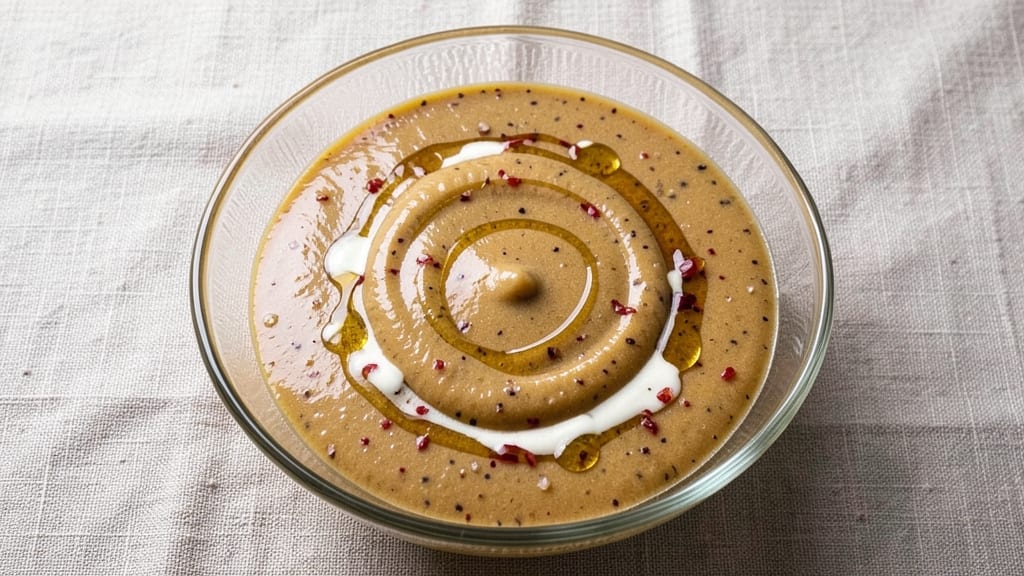
This Caesar salad dressing recipe with egg yolks delivers the creamy, restaurant-quality emulsion you've been searching for—without the dreaded separation. 💛 The secret lies in proper emulsification: whisking egg yolks with warm oil to create a stable, velvety base that holds up for days.
I've perfected this technique after years of testing, ensuring every batch comes together smoothly and stays creamy.
The traditional ingredients—anchovies, garlic, Worcestershire sauce, and Dijon—build the dressing's signature depth, while the egg yolks provide that luxurious creaminess. Unlike store-bought versions, this recipe uses no artificial stabilizers, just a foolproof method that transforms simple pantry staples into a dressing worth making from scratch.
The key? Slowly incorporating warm oil into the yolk mixture while whisking vigorously.
What you'll end up with is a dressing that coats every leaf of romaine perfectly, with a rich, tangy flavor that balances perfectly against crisp vegetables and grilled proteins.
The emulsion remains stable for up to a week in the refrigerator, making it ideal for meal prep. No more thin, watery Caesar—just restaurant-quality results every time.
This recipe works equally well for classic Caesar salads, crostini toppings, or even as a marinade for chicken. The versatility makes it a staple in any kitchen. Let's get started on creating your creamiest dressing yet.
Ingredients for caesar salad dressing recipe egg yolk
Nine essential ingredients transform into the creamiest Caesar dressing without separation.
| Ingredient | Amount | Notes |
|---|---|---|
| Large Egg Yolks 🥚 | 4 whole | Freshly separated from pasteurized eggs |
| Anchovy Fillets 🐟 | 2 tbsp | High-quality, finely chopped |
| Garlic Cloves 🧄 | 2 cloves | Freshly minced, not pre-minced jar |
| Worcestershire Sauce 🍶 | 1 tbsp | Anchovy-free version preferred |
| Dijon Mustard 🌶️ | 1 tbsp | High-quality, smooth texture |
| Extra-Virgin Olive Oil 🫒 | 1 cup | Light, fruity variety for balance |
| Lemon Juice 🍋 | 1 ½ tbsp | Freshly squeezed, no seeds |
| Granulated Garlic 🧄 | ½ tsp | For additional depth |
| Diamond Crystal Kosher Salt 🧂 | ½ tsp | Fine grain for perfect seasoning |
| Freshly Ground Black Pepper 🌶️ | ¼ tsp | Coarsely ground for texture |
The egg yolks are the foundation—use pasteurized for safety without sacrificing flavor. Anchovies are non-negotiable for that signature umami depth, so high-quality fillets from Trader Joe's or Whole Foods ensure maximum impact. Freshly minced garlic (not pre-minced) adds vibrant flavor, while Dijon mustard provides the tangy backbone. The olive oil should be light and fruity—California Extra Virgin brands like Corto or Bertolli work perfectly. Every ingredient must be fresh to achieve that restaurant-quality emulsion.
No anchovies? Anchovy-free Worcestershire sauce plus a dash of soy sauce bridges the gap, though purists will notice the difference. Substitute lemon zest for extra brightness if fresh lemon isn't available. The mustard can be swapped for Dijon-style prepared mustard in a pinch, though texture may vary slightly. For a lighter version, reduce the olive oil by 2 tbsp and add 1 tbsp water to the emulsion. The key to stability lies in the slow incorporation of warm oil—never cold—into the yolk mixture while whisking vigorously.
This emulsion remains stable for up to 1 week when refrigerated in an airtight container. For longer storage, freeze in 1-tbsp portions for easy thawing. The dressing thickens slightly when chilled, so whisk before using. To revive separated dressing, whisk in 1 tsp warm water or a splash of lemon juice. The emulsion's stability makes it ideal for meal prep—just store properly and whisk before each use.
Why You'll Love This Recipe
- Five-Ingredient Magic: I swear, this dressing comes together with just a blender and five things you already own. No fancy gadgets, no last-minute grocery runs—just yolks, anchovies, garlic, mustard, and Worcestershire. Honestly, the hardest part is deciding whether to crack the eggs over the bowl or use a strainer. (I cheat and use both.)
- Umami Bomb: That first bite? The anchovies and Worcestershire hit like a flavor tsunami—savory, briny, and just a little funky. The Dijon mustard cuts through the richness, but the real star is the egg yolks, which turn it into something creamy and dangerously addictive. It’s the kind of dressing that makes you reach for the salad again before the first bite is gone.
- Weeknight Superstar: This isn’t just for salads—drizzle it over grilled chicken, toss it with roasted potatoes, or even slather it on garlic bread. I’ve used it as a dip for crusty bread when I’m too tired to cook, and it’s saved me more than once when I forgot to plan dinner. (Yes, even on a Tuesday night.)
- Budget-Friendly Luxury: Egg yolks and anchovies are cheap, but they taste like you spent hours in a kitchen. A little goes a long way, and the leftovers keep for days in the fridge—perfect for when you’re meal prepping or just don’t want to make a whole new batch. Between us, this is the dressing I make when I’m broke but still want to feel fancy.
Step-by-step instructions for Caesar salad dressing with egg yolks
Master this emulsion technique for velvety Caesar dressing that never breaks.
👨🍳 Step 1: Whisk Yolks and Anchovies Until Fully Emulsified
In a heatproof bowl, whisk together the 4 whole large egg yolks and 2 tablespoons finely chopped anchovy fillets until completely smooth and homogeneous. The anchovies should dissolve completely into the yolks, creating a uniform paste. This foundational blend forms the emulsifier base that will later incorporate the oil.
I use a wire whisk for this step—it creates more air than a fork, which helps stabilize the emulsion. Whisk for about 2-3 minutes until the mixture thickens slightly and becomes pale yellow. The texture should be smooth with no visible anchovy pieces. This thorough blending prevents separation later when we add the oil.
🍳 Step 2: Incorporate Aromatics and Seasonings
Add the 2 cloves freshly minced garlic, 1 tablespoon Worcestershire sauce, 1 tablespoon Dijon mustard, 1.5 tablespoons freshly squeezed lemon juice, 0.5 teaspoon granulated garlic, 0.5 teaspoon Diamond Crystal kosher salt, and 0.25 teaspoon freshly ground black pepper to the yolk mixture. Whisk continuously for 1-2 minutes until everything is fully combined and the mixture reaches room temperature.
The Dijon mustard acts as both a flavor enhancer and natural emulsifier here. The lemon juice brightens the richness while the Worcestershire adds umami depth. Whisking at this stage ensures even distribution of all seasonings—don't skip this step or you'll get flavor pockets in your dressing. The mixture should now be thick, glossy, and well-seasoned.
🥘 Step 3: Gradually Add Olive Oil for Perfect Emulsion
With the bowl positioned over a pot of barely simmering water (double boiler), begin adding the 1 cup extra-virgin olive oil very slowly—about 1 teaspoon at a time—while whisking constantly. The gentle heat helps the oil incorporate more easily, and the constant whisking creates tiny oil droplets that disperse evenly throughout the yolk mixture.
This is where the magic happens: the egg yolks act as an emulsifier, trapping oil molecules in a stable suspension. If you add the oil too quickly, you'll risk breaking the emulsion. Work patiently—it should take 5-7 minutes to incorporate all the oil. The final dressing should have a smooth, mayonnaise-like consistency with no visible oil separation.
⏰ Step 4: Cool and Adjust Seasoning
Remove the bowl from the heat and continue whisking for another 2-3 minutes until the dressing cools slightly. Taste and adjust seasoning if needed—add more salt, pepper, or lemon juice as necessary. The dressing should be tangy, savory, and perfectly balanced with no single flavor overpowering.
Transfer the dressing to a clean jar and refrigerate for at least 30 minutes before using. This chilling period allows flavors to meld completely and ensures the emulsion remains stable. The dressing will keep in the refrigerator for up to 5 days, maintaining its creamy texture the entire time.
Pro Tips For Making Caesar Salad Dressing Recipe Egg Yolk
- Whisk Slowly at First: Start with a gentle hand—egg yolks scramble faster than you think when heat builds. Once the mixture thickens slightly (about 30 seconds), you can increase speed, but rushing here means curdled dressing. I learned this the hard way after making a batch that looked like mayonnaise went rogue.
- Rinse Anchovies Thoroughly: Those little fillets pack a salty punch—rinse them under cold water before mincing to cut the saltiness in half. Skimp here, and your dressing tastes like a fishmonger’s counter, not a Caesar. Trust me, your taste buds will notice.
- Mince Garlic Fine: No chunky bits—this isn’t a garlic confit. Use a knife or microplane to turn those cloves into a paste. Lumpy garlic means a dressing that fights for flavor instead of blending smoothly. (Yes, even if you’re impatient like me.)
- Temper the Yolks: Warm the yolks with a splash of the oil or anchovy mixture first—just a teaspoon—before adding everything else. Cold yolks shock the emulsion and turn your dressing into a sad, broken mess. Sounds weird, but it works: the yolks stay stable, and the texture stays silky.
Essential equipment for this dish
Essential Whisking Tools
For perfect emulsification, I swear by a Ball Fine Whisk—its flexible wires create more air than a regular whisk, which helps stabilize the dressing. A French whisk also works well, but avoid plastic whisks as they can't handle the vigorous whisking required.
If you prefer electric, a hand mixer on low speed works too, but whisking by hand gives you better control over the emulsion process. 💛
Heatproof Bowl
Use a stainless steel mixing bowl that fits snugly over a saucepan for your double boiler setup. I recommend a 3-quart capacity to accommodate the oil without spills.
Glass bowls work, but they conduct heat differently and may crack under sudden temperature changes. Avoid aluminum as it can react with acidic ingredients like lemon juice.
Double Boiler Setup
Your double boiler should have about 2 inches of water in the bottom pot—never let it touch the bowl. Maintain a gentle simmer (small bubbles, not rolling boil) to keep the yolk mixture warm but not hot enough to scramble.
I use a medium saucepan with a heat diffuser disc to prevent hot spots that could cook the eggs.
Measuring Tools
Precision matters here! Use a digital kitchen scale for the egg yolks (50g per yolk) and a fine-mesh strainer to remove any anchovy bones. A microplane for garlic and lemon zest gives better texture than mincing.
My go-to is a 2-ounce liquid measuring cup for the olive oil—it has clear markings for accurate pouring.
Storage Containers
Transfer finished dressing to a glass mason jar with a tight-sealing lid for best results. I prefer 8-ounce jars for single servings or 16-ounce jars for meal prep. For freezing, use silicone ice cube trays—portion into 1-tablespoon servings for easy thawing. Label containers with the date to track freshness.
Optional Pro Tools
For extra stability, I keep a small bottle of xanthan gum (just ¼ teaspoon) on hand to revive separated dressing. A thermometer helps monitor water temperature—ideal range is 140-160°F for the double boiler. For flavor testing, a small tasting spoon prevents cross-contamination with your main utensils. 💡
Nutrition facts
Frequently asked questions
Why does my homemade Caesar dressing separate?
The most common cause is adding oil too quickly or using cold ingredients. The egg yolks need to be at room temperature and the oil should be warm when incorporated. Always whisk constantly while adding oil drop by drop—never pour it all in at once. If it separates, whisk in 1 teaspoon warm water or lemon juice to revive the emulsion.
Can I make this dressing without anchovies?
Yes, but the flavor will differ. Replace the anchovies with 1 tablespoon anchovy-free Worcestershire sauce plus ½ teaspoon soy sauce for umami depth. For a vegetarian version, use 1 tablespoon nutritional yeast and ½ teaspoon smoked paprika instead. The dressing will still emulsify properly, though the traditional savory depth will be slightly reduced.
How do I adjust the consistency for thicker or thinner dressing?
For thicker dressing, chill it longer (up to 2 hours) to let the emulsion set. If too thick, whisk in 1 teaspoon warm water at a time. For thinner dressing, add 1-2 teaspoons olive oil while whisking. The ideal consistency should coat the back of a spoon but still pour smoothly.
Can I use this dressing on other dishes besides salads?
This versatile dressing works beautifully as a dip for garlic bread, a marinade for grilled chicken, or a sauce for pasta. For baked potatoes, drizzle warm dressing over the top with grated Parmesan. The rich flavor also pairs well with roasted vegetables or as a topping for deviled eggs. Just adjust seasoning slightly for different dishes.
What's the secret to making this dressing ahead of time?
Store in an airtight glass jar in the fridge for up to 5 days. For longer storage, freeze in 1-tablespoon portions on a tray, then transfer to a bag. Thaw overnight in the fridge and whisk before using. The emulsion remains stable when properly stored—just avoid temperature fluctuations that can cause separation.