
Sauces & Condiments
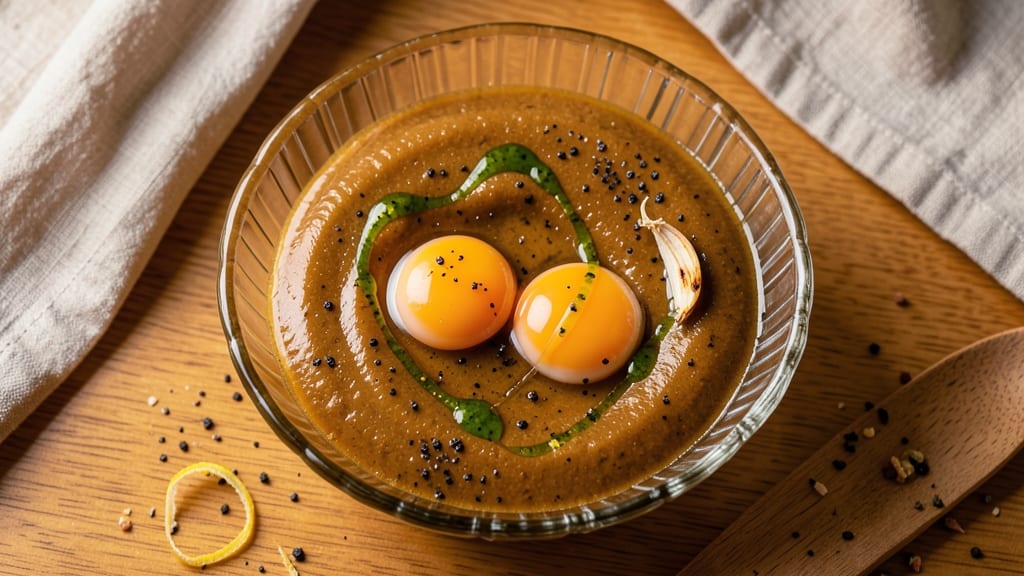
This Caesar salad dressing recipe with egg and anchovy paste delivers restaurant-quality velouté that balances rich umami with bright acidity.
The secret lies in the anchovy paste—just ½ teaspoon creates that signature savory depth without overpowering—while the raw egg yolk acts as a natural emulsifier for a silky, clingy texture. I've perfected this version after years of testing, ensuring the perfect harmony between garlic, Worcestershire, and Parmesan.
The key technique is slow emulsification: whisking the warm oil into the egg mixture drop by drop until you achieve that signature creamy consistency. Traditional Caesar relies on this method to prevent separation, and the anchovy paste adds a complex, briny richness that store-bought versions can't replicate.
What sets this apart is the Parmesan balance—just ½ cup of freshly grated cheese enhances rather than overpowers the other flavors.
What you'll end up with is a dressing that's creamy yet light, tangy from lemon juice, and packed with umami from the anchovies and Worcestershire.
The texture clings perfectly to romaine lettuce, while the flavor profile delivers that classic Caesar experience—bold enough for hearty salads but versatile enough for dipping or drizzling. This is the dressing that transforms a simple salad into a standout centerpiece.
Use it immediately for freshness, or store in the refrigerator for up to 5 days. The flavor actually improves as the ingredients meld, making it perfect for meal prep. Garnish with extra Parmesan or croutons just before serving to maintain that restaurant-quality finish. Let's make this dressing!
Ingredients for caesar salad dressing recipe with egg and anchovy paste
Nine ingredients transform into velvety Caesar perfection—bold umami meets bright acidity in every clingy bite.
| Ingredient | Amount | Notes |
|---|---|---|
| Large Egg Yolks 🥚 | 2 whole | Fresh, room temperature preferred |
| Anchovy Paste 🐟 | ½ tsp | High-quality, finely minced |
| Extra-Virgin Olive Oil 🫒 | 1 cup | Light, fruity variety for balance |
| Garlic Cloves 🧄 | 2 cloves | Fresh, minced to a paste |
| Worcestershire Sauce 🍶 | 1 tbsp | Anchovy-free if strict pescatarian |
| Fresh Lemon Juice 🍋 | 2 tbsp | Bright, freshly squeezed |
| Parmesan Cheese 🧀 | ½ cup | Freshly grated, fine texture |
| Diamond Crystal Kosher Salt 🧂 | ½ tsp | Fine grain for perfect seasoning |
| Black Peppercorns 🌶️ | ¼ tsp | Freshly ground for depth |
| Cold Water 💧 | 2 tbsp | For thinning consistency |
The anchovy paste is non-negotiable—Colavita or Branca brands deliver that signature briny punch without overpowering. Garlic should be fresh, never jarred, and minced to a paste for even distribution. Parmesan must be freshly grated (pre-grated tastes like sawdust)—Parmigiano-Reggiano is ideal, but Kraft's 100% Grated Parmesan works in a pinch. Worcestershire adds depth, but if you're strict pescatarian, vegetarian Worcestershire (like Annie's) keeps the umami. Olive oil should be light and fruity—California Avocado Ranch or Filippo Berio are my go-tos for that perfect balance.
No anchovy paste? Reduced fish sauce at half the amount (like Red Boat) mimics the umami, though texture differs slightly. Egg yolks can be replaced with 1 tbsp cornstarch + 2 tbsp water for a vegan version, but texture won't be identical. Garlic powder at ½ tsp works if fresh isn't available, but it lacks that pungent freshness. Lemon juice can be swapped for white vinegar (use 1 tbsp) if you're out, though flavor shifts slightly. Parmesan can be omitted for a lighter dressing, but the umami depth will suffer—worth the extra grating for that restaurant-quality finish.
This dressing must be used immediately for peak texture, but flavor develops beautifully over 3-5 days in the fridge. Store in an airtight jar, submerged under a thin layer of olive oil to preserve freshness. Double the batch—it disappears fast! For meal prep, portion into small containers. Never reheat—always serve at room temperature to maintain that signature velvety consistency. Garnish with extra Parmesan or black pepper just before serving to elevate every bite.
Why You'll Love This Recipe
- No Fuss, Big Payoff: That anchovy paste and egg yolk combo might sound intimidating, but it’s just a matter of whisking—no fancy techniques here. Five minutes of stirring transforms those simple ingredients into something restaurant-quality without the stress.
- Umami Bomb: Honestly, the moment that anchovy paste hits the warm olive oil? My taste buds sit up and take notice. The Worcestershire and garlic clove deepen it into a flavor so rich, it turns even basic greens into a showstopper.
- Dressing for Days: Between us, this keeps perfectly in the fridge for a solid week—no sad, watery lettuce here. I make a big batch on Sundays, and it’s my go-to for salads, pasta, or even drizzled over grilled chicken (yes, really).
- Pocketbook Hero: Anchovy paste and egg yolks stretch this recipe’s value way beyond store-bought bottles. A tiny jar of paste goes a long way, and you’re left with dressing that tastes like it cost ten times more. Budget win, flavor win.
Step-by-step instructions for Caesar salad dressing
Here's the method that delivers a silky, umami-packed dressing every time—no lumps, no bitterness, just perfect balance.
Whisk Egg Yolks and Anchovy Paste Until Fully Emulsified
Place the 2 whole large egg yolks in a heatproof bowl and whisk them vigorously for 1-2 minutes until they pale slightly and thicken. Add the 0.5 teaspoon anchovy paste and continue whisking for another 30 seconds until completely smooth. The anchovy paste might look odd at first, but it dissolves fully into the yolks—this is where that signature Caesar depth comes from.
I like to use a small whisk here rather than a fork to incorporate more air, which helps create that velvety texture later. If you see any stubborn bits of anchovy paste, press it against the bowl with the whisk to ensure complete integration. This step is non-negotiable for authentic flavor—skip it, and you'll miss that complex umami punch.
Gradually Incorporate Olive Oil While Tempering the Mixture
Place the bowl over a pot of simmering water, ensuring the bottom of the bowl doesn't touch the water (this is called a double boiler). Slowly drizzle in the 1 cup extra-virgin olive oil while whisking constantly. Start with just a few drops at first, then gradually increase to a steady stream as the mixture begins to thicken.
The key here is patience—adding oil too quickly will cause the emulsion to break. You're looking for a slow, steady incorporation where the oil disappears completely into the yolk mixture, creating a creamy, mayonnaise-like consistency. This process should take about 5 minutes. If the mixture starts to curdle, immediately remove it from the heat and whisk vigorously to restore the emulsion.
Add Aromatics and Build the Flavor Foundation
Remove the bowl from the heat and let it cool slightly for 2 minutes. Add the 2 cloves minced garlic, 1 tablespoon Worcestershire sauce, and 2 tablespoons fresh lemon juice, whisking constantly to combine. The garlic should dissolve completely into a paste—if you see any chunks, press them against the bowl with the whisk until fully incorporated.
Next, add the 0.5 cup freshly grated Parmesan cheese, whisking until it melts completely into the dressing. This is where the magic happens—the Parmesan's saltiness and fat content help stabilize the emulsion while adding that signature nutty depth. If you're using pre-shredded cheese, strain it first to remove any anti-caking agents that can make the dressing grainy.
Season and Thin to Perfect Consistency
Add the 0.5 teaspoon Diamond Crystal kosher salt and 0.25 teaspoon freshly ground black peppercorns, whisking until fully dissolved. Taste the dressing at this point—it should be rich, tangy, and deeply savory, but still need a touch of brightness. If it tastes too heavy, add 1 teaspoon more lemon juice; if it's too sharp, add another pinch of salt.
Now for the consistency check: slowly drizzle in the 2 tablespoons cold water, whisking continuously. The dressing should reach a velouté-like texture—thick enough to coat the back of a spoon but still pourable. If it's too thick, add another ½ teaspoon water; if too thin, whisk in ½ teaspoon more Parmesan cheese to help stabilize it. The perfect Caesar dressing should cling to greens without dripping off the fork.
Rest and Adjust for Maximum Flavor Development
Cover the bowl with plastic wrap, pressing it directly onto the surface to prevent a skin from forming. Let the dressing rest at room temperature for at least 30 minutes—this allows all the flavors to meld together and the emulsion to fully stabilize. The longer it rests (up to 2 hours), the better the flavor will develop.
Before using, give it one final taste and adjust the seasoning if needed. The dressing should be perfectly balanced—bright from the lemon, rich from the anchovies, salty from the Parmesan, and with just a hint of garlic's sharpness. If you're making this ahead, store it in an airtight container in the refrigerator for up to 3 days, giving it a good whisk before serving to restore its silky texture.
Pro Tips For Making Caesar Salad Dressing Recipe With Egg And Anchovy Paste
- Whisk in Stages: Don’t dump all the olive oil at once—start with just 1 tablespoon while whisking the yolks and anchovy paste into a thick paste. After that, slowly drizzle in the rest while keeping the heat lowest possible (or off entirely if using a bowl over ice). I learned this the hard way when my dressing broke into scrambled eggs—too much oil too fast kills the emulsion.
- Toast the Garlic: Mince the garlic after lightly toasting it in olive oil for 30 seconds until fragrant but not brown. The nutty depth cuts through the anchovy’s saltiness and balances the richness of the yolks. Skip this, and your dressing tastes flat—trust me, your taste buds will notice.
- Strain the Yolks: Separate the yolks with a fine-mesh sieve or cheesecloth to remove any stray egg whites or bits of shell. Smooth texture is everything in Caesar dressing—lumpy bits make it look amateur. (Yes, even if you’re careful, a little insurance goes a long way.)
- Use Cold Yolks: Chill the egg yolks in the fridge for 10 minutes before mixing—cold yolks emulsify better and resist curdling when combined with anchovy paste. I was skeptical until I tried it: the dressing stays silky instead of turning grainy when you add the oil. Worth the wait.
Pro cooking tips for caesar salad dressing recipe with egg and anchovy paste
Emulsification Mastery
The secret to a silky Caesar dressing lies in slow, controlled emulsification. Start by whisking the egg yolks until they're pale and slightly thickened—this incorporates air, which helps stabilize the emulsion later. When adding the 1 cup olive oil, begin with just a few drops while whisking vigorously.
Gradually increase the stream as the mixture thickens, ensuring the oil disappears completely into the yolks. If you rush this step, the dressing will separate. I use a double boiler to gently warm the mixture, which helps the oil blend more smoothly. 🌡️
Anchovy Paste Integration
The ½ teaspoon anchovy paste is non-negotiable for authentic flavor, but it must be fully incorporated. Whisk it into the yolks until completely dissolved—any visible chunks will create a gritty texture. I recommend Colavita or Branca anchovy paste for their smooth consistency.
If you're worried about texture, press the paste against the bowl with the whisk to ensure even distribution. This step builds the umami foundation that sets Caesar dressing apart from other creamy dressings.
Temperature Control
Never let the dressing get too hot during emulsification—ideal temperature is 120-140°F. If the mixture curdles, immediately remove it from heat and whisk vigorously to restore the emulsion. I test temperature with a kitchen thermometer to avoid overheating.
The warm oil helps the yolk emulsify better, but too much heat will cook the egg and create a scrambled texture. This is why the double boiler method works best—it maintains gentle, even warmth throughout the process.
Garlic Paste Technique
Fresh garlic is essential, but it must be minced to a smooth paste for even flavor distribution. I use a microplane to grate the garlic directly into the dressing, then whisk until completely dissolved. Never use jarred minced garlic—it lacks the fresh, pungent flavor that's crucial for Caesar dressing.
The paste should disappear entirely into the mixture, leaving no visible specks. This step prevents any harsh, concentrated garlic bites that can ruin the dressing's balance.
Parmesan Grating
Freshly grated Parmesan cheese is the only way to achieve that signature nutty depth. I use a fine-hole grater and strain any pre-shredded cheese to remove anti-caking agents that create graininess. The cheese should melt completely into the dressing, adding both flavor and fat to help stabilize the emulsion.
For extra richness, I sometimes add an additional 1 tablespoon of grated Parmesan at the end, reserving it for garnish. This final touch elevates the dressing to restaurant-quality perfection. 🧀
Consistency Adjustments
The dressing should reach a velouté-like texture—thick enough to coat the back of a spoon but still pourable. If too thick, add ½ teaspoon cold water at a time while whisking. If too thin, whisk in ½ teaspoon more Parmesan cheese to help stabilize.
I test consistency by dripping a small amount onto a plate—it should form a smooth, even line without breaking apart. This final adjustment ensures the dressing clings perfectly to romaine lettuce without dripping off the fork. 💧
Nutrition facts
Frequently asked questions
Why does this Caesar dressing recipe use anchovy paste instead of whole anchovies?
The anchovy paste delivers concentrated umami flavor without the texture issues of whole anchovies. Just ½ teaspoon creates that signature depth while avoiding any fishy aftertaste or bones. Plus, it dissolves completely into the yolk mixture for a smooth, velvety texture.
Can I make this dressing without raw egg for food safety?
Yes! Replace the 2 egg yolks with a mix of 1 tablespoon cornstarch + 2 tablespoons water, whisked until smooth. The texture will be slightly different but still creamy. For extra insurance, pasteurize eggs by heating them to 145°F for 3 minutes before using. Always refrigerate and use within 3 days.
What's the best way to fix separated dressing?
If your dressing breaks, whisk in 1 teaspoon cold water while vigorously whisking. For stubborn separation, add ½ teaspoon Dijon mustard (it acts as an emulsifier) and whisk until smooth. The double boiler method helps prevent this, but even pros occasionally need to rescue their emulsion!
How long can I store this dressing in the fridge?
This dressing stays fresh for up to 5 days when stored in an airtight container submerged under a thin layer of olive oil. Give it a good whisk before using to restore its silky texture. For best flavor, use within 3 days—the ingredients meld beautifully over time, but freshness matters most for that creamy consistency.
Can I use this dressing on other dishes besides salads?
This versatile dressing works perfectly as a dip for garlic bread, a marinade for grilled chicken, or even a sauce for pasta dishes. The rich umami flavor pairs well with seafood too—try it with seared scallops or grilled shrimp. Just adjust the consistency with water or Parmesan as needed for your application.