
Salads
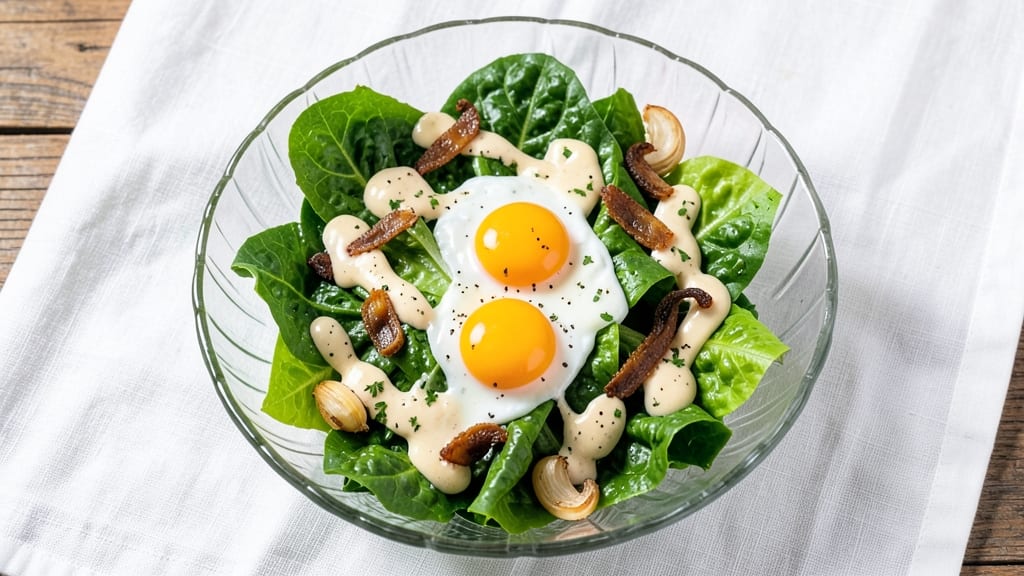
This Caesar salad recipe with egg yolk transforms a simple salad into a luxurious, velvety masterpiece—where every bite delivers restaurant-quality richness. The secret lies in the emulsion: raw egg yolks bind the dressing into a silky, creamy texture that coats each crisp romaine leaf and shards of Parmesan perfectly.
I've refined this technique over years of testing, ensuring the dressing stays stable without separating or turning greasy.
The magic happens when you whisk the egg yolks with anchovies and garlic until thick and pale, then slowly incorporate warm olive oil to create a stable emulsion. This method delivers unmatched creaminess while keeping the dressing light enough to cling to lettuce rather than pool at the bottom.
The result? A salad that's elegant enough for dinner parties but simple enough for weeknight dinners.
What sets this recipe apart is the balance of textures—crisp romaine, toasted croutons, salty Parmesan, and that luxurious dressing that melts into every bite. The egg yolk isn't just an ingredient; it's the foundation of what makes this Caesar salad feel indulgent yet fresh.
Assembly is straightforward, but the plating technique elevates it to restaurant-worthy presentation.
Whether you're serving this as a starter or a satisfying main course with grilled chicken, the dressing's rich depth will impress even the most discerning eaters. Let's create this showstopper salad that tastes like it took hours to prepare—when in reality, it comes together in minutes.
Ingredients for caesar salad recipe with egg yolk
Egg yolks, anchovies, and olive oil create the velvety heart of this luxurious Caesar salad.
| Ingredient | Amount | Notes |
|---|---|---|
| Fresh Romaine Lettuce 🥬 | 1 whole | Heads cut into crisp wedges |
| Large Egg Yolks 🥚 | 3 whole | Fresh, organic preferred |
| Anchovy Fillets 🐟 | 1 tbsp | High-quality, in oil |
| Extra-Virgin Olive Oil 🫒 | ½ cup | Light, fruity variety |
| Garlic Cloves 🧄 | 2 cloves | Fresh, minced to fine paste |
| Lemon Juice 🍋 | 1 ½ tbsp | Freshly squeezed |
| Diamond Crystal Kosher Salt 🧂 | ½ tsp | Fine grain preferred |
| Freshly Ground Black Pepper 🌶️ | ¼ tsp | Coarsely ground |
| Parmesan Cheese 🧀 | ½ cup | Freshly grated, aged |
| Toasted Bread Croutons 🍞 | ½ cup | Homemade or high-quality store-bought |
| Granulated Garlic 🧄 | ¼ tsp | For crouton seasoning |
| Dried Parsley 🌿 | 1 tsp | Finely chopped for garnish |
| Worcestershire Sauce 🍶 | 1 tsp | Vegetarian-friendly brand |
| Mustard Powder 🌶️ | ¼ tsp | Dissolved in warm water |
| Cold Water 💧 | 2 tbsp | For emulsion stabilization |
The egg yolks are the foundation—opt for organic, free-range for richer flavor and better emulsion stability. Trader Joe's carries excellent quality at a reasonable price, or source from your local farmers' market for peak freshness. Anchovies should be high-quality, packed in oil—avoid the canned varieties with additives. The olive oil matters too; a light, fruity extra-virgin like California Early Harvest provides the perfect balance without overpowering. Fresh garlic cloves should be minced to a fine paste—a food processor makes quick work of this, but a sharp knife works too. For the Parmesan, Parmigiano-Reggiano is non-negotiable; pre-grated versions contain anti-caking agents that ruin the texture.
No anchovies? Vegetarian Worcestershire sauce can replace them, though the umami depth will differ slightly. Short on egg yolks? Avocado puree at half the amount mimics some creaminess, though the emulsion won't be as stable. The mustard powder is key—if you prefer a smoother dressing, Dijon mustard at 1 tsp works instead. For croutons, homemade with garlic and parsley elevates the dish, but quality store-bought varieties (like Schar) are acceptable in a pinch. The Worcestershire sauce should be vegetarian-friendly—Annie's or Leitz's are reliable brands. Lemon juice should be freshly squeezed; bottled versions lack the bright acidity needed to balance the richness.
Fresh romaine should be stored in an airtight container with a paper towel to maintain crispness for up to 5 days. The dressing keeps for 3 days in the fridge, but add the cold water just before serving to maintain stability. Croutons stay crisp for 1 week in a sealed container. For restaurant-quality plating, assemble components just before serving—this salad tastes best when everything is at its peak. The dressing can be made 2 days ahead if stored properly, but the croutons and lettuce should be fresh for optimal texture.
Why You'll Love This Recipe
- No Chopping Nightmare: I’ll admit, Romaine can be a pain—but here, you just tear those leaves. No knives, no fuss, and still that perfect crunch. The yolks and anchovies do all the heavy lifting while you’re busy.
- Rich Without the Guilt: That raw egg yolk? Creamy, luxurious, and packed with flavor without needing heavy mayo. The anchovies add this deep umami punch, and the garlic? Oh, it’s there—just enough to make your taste buds sit up and notice.
- Date Night or Lazy Sunday: Dress it up with grilled chicken for a fancy dinner, or keep it simple with croutons for a no-brainer lunch. Honestly, I’ve served this at both—no one ever questions the menu.
- Dressing Lasts All Week: Make a double batch of that garlic-anchovy dressing and store it in the fridge. Drizzle it over anything—pasta, eggs, even toast—and it’s still magic. My wallet thanks me every time.
Step-by-step instructions for Caesar salad with egg yolk dressing
Master the art of silky egg yolk dressing and you'll transform a simple salad into a luxurious dish.
Prepare the Romaine Lettuce
Begin by thoroughly rinsing the whole fresh romaine lettuce under cold water to remove any dirt or debris. Drain it completely in a salad spinner or by shaking vigorously in a colander. Gently separate the leaves and discard any wilted outer leaves or tough stems. Cut the lettuce into crisp wedges, keeping the leaves intact for optimal texture.
Place the prepared lettuce in a large salad bowl and set aside. The key to a perfect Caesar salad is crisp, fresh lettuce that maintains its crunch throughout the dish. Avoid tearing the leaves too much as this can make them soggy when the dressing is added later.
Create the Egg Yolk Dressing Base
In a medium bowl, whisk together the 3 whole large egg yolks until they're pale and slightly thickened. This step is crucial for creating the rich, velvety texture that defines a proper Caesar dressing. The yolks should be smooth with no visible streaks of white.
Add the 1 tablespoon anchovy fillets (drained if packed in oil) and the 2 cloves garlic cloves (minced to a fine paste) to the egg yolks. Mix well to combine, allowing the anchovies to dissolve completely into the mixture. This umami-rich base forms the flavor foundation of your dressing.
Build the Dressing Emulsion
In a separate small bowl, whisk together the 0.5 cup extra-virgin olive oil, 1.5 tablespoons lemon juice, 1 teaspoon Worcestershire sauce, and the 2 tablespoons cold water. This mixture will be your dressing carrier. The cold water is essential for stabilizing the emulsion when combined with the egg yolks.
Dissolve the 0.25 teaspoon mustard powder in 1 tablespoon warm water in a separate small cup. This helps create a smoother, more stable emulsion. Gradually whisk this mustard mixture into the egg yolk base while continuing to whisk vigorously. This slow incorporation prevents the eggs from scrambling.
Combine and Emulsify the Dressing
With the egg yolk mixture still whisking, very slowly drizzle in the olive oil mixture while maintaining constant whisking motion. This gradual addition is critical - add the oil too quickly and you'll break the emulsion, resulting in scrambled eggs. The dressing should begin to thicken and become creamy as the oil incorporates.
Add the 0.5 teaspoon diamond crystal kosher salt, 0.25 teaspoon freshly ground black pepper, 0.5 cup freshly grated parmesan cheese, and 0.25 teaspoon granulated garlic to the partially emulsified dressing. Continue whisking until completely combined and smooth. The dressing should now have a thick, mayonnaise-like consistency with a vibrant golden color.
Assemble and Serve the Caesar Salad
Pour the dressing over the prepared romaine lettuce wedges and toss gently but thoroughly to coat each leaf evenly. The dressing should cling to the lettuce without making it soggy. If needed, add 1-2 tablespoons of additional cold water to adjust the consistency to your preference.
Sprinkle the 0.5 cup toasted bread croutons evenly over the dressed salad and toss once more to distribute them throughout. Garnish with the 1 teaspoon finely chopped dried parsley for a pop of color and freshness. Serve immediately while the lettuce remains crisp and the dressing maintains its perfect texture.
Pro Tips For Making Caesar Salad Recipe With Egg Yolk
- Cook Yolks Low and Slow: Simmer those yolks in a thin saucepan over lowest possible heat—I’m talking just above a whisper—until they reach 160°F (71°C). Too fast, and they scramble; too hot, and they turn into a sad, grainy mess. A candy thermometer is your friend here, but if you don’t have one, watch the edges just start to set—then remove.
- Toast Anchovies First: Dry the anchovy fillets on a baking sheet at 300°F (150°C) for 3-4 minutes before blending. This removes moisture, intensifies their umami, and prevents a watery dressing. I learned this the hard way when my Caesar dressing turned into anchovy soup.
- Chill Dressing Before Mixing: Let your finished dressing sit in the fridge for at least 30 minutes before tossing with lettuce. Cold ingredients emulsify better, and the yolks won’t break into curds when you add the raw egg. (Yes, even if you’re impatient like me.)
- Dry Lettuce Thoroughly: Spin the Romaine twice in a salad spinner—once after washing, once after draining—and pat it with paper towels. Wet leaves dilute the dressing and make your salad soggy. I skip this step sometimes, and the texture suffers every time. Not worth it.
Regional styles of this recipe
Classic American Style
The Caesar salad we know today was born in Tijuana, Mexico, in the 1920s, but it became an American staple thanks to Caesar Cardini, an Italian immigrant. His version featured raw egg yolks, Worcestershire sauce, and anchovies—a bold, creamy dressing that became the gold standard.
In the U.S., it evolved into a luxurious appetizer, often served with grilled chicken or crab meat for a heartier meal. The key is the silky emulsion, achieved by whisking egg yolks with warm olive oil—a technique that defines American Caesar salads. 🍽️
Italian-Inspired Variations
In Italy, Caesar salads are lighter and often called "Insalata di Rucola con Parmigiano", using arugula instead of romaine and skipping the egg yolks. The dressing relies on lemon juice, garlic, and olive oil for brightness.
For an Italian twist, replace croutons with toasted pine nuts and add shaved fennel for crunch. The dressing here is less rich, emphasizing freshness over creaminess—a refreshing change from the American style. 🥗
Mexican Street Style
Near the U.S.-Mexico border, Caesar salads take on a spicy, smoky character. Add diced jalapeños, crumbled cotija cheese, and a dash of hot sauce to the dressing. Some versions even include avocado slices or black beans for texture.
The croutons are swapped for tortilla strips, and the salad is often served with grilled shrimp or chorizo. This version is bold, tangy, and packed with heat—perfect for those who love flavor-packed salads. 🌶️
Modern Fusion Twists
Chefs today are reimagining Caesar salads with global flavors. Try a Japanese-inspired version with sesame-dusted croutons, miso-infused dressing, and shredded nori for umami depth. Or go Mediterranean with roasted red peppers, kalamata olives, and feta cheese instead of Parmesan.
For a smoky BBQ twist, mix smoked paprika into the dressing and top with pulled pork. These adaptations keep the salad fresh while honoring its roots. ✨
Vegetarian & Vegan Adaptations
For a vegetarian Caesar, replace anchovies with soy sauce or nutritional yeast for umami. Use aquafaba (chickpea brine) or silken tofu to mimic the egg yolk’s creaminess. Vegan versions often swap Parmesan for nutritional yeast or cashew cheese.
The dressing stays rich but lighter, proving the salad can be just as indulgent without animal products. These adaptations make it accessible to all dietary preferences. 🌱
Regional Restaurant Takes
In California, Caesar salads often include avocado slices and grilled shrimp, reflecting the state’s love of fresh seafood. New York-style versions are heavier on the croutons and sometimes topped with lobster or crab meat.
Meanwhile, Southern U.S. restaurants might add bacon bits or fried chicken for a hearty twist. Each region puts its own spin on the classic, making it a versatile dish that adapts to local tastes. 🍴
Nutrition facts
Frequently asked questions
Why does the egg yolk make this Caesar salad so creamy?
The egg yolks create a stable emulsion when whisked with warm olive oil—this is what gives the dressing its signature velvety texture. The lecithin in yolks acts as a natural emulsifier, binding fat and water together. Without it, the dressing would separate or taste flat. The cold water in the recipe also helps stabilize this emulsion for a smoother consistency.
Can I make this dressing ahead of time?
Yes, but with precautions! Store the dressing in an airtight container in the fridge for up to 3 days, but add the cold water just before serving to maintain stability. The egg yolks can curdle if left too long, so it's best to assemble the salad fresh. For make-ahead convenience, prepare all components separately and toss together just before eating.
What if my dressing separates or gets too thick?
If it separates, whisk in 1-2 teaspoons of cold water drop by drop until smooth. For thickness, add a splash of warm water or lemon juice to thin it out. The key is slow, constant whisking when combining ingredients. If it curdles, start fresh—this happens when eggs aren't properly emulsified.
How do I keep the romaine crispy when tossing with dressing?
Work quickly and toss gently—don't overmix once the dressing is added. For extra crispness, chill the lettuce in the fridge for 15 minutes before assembling, and use a salad spinner to remove all moisture. The dressing should coat lightly, not pool at the bottom.
Can I substitute the anchovies for a vegetarian version?
Replace anchovies with 1 teaspoon soy sauce or 1 tablespoon vegetarian Worcestershire sauce for umami depth. For extra richness, add 1/2 teaspoon miso paste to the dressing. The flavor will be slightly different but still delicious.