
Salads
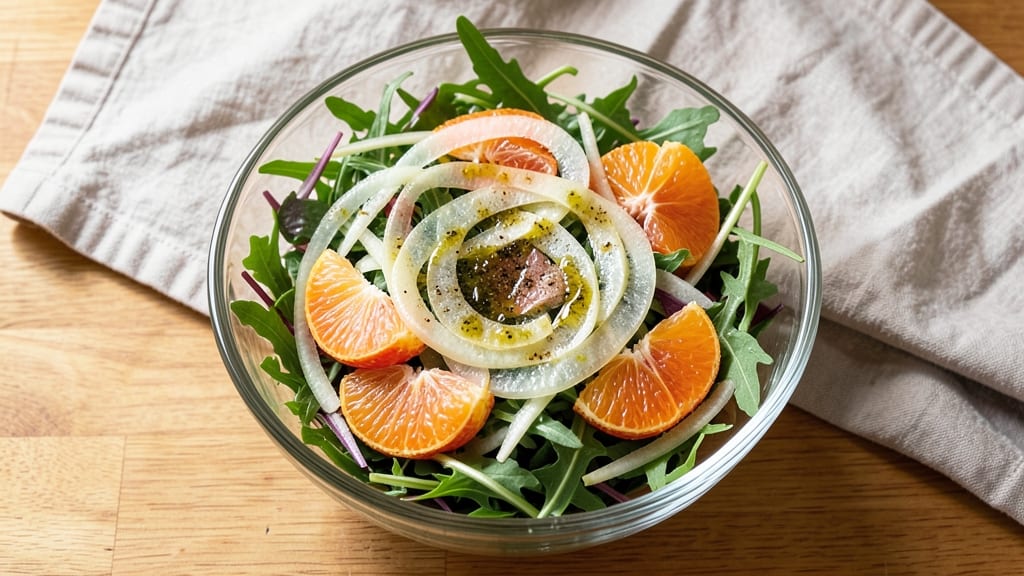
This arugula fennel and orange salad recipe transforms simple ingredients into a vibrant, texturally complex dish that’s perfect for spring or summer gatherings. The combination of peppery arugula, crisp fennel, and bright orange segments creates a balance of flavors that’s both refreshing and satisfying—no cooking required.
I developed this recipe after realizing how often I reached for store-bought salads that lacked depth, and this version delivers restaurant-quality results in just 15 minutes.
The secret lies in the dressing—a light citrus vinaigrette that cuts through the bitterness of the arugula while enhancing the natural sweetness of the orange and the licorice-like notes of the fennel.
Thinly slicing the fennel and segmenting the orange ensures every bite delivers a satisfying crunch, while the dressing ties it all together with a tangy finish. This salad is as much about texture as it is about flavor: crisp, juicy, and fresh with every forkful.
What makes this salad truly special is its versatility—it works as a light lunch, a side dish for grilled proteins, or even as a refreshing starter for dinner. The ingredients are simple, but the result is anything but ordinary.
Whether you’re prepping for a weeknight dinner or hosting a brunch, this salad brings a burst of color and flavor to the table without the fuss. Here’s how to assemble it effortlessly.
Once you’ve mastered this combination, you’ll find endless ways to adapt it—add toasted nuts for crunch, swap in grapefruit for a different citrus profile, or experiment with herbs like thyme or basil.
The key is keeping the ingredients fresh and the prep quick, so you can enjoy the process as much as the result. Let’s get started on creating this bright, herby, citrusy masterpiece.
Ingredients for arugula fennel and orange salad
Bright greens meet citrus sunshine—just eight ingredients for a salad that wows.
| Ingredient | Amount | Notes |
|---|---|---|
| Baby Arugula 🌿 | 5 oz | Fresh, vibrant leaves preferred |
| Fennel Bulb | 1 medium | Thinly sliced, fronds reserved |
| Navel Oranges 🍊 | 2 whole | Segmented, peel removed |
| Extra-Virgin Olive Oil 🫒 | ¼ cup | High-quality, fruity |
| Fresh Lemon Juice 🍋 | 2 tbsp | Freshly squeezed |
| Dijon Mustard 🥫 | 1 tsp | Mild or regular |
| Honey 🍯 | 1 tsp | For subtle sweetness |
| Sea Salt 🧂 | ½ tsp | Fine grain preferred |
| Freshly Ground Black Pepper 🌶️ | ¼ tsp | Freshly cracked |
| Toasted Walnuts 🥜 | ¼ cup | Optional for crunch |
| Fresh Thyme Leaves 🌿 | 2 tsp | Chopped, optional garnish |
The fennel is your texture MVP here. Look for bulbs that feel firm and heavy for their size—those at Whole Foods or well-stocked grocery stores usually have the best selection. Freshness matters most: if the fennel's fronds are wilted, skip it. Oranges should be heavy and smell sweet at the stem. I always grab Navel oranges because their segments are easier to work with. Arugula? The darker the leaves, the pepperier the flavor—Trader Joe's has the best pre-washed bags if you're short on time. Toast your walnuts in a dry pan for 3-4 minutes until fragrant—worth the extra minute.
No fennel? Thinly sliced celery or endive adds a similar crunch, though you'll lose that anise flavor. Running low on honey? Maple syrup at half the amount works in a pinch. The dressing is make-or-break: if you don't have Dijon, whole-grain mustard thinned with water gets you close. Swap oranges for grapefruit if you prefer—just double the citrus juice. Fresh thyme is ideal, but dried thyme at one-third the amount won't ruin the party. Pro tip: zest the oranges first for extra aroma, then segment.
This salad stays fresh for 2 days in the fridge, but the dressing separates fast. Keep it in a separate jar and shake before using. Walnuts? Store them in the freezer to keep them crisp. I always make double—half for lunch, half to pack for work. The dressing keeps for 5 days in the fridge, but the salad itself is best eaten within 12 hours of prepping. For extra flair, drizzle with a little balsamic glaze before serving—just a teaspoon per serving goes a long way.
Why You'll Love This Recipe
- No-Knife Nightmare: I swear by this salad because fennel’s thinly sliced layers actually shave easier than they chop—no knife skills required. The orange segments? Just peel, separate, and toss. Twenty minutes max, and zero frustration.
- Bright, Crunchy Magic: That citrusy zing from the navel oranges cuts through the peppery arugula, while the fennel adds a crisp, almost licorice-like sweetness. Drizzle with good olive oil and lemon juice, and suddenly you’ve got a salad that tastes like a vacation in a bowl.
- Weeknight to Dinner Party: Honestly, this is my go-to when I need something fresh but not fussy. Serve it as a side with grilled fish or chicken, or pile it high on toast for a "salad" that feels like a meal. Even my picky-eating friend asks for seconds.
- Leftovers That Don’t Let You Down: Unlike wilted greens, this salad holds up for days in the fridge—if there’s any left. The fennel stays crisp, the oranges brighten, and the dressing keeps it all fresh. Pack it for lunch or save it for a lazy evening when you’re too tired to cook.
Step-by-step instructions for arugula, fennel, and orange salad
This vibrant salad comes together faster than you can say "zesty" with just a few simple prep steps.
Prepare the Fennel and Oranges
Start by carefully trimming off the tough outer layers of the 1 medium fennel bulb using a sharp chef's knife. Cut off the stem end and slice the bulb in half lengthwise. Remove the core and discard it, then slice each half into ¼-inch thick half-moons. The fennel should look like pale, translucent half-rings—this thin slicing ensures tender texture rather than chewy pieces.
Next, segment the 2 whole Navel oranges. Cut off the top and bottom, then make vertical cuts between each segment to separate them from the membrane. Peel off the skin and remove any remaining white pith. You want just the bright orange segments—no bitterness from the peel. I like to cut the segments into ½-inch pieces for even distribution in the salad. The citrus will brighten every bite with its natural sweetness.
Make the Citrus Dressing
In a small bowl, whisk together the 0.25 cup extra-virgin olive oil, 2 tablespoons fresh lemon juice, 1 teaspoon Dijon mustard, 1 teaspoon honey, 0.5 teaspoon sea salt, and 0.25 teaspoon freshly ground black pepper. The dressing should look emulsified but still slightly streaky—this indicates it's ready to coat the salad perfectly. If you prefer a smoother texture, add 1 teaspoon water and whisk again.
Here's the thing—this dressing needs time to marry. Let it sit for 5 minutes before using. The acidity from the lemon juice will mellow slightly, and the honey will blend more seamlessly with the other flavors. Taste it now and adjust the sweetness or saltiness if needed. I usually find the honey balances the tartness beautifully, but if your oranges are particularly sweet, you might want to reduce it to ½ teaspoon instead.
Assemble the Salad
In a large mixing bowl, combine the 5 oz baby arugula, sliced fennel, and orange segments. The arugula should look like a lush, dark green base with the pale fennel and bright orange segments peeking through. Gently toss everything together just enough to distribute the ingredients evenly—you don't want to bruise the arugula or break the fennel slices.
Drizzle the dressing over the salad and toss again, this time more thoroughly. The dressing should coat each leaf and fennel slice evenly. If the salad looks dry, add 1 tablespoon water and toss once more. The key is to distribute the dressing evenly without making the arugula soggy. For extra crunch, sprinkle the 0.25 cup toasted walnuts over the top and toss lightly just before serving.
Garnish and Serve Immediately
Transfer the salad to serving plates and garnish with the 2 teaspoons fresh thyme leaves. The thyme adds an earthy, aromatic note that complements the bright citrus and peppery arugula. I like to arrange the salad on a platter and scatter the thyme leaves artistically—it makes the dish look as good as it tastes.
This salad shines when served immediately, so don't let it sit too long before eating. The arugula will start to wilt, and the dressing may separate. For the best experience, assemble it right before serving and enjoy within 15 minutes. Pair it with grilled chicken or crusty bread to round out the meal—you'll love how the flavors come together in every bite.
Pro Tips For Making Arugula Fennel And Orange Salad
- Trim Fennel Like a Pro: Use a sharp chef’s knife and slice the fennel horizontally into ¼-inch-thick rounds first, then cut each round into thin matchsticks. I learned this the hard way—thick slices make the salad taste like you’re chewing on a crunchy doorstop.
- Soak Oranges 10 Minutes: Toss orange segments in warm water for 10 minutes before draining to soften the membranes and remove bitterness. Skip this, and you’ll be left with a salad that tastes like you’re eating citrus-flavored cardboard.
- Toss Arugula Last: Dress the fennel and orange first, then fold in the arugula just before serving. The peppery greens wilt fast in citrus, turning your salad into a sad, soggy mess if you mix everything at once.
- Use Cold Oil: Chill the olive oil in the fridge for 15 minutes before drizzling—it clings better to the fennel’s shaved edges and keeps the salad from turning greasy. I was skeptical until I tried it, and now I won’t go back.
Wine and beer pairings for this recipe
Crisp Whites
This salad’s bright citrus and peppery notes pair beautifully with dry Italian whites that have crisp acidity to cut through the richness. I love Vermentino from Sardinia—its mineral-driven finish and citrus undertones mirror the orange segments perfectly.
Another favorite is Pinot Grigio from Alto Adige, which balances the fennel’s licorice notes without overpowering the arugula’s bite. 🍷
Avoid heavy whites like Chardonnay—they’ll make the salad taste dull. Instead, opt for wines with 12-13% ABV and green apple or lemon zest on the palate. Serve slightly chilled (45-50°F) to enhance the salad’s refreshing qualities.
Light Reds
If you prefer red wine, light-bodied options work best to avoid clashing with the citrus. Pinot Noir from Oregon or New Zealand offers bright acidity and red fruit notes that complement the orange and fennel.
Look for wines with 12-13% ABV and strawberry or cherry undertones—these enhance the salad’s sweetness without overwhelming it.
Avoid bold reds like Cabernet Sauvignon or Syrah. Instead, try Italian Sangiovese with its bright acidity and herbal notes. Serve at 55-60°F to preserve the wine’s freshness alongside the salad’s vibrant flavors.
Sparkling Options
For a festive touch, Prosecco or Cava adds effervescence that cleanses the palate between bites. Their apricot and citrus notes harmonize with the orange and fennel, while the bubbles keep the meal feeling light. I love La Marca Prosecco for its crisp finish and affordability.
If you prefer something drier, German Riesling Kabinett (off-dry) offers a perfect balance of sweetness and acidity. Serve at 40-45°F to highlight the wine’s refreshing qualities alongside the salad’s bright flavors.
Beer Pairings
A crisp Belgian witbier like Stella Artois or Hoegaarden brings citrusy notes that echo the orange segments. The coriander and orange peel flavors in these beers enhance the fennel’s licorice undertones without competing with the arugula’s peppery bite. 🍺
For a hoppier option, try a light American lager like Miller Lite or Coors Light. Their clean, crisp profiles let the salad’s flavors shine without adding bitterness. Serve beers at 40-45°F to keep them refreshing alongside the dish.
Nutrition facts
Frequently asked questions
Can I substitute grapefruit for oranges in this salad?
Grapefruit adds a tangier, slightly bitter note that pairs beautifully with the fennel and arugula. Use 1 grapefruit (segmented) instead of the 2 oranges, and you may want to reduce the honey in the dressing to ½ teaspoon since grapefruit is naturally more tart. The extra acidity will cut through the richness of the walnuts if you add them.
How do I store leftover salad without making the arugula soggy?
Keep the dressing separate and store it in a sealed container in the fridge for up to 5 days. When ready to eat, toss the arugula, fennel, and orange segments together, then add the dressing just before serving. For extra freshness, add a pinch of salt to the greens right after rinsing to help preserve their crispness.
What's the best way to thinly slice fennel without crying?
Use a mandoline slicer or a sharp chef's knife with the blade at a 15-degree angle for clean cuts. Wear cut-resistant gloves and position a damp paper towel under the fennel to catch any stray slices. For extra safety, slice the fennel while it's still whole (before removing the core) to minimize mess.
Can I make this salad ahead of time?
Prep the fennel and orange segments 1 day ahead and store them separately in airtight containers. Keep the dressing ingredients separate until ready to use. Assemble the salad just before serving to maintain crispness. The arugula should always be added fresh—it wilts quickly when dressed in advance.
What if my fennel tastes too strong or bitter?
Fresh fennel should have a mild, licorice-like sweetness. If it tastes bitter, it may be old or overcooked. Look for bulbs with firm, white cores and green fronds. For milder flavor, soak the sliced fennel in cold water for 10 minutes before using. If the bitterness persists, reduce the amount to ½ bulb and add more orange segments to balance the flavor.