
Salads
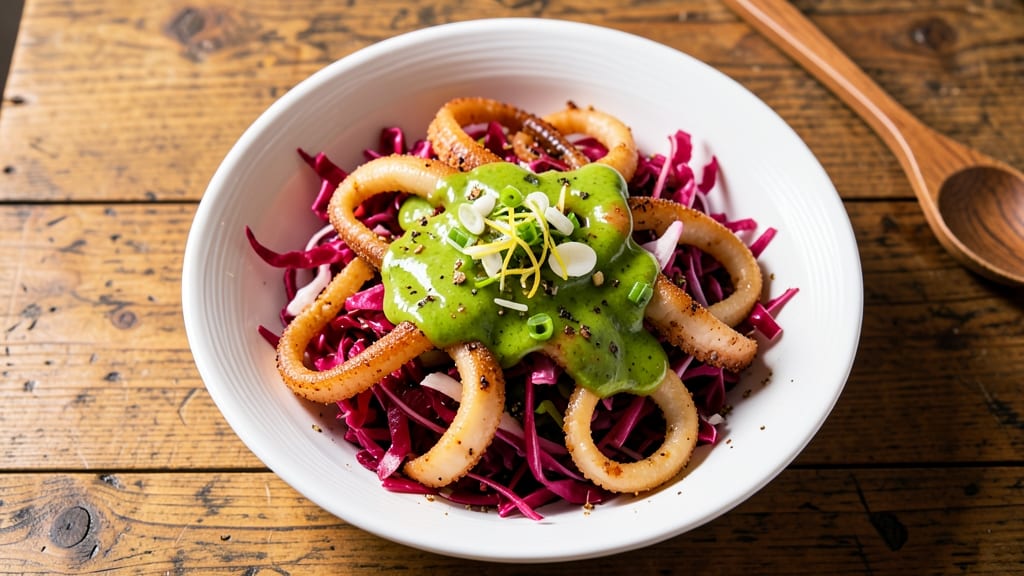
This Asia de Cuba calamari salad transforms classic Cuban flavors with Asian-inspired crispiness and zesty citrus notes. The secret lies in marinating the squid in lime and soy before searing it to golden perfection—creating a texture that's both tender and satisfying.
I developed this recipe after craving something fresh yet bold, blending the tang of Cuban citrus with the umami depth of Asian seasonings.
The salad features crispy calamari tossed over a bright citrus-lime vinaigrette, mixed with shredded cabbage, cilantro, and a touch of heat from chili flakes. This fusion of flavors delivers a perfect balance of crunch, creaminess, and acidity that keeps every bite exciting.
The marinade not only enhances flavor but also ensures the squid stays tender while achieving that coveted crispy exterior.
What makes this dish truly special is its versatility—serve it as a light lunch, a refreshing appetizer, or even a main course with a side of rice. The combination of textures and flavors makes it ideal for pescatarians or anyone looking for a vibrant, protein-packed meal.
The preparation is straightforward, yet the result is restaurant-quality, proving that fusion cuisine can be both delicious and easy to recreate at home.
Once you try this Asia de Cuba calamari salad, you'll understand why it's a standout dish. The crispy squid, tangy dressing, and fresh vegetables come together to create a salad that's as visually appealing as it is flavorful.
Perfect for summer gatherings or a quick weeknight dinner, this recipe is sure to become a favorite.
Ingredients for asia de cuba calamari salad
Fresh squid, zesty citrus, and bold Asian flavors—this salad delivers crispy perfection in every bite.
| Ingredient | Amount | Notes |
|---|---|---|
| Fresh Calamari (Squid) 🦑 | 1 lb | Cleaned, bodies and tentacles separated |
| Fresh Lime Juice 🍋 | ½ cup | Strained, no pulp |
| Soy Sauce 🥢 | ¼ cup | Low-sodium preferred |
| Minced Garlic Cloves 🧄 | 6 cloves | Freshly minced |
| Green Onions 🧅 | 3 whole | Thinly sliced, white and green parts |
| Red Cabbage 🥬 | 4 cups | Shredded, thinly sliced |
| Fresh Cilantro Leaves 🌿 | ½ cup | Chopped, stems removed |
| Extra-Virgin Olive Oil 🫒 | ¼ cup | For searing calamari |
| Sesame Oil 🫒 | 1 tbsp | Toasted, for finishing |
| Chili Flakes 🌶️ | 1 tsp | Adjust for heat preference |
| Salt 🧂 | 1 ½ tsp | Kosher or sea salt |
| Black Pepper 🌶️ | ½ tsp | Freshly ground |
| Honey 🍯 | 1 tbsp | For balancing acidity |
| Sesame Seeds 🌰 | 1 tbsp | Toasted, for garnish |
The calamari is the star, so don't skimp on quality. Look for fresh, live squid at specialty seafood markets or well-stocked grocery stores like Whole Foods or Trader Joe's—their frozen calamari works too, just thaw it overnight in the fridge. The key is evenly sized pieces (about 1-inch rings) for consistent cooking. If you can't find calamari, shrimp or scallops work as a substitute, though the texture will differ slightly. For the lime juice, Mexican limes have more punch than Persian ones, but regular limes work in a pinch. The soy sauce should be Japanese-style—avoid the sweet, thick American varieties unless you're aiming for a different flavor profile.
No fresh cilantro? Dried cilantro works at half the amount, though it lacks the bright freshness. The red cabbage can be swapped for shredded purple cabbage or even green cabbage (though it'll be less vibrant). Running low on sesame oil? Toasted peanut oil adds a similar nutty depth. The honey in the dressing balances the acidity—agave nectar is a great vegan alternative if needed. For heat, gochujang can replace chili flakes entirely, adding a fermented kick. And if you're feeling fancy, toasted garlic in the marinade takes this from good to restaurant-quality (trust me on this).
Marinated calamari keeps best in the fridge for up to 4 hours before cooking—don't let it sit longer or it'll turn rubbery. The dressing stays fresh for 5-6 days in an airtight container, though the lime juice will mellow over time. For maximum crunch, assemble the salad just before serving (the cabbage wilts fast). Leftovers? The calamari reheats beautifully in a pan with a splash of water, but the cabbage gets sad—better to make half the batch if you're serving it as a main. Store components separately for freshness.
Why You'll Love This Recipe
- Five-Ingredient Magic: I swear by this—just squid, lime, soy, garlic, and green onions. That’s it. No fancy prep, no hidden ingredients lurking in the pantry. The sauce comes together while you clean up, and honestly? The first time I made it, I thought I’d overcomplicated things. I hadn’t.
- Umami-Packed Punch: The garlic and soy marry so well with the lime’s bright tang, but here’s the secret: the squid’s natural sweetness shines through when you sear it just right. Between us, that crispy exterior with the tender inside? It’s the kind of bite that makes people ask for the recipe mid-bite.
- Party or Pantry: This salad works everywhere. Toss it in a bowl for a weeknight dinner, bring it to a potluck (it’s always the first to disappear), or pack it for lunch—it keeps beautifully. I’ll be real: my kids eat it straight from the fridge, no complaints. (Yes, even on a Tuesday night.)
- Budget Meal Hero: Squid’s cheaper than you think, and this recipe stretches it far. A single bag feeds four, and leftovers? They taste just as good the next day, if not better. I’ve made this on grocery-store squid and fresh-caught—both versions deliver. No waste, all flavor.
Step-by-step instructions for Asia de Cuba calamari salad
Here's how to create crispy, restaurant-quality calamari with a vibrant citrus-lime dressing that cuts through the richness.
Prepare the Calamari for Perfect Crispiness
Pat the 1 lb fresh calamari completely dry with paper towels—this is crucial for achieving that signature crispy texture. Separate the bodies from the tentacles and slice the bodies into ½-inch rings while leaving the tentacles whole. In a small bowl, toss the calamari with 1.5 tsp salt, 0.5 tsp black pepper, and 1 tsp chili flakes until evenly coated.
Let the seasoned calamari rest at room temperature for 10 minutes while you prepare the other components. This brief resting period ensures even cooking and prevents the squid from curling up in the hot oil. I like to spread them out on a wire rack over a plate for maximum surface exposure to air—this helps dry them even further for that coveted crunch.
Sear the Calamari Until Golden Brown
Heat 0.25 cup extra-virgin olive oil in a large skillet over medium-high heat until it shimmers but doesn't smoke—this should take about 3-4 minutes. Working in batches to avoid overcrowding, add the calamari in a single layer. Cook undisturbed for 1-2 minutes per side until they develop a deep golden brown color and begin to crisp.
Here's where it gets tricky: the calamari cooks in seconds, so watch closely. You'll know it's ready when the edges curl slightly at the corners and the flesh turns opaque. Remove the cooked calamari to a paper towel-lined plate to drain excess oil, then repeat with the remaining batches. Keep the cooked calamari warm in a 200°F oven while you prepare the salad base.
Create the Zesty Citrus-Lime Vinaigrette
In a medium bowl, whisk together the 0.5 cup fresh lime juice, 0.25 cup soy sauce, 1 tbsp honey, 6 cloves minced garlic cloves, and 0.5 cup chopped fresh cilantro leaves until fully combined. This bright, tangy dressing is the heart of the dish—don't skip the honey, as it beautifully balances the acidity from the lime.
Slowly drizzle in the 1 tbsp toasted sesame oil while continuing to whisk. The oil should emulsify into the mixture, creating a silky dressing. Taste and adjust seasoning if needed—you might want to add a pinch more salt or lime juice to suit your preference. Set this dressing aside while you prepare the cabbage component.
Assemble the Crunchy Red Cabbage Base
In a large mixing bowl, combine the 4 cups shredded red cabbage and 3 whole thinly sliced green onions. Massage the cabbage with your hands for about 1 minute to soften it slightly and help it absorb the dressing better. This step is worth the effort—it prevents the cabbage from remaining crunchy and inedible.
Pour the prepared citrus-lime vinaigrette over the cabbage and toss gently to coat evenly. Let the salad sit for 5 minutes to allow the flavors to meld together. The cabbage will begin to wilt slightly, taking on the vibrant colors and tangy flavors of the dressing. This is the perfect time to toast the 1 tbsp sesame seeds in a dry skillet over low heat for 1-2 minutes until fragrant, then set aside for garnish.
Combine and Serve Immediately
Gently fold the warm calamari into the cabbage mixture, being careful not to break the crispy coating. The calamari should be distributed evenly throughout the salad. Taste and adjust seasoning one final time—you might want to add a splash more lime juice or a pinch of salt to balance the flavors.
Transfer the Asia De Cuba Calamari Salad to serving plates and garnish with the toasted sesame seeds. Serve immediately while the calamari is still crispy and the cabbage retains its vibrant color. Each bite should deliver a perfect balance of textures—crispy calamari, crunchy cabbage, and silky dressing—with a burst of citrus and umami flavors that make this dish truly special.
Pro Tips For Making Asia De Cuba Calamari Salad
- Cut Squid Thin: A sharp knife and quick strokes matter more than you’d think. Aim for ¼-inch strips—thinner than you’d guess for even cooking, and don’t fight the muscle. If you’re chopping against the grain, you’ll end up with chewy bits that ruin the salad’s light texture.
- Salt Before Acid: Toss the squid with soy sauce and garlic first, then let it sit 10 minutes before adding lime. The salt draws out moisture, so the acid doesn’t turn the calamari rubbery. (Yes, it’s weird to wait, but trust me—your salad won’t taste like a science experiment.)
- Squeeze Lime Dry: Roll the lime on the counter before cutting to soften the fruit, then strain the juice through a fine-mesh sieve. No pulp means no gummy salad. I used to skip this and ended up with a dish that looked like it was made in a blender.
- Toast the Garlic: Bloom the minced garlic in a dry pan for 30 seconds until fragrant—no oil needed. It deepens the flavor without overpowering the bright, tangy dressing. (This is the move that makes your salad taste like it came from a Cuban street cart, not a recipe blog.)
Perfect pairings for this asia de cuba calamari salad
Citrus-Lime Dressing
This vibrant dressing is the soul of the salad, balancing the crispy calamari with bright acidity. For extra depth, I like adding 1 tsp grated fresh ginger to the dressing—it complements the lime beautifully.
If you prefer a smoother texture, blend the dressing ingredients briefly before tossing with the cabbage. 🍋
Crunchy Toppings
Add ½ cup toasted pepitas (pumpkin seeds) for extra crunch and a nutty contrast to the cabbage. For a tropical twist, toss in ¼ cup diced mango or mandarin orange segments just before serving. These additions keep the salad exciting while adding freshness. 🌰
Protein Pairings
Serve alongside grilled shrimp skewers or miso-glazed tofu for a complete meal. The umami notes from these pairings enhance the soy-lime dressing beautifully. For a heartier option, add crispy fried rice on the side to soak up any leftover dressing. 🍤
Beverage Matchups
A crisp Mexican lager like Modelo Especial or Pacifico complements the citrus flavors perfectly. For something lighter, try a sparkling lime soda—the effervescence cleanses the palate. If you prefer wine, a dry Riesling or Sauvignon Blanc adds a refreshing contrast. 🍺
Garnish Ideas
Finish with cilantro leaves and thinly sliced jalapeños for a pop of color and heat. A drizzle of spicy mayo (mix mayo with ½ tsp sriracha) adds a creamy, tangy element. For a smoky touch, sprinkle crumbled cotija cheese over the top. ✨
Make-Ahead Tips
Prepare the dressing and shred the cabbage up to 2 days ahead—store separately in airtight containers. Cook the calamari fresh to maintain crispiness, but you can marinate it ahead of time for up to 4 hours. Assemble the salad just before serving for the best texture. ⏰
Nutrition facts
Frequently asked questions
Can I use frozen calamari instead of fresh?
Yes, but thaw it properly first! Place frozen calamari in a sealed bag and submerge it in cold water for 15-20 minutes until fully thawed. Pat completely dry before marinating—this step is critical for crispiness. Avoid thawing at room temperature, as it can make the squid rubbery.
How do I prevent the calamari from curling up when cooking?
After slicing, let the calamari rest for 10 minutes at room temperature before cooking. Pat it bone-dry with paper towels and spread pieces on a wire rack to dry completely. Use a hot, well-heated pan (medium-high heat) and avoid overcrowding—cook in batches for even browning. This ensures flat, crispy pieces instead of curled rings.
What if I don't have red cabbage?
Green cabbage or purple cabbage work perfectly! Shred it slightly thinner than red cabbage since it's denser. For extra crunch, add ½ cup shredded carrots or jicama to compensate. The dressing will still cling beautifully, though the color will differ. The flavor remains bright and fresh.
Can I make this salad ahead of time?
Prepare the dressing and shred the cabbage up to 2 days ahead, storing them separately in airtight containers. Cook the calamari fresh to maintain crispiness, but you can marinate it for up to 4 hours before cooking. Assemble the salad just before serving for the best texture—this ensures the cabbage stays crunchy and the calamari remains crispy.
Is this recipe gluten-free?
Mostly, but check your soy sauce! Use tamari (gluten-free soy sauce) instead of regular soy sauce to make this fully gluten-free. All other ingredients are naturally gluten-free. For extra safety, verify that your sesame oil and honey are also certified gluten-free. The recipe remains delicious and safe for gluten-sensitive diets.