
Salads
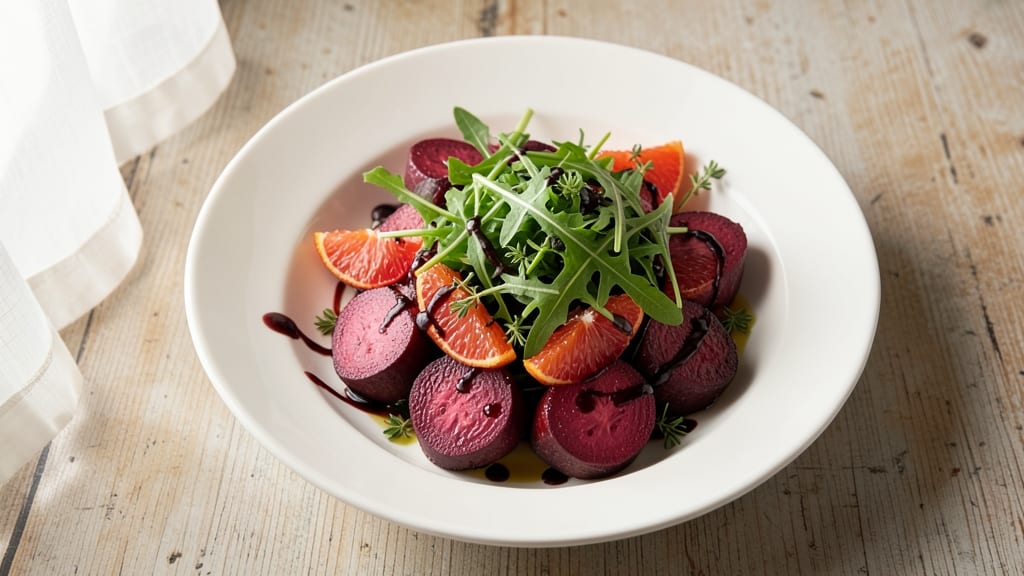
This beet and blood orange salad recipe transforms humble ingredients into a showstopper that tastes like autumn in a bowl. The deep earthiness of roasted beets meets the bright citrus tang of blood oranges, creating a balance that's both sophisticated and approachable—perfect for any meal or gathering.
What makes this salad truly special is how it comes together in just 15 minutes, with minimal prep work and maximum flavor impact.
The secret lies in the roasting process, which caramelizes the beets until they're tender and naturally sweet, then pairs them with blood orange segments that add a vibrant pop of color and zesty contrast.
A simple yet robust dressing ties everything together, while toasted nuts or seeds add crunch for texture. This isn't just another salad—it's a celebration of seasonal produce that feels both elegant and effortless.
What you'll end up with is a visually stunning dish that's as beautiful as it is delicious—deep ruby beets and bright orange segments against a bed of fresh greens, all coated in a dressing that enhances rather than overpowers.
The flavors are complex yet harmonious, with the sweetness of the beets and oranges balanced by the acidity of the dressing and the earthiness of the greens. It's the kind of salad that makes you want to take a bite just to admire the colors first.
Whether you're serving this as a side dish or a main course, it's equally impressive. The recipe is naturally vegan but easily adaptable—add goat cheese or feta for a non-vegan twist, or swap in seasonal fruits like pomegranate seeds or dried cranberries for extra depth.
Ready to create a salad that's as vibrant as it is flavorful? Let's get started.
Ingredients for beet and blood orange salad
Fresh beets, citrusy blood oranges, and crisp greens—this salad is a flavor explosion in every bite.
| Ingredient | Amount | Notes |
|---|---|---|
| Medium Beets 🍠 | 2 whole | Red or golden variety, peeled |
| Blood Oranges 🍊 | 2 whole | Segments only, peeled |
| Baby Arugula 🌿 | 5 oz | Or mixed baby greens |
| Extra-Virgin Olive Oil 🫒 | ¼ cup | For roasting and dressing |
| Balsamic Vinegar 🍷 | 2 tbsp | For dressing and drizzle |
| Fresh Thyme Leaves 🌿 | ¼ cup | Chopped, for dressing |
| Dijon Mustard 🌶️ | 1 tbsp | For dressing tang |
| Maple Syrup 🍯 | 1 tbsp | For dressing sweetness |
| Pumpkin Seeds 🥜 | ¼ cup | Toasted for crunch |
| Sea Salt 🧂 | ½ tsp | For seasoning |
| Freshly Ground Black Pepper 🌶️ | ¼ tsp | For dressing |
| Lemon Juice 🍋 | 1 tbsp | Brightens dressing |
The beets are the star here, so pick medium-sized ones—they roast faster and stay tender. Trader Joe's often has pre-washed, ready-to-use beets, but if you're peeling them yourself, wear gloves (they stain!). Blood oranges are seasonal, but any citrus with vibrant color works—grapefruit or navel oranges add a different twist. For the greens, arugula has that peppery kick, but mixed baby greens work too if you want something milder. Toast your seeds in a dry pan for 2-3 minutes—they'll smell amazing and add serious crunch.
No blood oranges? Substitute grapefruit or clementines—just adjust the juice to taste. The dressing is where the magic happens, so don't skip the Dijon. If you're out, yellow mustard at half the amount works in a pinch. The maple syrup adds just enough sweetness to balance the tang—agave works too. For extra depth, add a pinch of ground cinnamon to the dressing. And if you're feeling fancy, swap the pumpkin seeds for toasted pecans or walnuts. The key is keeping everything bright and fresh—no wilted greens here!
Roasted beets keep for 5 days in the fridge, wrapped tightly in foil. Blood orange segments stay fresh for 3 days if stored in an airtight container with a paper towel to absorb moisture. The dressing? Make it fresh, but it'll keep for 3 days in the fridge—shake before using. This salad tastes even better the next day as the flavors meld. Double the recipe and store components separately for easy assembly—perfect for meal prep.
Why You'll Love This Recipe
- No-Cook Magic: I swear by this—roast the beets ahead (or grab pre-cooked ones), slice the blood oranges, and toss with arugula. That’s it. Zero standing-over-the-stove time, just vibrant layers of color and texture ready in minutes.
- Sweet-Savory Balance: The blood oranges bring that juicy, citrusy punch while the roasted beets add earthy depth. Drizzle with balsamic and olive oil? It’s like a flavor party where everyone’s invited—no one ingredient overpowers, just pure harmony.
- Weeknight or WOW: Honestly, this salad works for both. Toss it together for a quick lunch or plate it pretty for dinner guests. The baby arugula keeps it light, but the beets and blood oranges make it feel special—no one will guess it’s this unfussy.
- Budget Brightener: Beets and blood oranges might sound fancy, but they’re affordable and pack a punch. A single roasted beet lasts for days, and blood oranges stay fresh longer than you’d think. Plus, olive oil and balsamic stretch this into multiple meals without breaking the bank.
Step-by-step instructions for beet and blood orange salad
Here's how to assemble this stunning salad with bold flavors and perfect textures.
Roast the Beets to Sweet Perfection
Preheat your oven to 400°F and line a baking sheet with parchment paper. Place the peeled 2 whole medium beets directly on the sheet. Drizzle with 1 tablespoon of the extra-virgin olive oil and sprinkle with ¼ teaspoon of the sea salt. This helps them caramelize beautifully.
Roast for 45-50 minutes until the beets are fork-tender and their edges are deeply caramelized. You'll know they're done when they pierce easily with a fork and smell intensely sweet. Let them cool completely before slicing—this makes them much easier to work with and prevents them from bleeding into the salad.
Segment the Blood Oranges for Maximum Brightness
Cut the 2 whole blood oranges in half crosswise and squeeze the juice from each half into a small bowl. You should get about 3-4 tablespoons of juice. Then, working over the same bowl, carefully segment the oranges by sliding your knife between the membrane and the fruit, keeping the knife parallel to the cutting board.
Discard any tough membranes and collect all the segments in the bowl with the juice. Set aside 1 tablespoon of this juice for the dressing later. The remaining juice will be used in the dressing, but keeping some separate ensures you don't overpower the salad with too much citrus acid.
Whisk Together the Vibrant Dressing
In a small bowl, combine the 1 tablespoon lemon juice, 1 tablespoon maple syrup, 1 tablespoon Dijon mustard, 2 tablespoons balsamic vinegar, and the reserved 1 tablespoon blood orange juice. Whisk until the maple syrup and mustard are fully incorporated.
Slowly drizzle in the ¼ cup extra-virgin olive oil while whisking continuously. Add the ¼ cup chopped fresh thyme leaves and ¼ teaspoon freshly ground black pepper, then whisk again until everything is perfectly combined. The dressing should be thick but pourable—if it's too thick, add 1 teaspoon water to loosen it.
Assemble the Salad with Perfect Balance
In a large bowl, combine the 5 ounces baby arugula with the sliced roasted beets (cut into ¼-inch thick slices) and the blood orange segments. Gently toss everything together just until the arugula is evenly distributed—you want to preserve the individual textures and colors.
Drizzle about half of the dressing over the salad and toss again, just until everything is lightly coated. The remaining dressing can be served on the side for those who want more flavor. Sprinkle the ¼ cup pumpkin seeds evenly over the top and give it one final gentle toss to distribute them.
Serve Immediately for Maximum Freshness
Divide the salad among 4 plates and drizzle with the remaining dressing. The contrast of the deep caramelized beets, bright blood orange segments, and peppery arugula creates a visual and flavor masterpiece. Serve immediately while everything is still crisp and vibrant.
This salad holds up well for about 2 hours if stored in an airtight container in the refrigerator, but the beets will soften slightly over time. For the best experience, assemble and serve right away—you'll love how the flavors and textures come together perfectly when everything is fresh.
Pro Tips For Making Beet And Blood Orange Salad
- ROAST BEETS UNTIL TENDER: I learned this the hard way—beets need real time in the oven, not just until they look soft. Cut them into 1-inch cubes, toss with olive oil, salt, and pepper, then roast at 400°F (200°C) for 40-45 minutes, flipping halfway. They should pierce easily with a fork but still hold shape—overcooking turns them mushy, and no one wants that in a salad.
- PEEL BEETS WHEN COOL: Skip the peeling rush—let roasted beets cool for 10 minutes before handling. The skins slide off effortlessly, and you’ll save your hands from sticky, stained fingers. (Yes, even if you’re impatient like me.)
- ZEST BEFORE JUICING: Blood oranges taste best when you zest first, then juice. The zest adds bright aroma and color to the salad, while the juice keeps the dressing vibrant. Use a fine grater for zest—about 1 teaspoon—and reserve the rest for juice. (No food processor? A microplane works just as well.)
- DRESS SALAD LAST: Add the balsamic and olive oil dressing right before serving—this keeps the arugula crisp and prevents the beets from turning soggy. Toss gently with tongs so the greens stay bright, not wilted. (I used to dress ahead and always wondered why the texture suffered.)
Dietary considerations for this beet and blood orange salad
Vegan-Friendly Base
This salad is naturally vegan—no animal products needed! The roasted beets and blood orange segments provide all the protein and fiber you need, while the pumpkin seeds add a plant-based crunch.
I always double-check labels on ingredients like Dijon mustard and maple syrup to ensure they're vegan, but the core components here are always cruelty-free. 🌱
Gluten-Free Adaptations
Since this salad relies on fresh produce and simple ingredients, it's inherently gluten-free. Just be mindful of any store-bought dressings or add-ins—stick to tamari (gluten-free soy sauce) if using, and always check labels on balsamic vinegar (some contain gluten).
The pumpkin seeds and arugula are naturally gluten-free, so you're safe with those.
Allergen Considerations
For those with nut allergies, swap the pumpkin seeds for sunflower seeds or omit them entirely—the salad still shines. If you're sensitive to mustard, simply reduce the Dijon to ½ tablespoon or use apple cider vinegar instead for tang.
The blood oranges are a low-FODMAP fruit, making this salad gentle for sensitive stomachs when prepared without high-FODMAP add-ins.
Sweetener Swaps
The maple syrup adds natural sweetness, but you can substitute agave nectar or date syrup for a different flavor profile. For a lower-glycemic option, use monk fruit sweetener (about ½ teaspoon)—it won’t alter the dressing’s texture but keeps things sugar-conscious.
I’ve also used orange zest instead of syrup for a citrus-forward twist.
Protein Boost
To make this salad more filling, add ½ cup cooked quinoa or chickpeas for extra protein. I like to toss in toasted chickpeas (tossed in olive oil and smoked paprika, then baked at 400°F for 20 minutes) for a satisfying crunch.
For a nutty flavor, sprinkle toasted walnuts or pecans on top—just toast them in a dry pan for 3-4 minutes until fragrant.
Seasonal Adjustments
In summer, swap blood oranges for grapefruit or tangerines—their juiciness holds up better to heat. For winter, add pomegranate seeds or dried cranberries for a festive touch. The thyme in the dressing can be swapped for rosemary in summer or cinnamon in winter for a seasonal twist.
Nutrition facts
Frequently asked questions
Can I use regular beets instead of blood oranges?
The recipe works beautifully with regular beets, but the color contrast and citrus flavor are what make this salad special. For a similar effect, try golden beets with grapefruit or navel oranges—the sweet-tart balance remains, just with a different visual impact. If you prefer, swap blood oranges for pomegranate seeds or dried cranberries to keep the vibrant color.
How do I store leftover roasted beets?
Wrap cooled beets tightly in foil and refrigerate for up to 5 days. For longer storage, freeze them in a sealed container for 3 months. Thaw overnight in the fridge before using. The texture changes slightly after freezing, but they still work well in salads or as a side dish.
Can I make this salad ahead of time?
Prep the roasted beets and blood orange segments 1 day ahead and store them separately. Keep the dressing in a sealed jar. When ready to serve, toss everything together and add the seeds last. This salad actually tastes better the next day as the flavors meld—just avoid wilting the greens by adding them last.
What if I don't have fresh thyme?
No problem! Swap thyme for rosemary (use half the amount) or dried thyme (reduce to ¼ teaspoon). For a different flavor profile, try basil or cilantro—just adjust the dressing ratio to taste. The key is balancing the citrus notes with an herb that complements rather than overpowers the sweet-tart combination.
Why does my dressing separate?
This happens when the oil and vinegar aren't properly emulsified. Whisk vigorously for 30 seconds to combine, then add a splash of warm water (1 tsp) to help bind the ingredients. For a foolproof method, blend the dressing ingredients in a blender before pouring. Store-bought dressings often contain stabilizers—this homemade version needs gentle shaking before use.