
Side Dishes
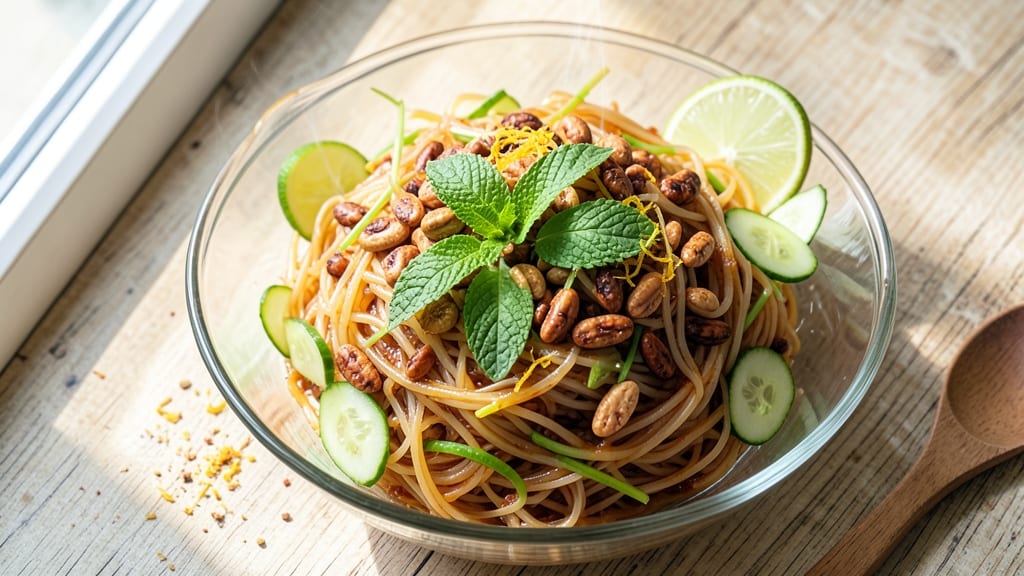
This Burmese noodle salad recipe delivers the perfect balance of tangy, sweet, and umami flavors that define traditional Burmese cuisine. The star is a vibrant tamarind-lime dressing that transforms simple rice noodles into a restaurant-worthy dish, while crispy peanuts add a satisfying crunch.
I first discovered this salad while traveling in Myanmar, where it's a staple at street food stalls and family gatherings—served chilled or at room temperature for that ideal texture.
The foundation of this dish is the dressing, where tamarind paste creates that signature tangy depth, balanced by fish sauce for umami richness and lime for brightness. Fresh herbs like mint and cilantro brighten every bite, while optional protein—chicken, shrimp, or tofu—adds substance.
The recipe comes together in just 20 minutes, making it perfect for weeknight dinners or meal prep.
What makes this salad truly special is how the flavors develop as it sits. The noodles absorb the dressing while remaining tender, and the peanuts stay crispy even when tossed.
Garnish with sliced shallots and fresh herbs for extra freshness, and you'll have a dish that's as beautiful as it is delicious—ideal for serving with grilled meats or as a standalone meal.
This Burmese noodle salad is versatile enough for everyday lunches but impressive enough for dinner guests. The key is letting it rest for 10 minutes before serving, allowing the flavors to meld perfectly. Here's how to make it!
Ingredients for burmese noodle salad
Here's what you need to make this vibrant Burmese noodle salad with restaurant-style tangy dressing.
| Ingredient | Amount | Notes |
|---|---|---|
| Rice Noodles 🍜 | 8 oz | Flat, medium-width, uncooked |
| Tamarind Paste 🍈 | ½ cup | Thick, unsweetened variety |
| Fish Sauce 🐟 | 2 tbsp | Red Boat preferred |
| Fresh Lime Juice 🍋 | ⅓ cup | About 3-4 limes |
| Peanuts 🥜 | ½ cup | Raw, unsalted, roasted |
| Fresh Mint Leaves 🌿 | ½ cup | Chopped, stems removed |
| Fresh Cilantro Leaves 🌿 | ¼ cup | Chopped, stems removed |
| Shallots 🧅 | 2 whole | Thinly sliced, white parts only |
| Garlic Cloves 🧄 | 3 cloves | Minced, fresh |
| Sugar 🍚 | 2 tbsp | Granulated, or coconut sugar |
| Vegetable Oil 🫒 | 2 tbsp | For roasting peanuts |
| Salt 🧂 | ½ tsp | Kosher or sea salt |
| Optional Protein 🍗🦐🥬 | 8 oz | Chicken, shrimp, or tofu |
The tamarind paste is non-negotiable here—look for thick, block-style tamarind at Asian markets or online. Red Boat fish sauce is the gold standard, but any good-quality brand works. Fresh herbs are a must: mint and cilantro should smell bright, not wilted. For the noodles, rice vermicelli, but flat rice noodles are traditional. If you can't find tamarind paste, substitute lime juice with a pinch of salt, but it won't be the same—trust me on this.
No fresh mint? Dried mint at half the amount works in a pinch, but it loses that fresh pop. For the peanuts, raw and unsalted are key—they toast to perfect crunch. If you're using protein, grill or pan-sear it first and slice thinly. The dressing can be made ahead—it actually tastes better after sitting for an hour. For extra heat, add a dash of chili flakes or sambal oelek to the dressing. The shallots should be thinly sliced so they add texture without overpowering.
Store the dressing separately in the fridge for up to 3 days—it keeps perfectly. The noodles? Soak them in warm water for 10 minutes, drain, and rinse with cold water to stop cooking. Toss with dressing right before serving to keep them tender. The peanuts stay crispy for 1 week in an airtight container. This salad tastes even better the next day—flavors meld like magic—so make extra for lunch.
Why You'll Love This Recipe
- No-Boil Magic: I swear by the 5-minute soak for those rice noodles—no stove, no fuss. Just toss them in warm water with a splash of lime while you chop the herbs, and they’re ready when you are. Honestly, it’s the kind of recipe that makes me feel like I actually cooked something.
- Umami Bomb: That tamarind-fish sauce-lime combo? It’s a flavor explosion in your mouth. The tamarind gives this salad a tangy depth, the fish sauce adds that salty richness, and the lime cuts through it all like a bright, refreshing finish. Between us, it’s the kind of taste that makes you want to eat it straight from the bowl.
- Lunchbox Hero: This salad holds up perfectly for meal prep—keep it in the fridge for up to 3 days, and it’s still fresh-tasting. Pack it for work, toss it in a bento box, or serve it at a potluck. My college-aged son lives for it when he’s too tired to cook, and my mom requests it at family gatherings. It’s that universally loved.
- Pantry Staple: You’re already stocked for this. Rice noodles, tamarind paste, fish sauce—these are ingredients I use for so many other dishes. And the peanuts add crunch without breaking the bank. I’ll be real: I’ve made this salad three times this month, and it’s never failed to satisfy. That’s the mark of a true budget-friendly winner.
Step-by-step instructions for Burmese noodle salad
Here's how to assemble this vibrant dish with perfect balance of tangy, crunchy, and savory elements.
Prepare the Tangy Tamarind Dressing
In a small bowl, whisk together the 0.5 cup tamarind paste, 2 tbsp fish sauce, 0.33 cup fresh lime juice, and 2 tbsp sugar until completely smooth. The tamarind paste should dissolve fully—if it's too thick, add 1-2 tablespoons of warm water to thin it out. Taste and adjust seasoning with more fish sauce for saltiness or lime juice for tang.
This dressing is the heart of the salad, so don't rush this step. The tamarind gives that signature Burmese tang, while the fish sauce and lime brighten it up. Set the dressing aside while you prepare the other components—it'll mellow slightly as it sits.
Roast the Peanuts for Maximum Crunch
Spread the 0.5 cup peanuts on a baking sheet and toast in a 350°F oven for 8-10 minutes, stirring once halfway, until they're golden brown and fragrant. Remove from oven and let cool completely before chopping roughly with a knife—you want them to stay crunchy in the salad. Don't over-toast or they'll turn bitter.
Roasting enhances their nutty flavor and creates that essential crunch that keeps the salad interesting. If you're short on time, you can skip roasting and use store-bought roasted peanuts, but freshly toasted makes all the difference.
Cook and Prepare the Rice Noodles
Bring a pot of water to a boil and add the 8 oz rice noodles. Cook for 3-4 minutes until they're tender but still slightly firm—they'll finish cooking in the dressing. Drain immediately and rinse under cold water to stop the cooking process. Toss the noodles with 1 tbsp vegetable oil to prevent sticking while you assemble everything.
The key here is not to overcook the noodles. They should be pliable but still hold their shape when tossed with the dressing. If they're mushy, they'll turn to paste in the salad and lose their texture.
Sauté the Aromatics and Protein
Heat 1 tbsp vegetable oil in a pan over medium heat. Add the 2 whole shallots and 3 cloves garlic, cooking for 2-3 minutes until fragrant but not browned. If using 8 oz optional protein (like chicken or shrimp), add it now and cook until fully done, then set aside.
For the protein, I recommend thinly sliced chicken breast or shrimp that cooks in 3-4 minutes max. If using tofu, press and pan-fry until golden. The aromatics should be soft but not crispy—they'll meld into the salad without overpowering it.
Assemble and Toss Everything Together
In a large bowl, combine the cooked noodles, sautéed aromatics and protein (if using), 0.5 cup chopped mint leaves, and 0.25 cup chopped cilantro leaves. Pour the tamarind dressing over everything and toss gently but thoroughly until everything is evenly coated. Let it sit for 5 minutes before serving—this allows the flavors to meld.
Garnish with the toasted peanuts right before serving. The salad should have a perfect balance of textures—chewy noodles, crisp peanuts, tender protein, and fresh herbs—with that signature tangy dressing tying it all together. Serve immediately while the noodles are still warm and the herbs are vibrant.
Pro Tips For Making Burmese Noodle Salad
- SOAK NOODLES UNTIL FLEXIBLE: I learned this the hard way—draining rice noodles too early ruins the texture. Soak them in warm water for 10-15 minutes until they bend easily but still have a slight bite. Over-soaking turns them mushy, and under-soaking makes them chewy.
- DILUTE TAMARIND PASTE FIRST: This isn’t the prettiest method, but it’s the tastiest. Mix the tamarind paste with ¼ cup warm water before adding it to the dressing—it dissolves smoothly and prevents clumpy, bitter pockets. (Yes, even if you’re impatient like me.)
- TEST FISH SAUCE BALANCE: Skip guessing the fish sauce amount. Taste it alone first—good quality should be salty but not overpowering. Then mix with lime juice and adjust gradually; you can’t fix too much later.
- TOAST PEANUTS LOW AND SLOW: Cranking the heat on peanuts burns them before they’re crisp. Use medium-low for 3-5 minutes, shaking the pan often, until golden and fragrant. Burnt peanuts add bitterness—no one notices the good ones.
Make-ahead tips for this burmese noodle salad
Dressing Prep Ahead
The tamarind dressing is the secret weapon here, and it actually tastes better when made 24 hours ahead. Whisk together the 0.5 cup tamarind paste, 2 tbsp fish sauce, 0.33 cup lime juice, and 2 tbsp sugar in a sealed airtight container and refrigerate.
The flavors deepen and mellow beautifully—just give it a quick stir before using. I like to store it in a small glass jar with a tight lid to keep it fresh for up to 5 days. 💛
Noodle Prep Shortcut
Save time by prepping the noodles in advance. Cook the 8 oz rice noodles as directed, then rinse with cold water and toss with 1 tbsp vegetable oil. Store them in a resealable plastic bag in the fridge for up to 2 days.
When ready to serve, just toss with the dressing and protein—no need to cook again. The oil prevents sticking, so they stay separate until you're ready to assemble. 🍜
Protein Prep Options
If using protein, cook it ahead and store separately. For chicken or shrimp, marinate in 1 tbsp fish sauce and 1 tsp lime juice for 30 minutes before cooking. Store cooked protein in an airtight container for up to 3 days.
For tofu, press and pan-fry until golden, then store in the fridge. Reheat gently before adding to the salad to maintain texture. 🍗
Peanut Storage Hack
Toast and chop the 0.5 cup peanuts in advance and store them in a small jar with a tight lid at room temperature. They’ll stay crispy for up to 1 week, ready to add as a garnish whenever you serve the salad.
For extra crunch, lightly toast them again in a dry pan for 1 minute before adding to the salad. 🥜
Flavor Boost Tip
Let the assembled salad rest for 10-15 minutes before serving—this is where the magic happens. The noodles absorb the dressing, the herbs release their oils, and the flavors meld into a cohesive, restaurant-quality dish.
If making ahead, store the fully assembled salad (without peanuts) in an airtight container for up to 2 days. Add peanuts fresh for maximum crunch. ✨
Nutrition facts
Frequently asked questions
Can I use regular pasta instead of rice noodles?
Not ideal! Rice noodles are traditional for this dish because they're thinner and softer than regular pasta, absorbing the tangy dressing perfectly. If you must substitute, try rice vermicelli or egg noodles—they'll work better than wheat-based pastas like penne or spaghetti. The texture difference will be noticeable, but it's better than using nothing at all.
What's the best way to find tamarind paste if I can't find it in stores?
Look for tamarind blocks at Asian markets or online—they're unsweetened and perfect for this recipe. If you can't find any, mix 1 tbsp lime juice with 1 tsp sugar and ½ tsp vinegar as a substitute, but it won't replicate the exact tangy depth. For a closer match, try tamarind concentrate (found in some international aisles).
How do I adjust this recipe for spicier heat?
Add ½ tsp chili flakes or 1 tsp sambal oelek to the dressing for mild heat, or increase to 1 tsp chili flakes for medium spice. For extra kick, serve with sliced jalapeños or a side of Burmese chili sauce. Always taste as you go—you can add more heat, but you can't remove it!
Can I make this salad vegan?
Skip the fish sauce and replace it with 2 tbsp soy sauce or vegan fish sauce alternative. Use tofu instead of chicken/shrimp (press and pan-fry it first). The dressing will still taste amazing with these swaps—just ensure your tamarind paste is vegan (some contain honey).
Why does my salad taste too sweet?
Too much sugar in the dressing is likely the culprit. The 2 tbsp sugar should balance the tamarind's tanginess—if it's overpowering, reduce it to 1 tbsp next time. Also, check if your tamarind paste is sweetened (some brands are). For extra tang, add 1 tsp lime juice or a pinch of salt to rebalance the flavors.